
Last updated November 4, 2026
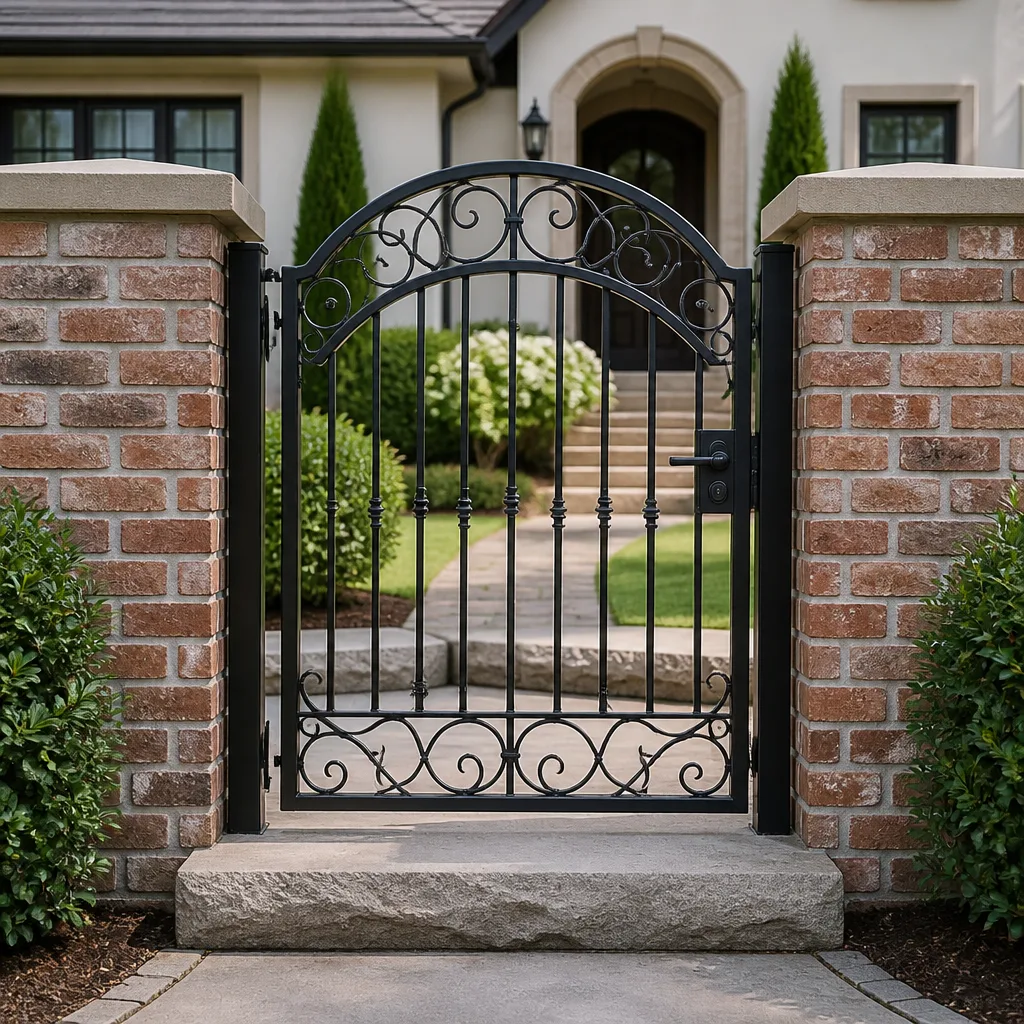 Wrought iron
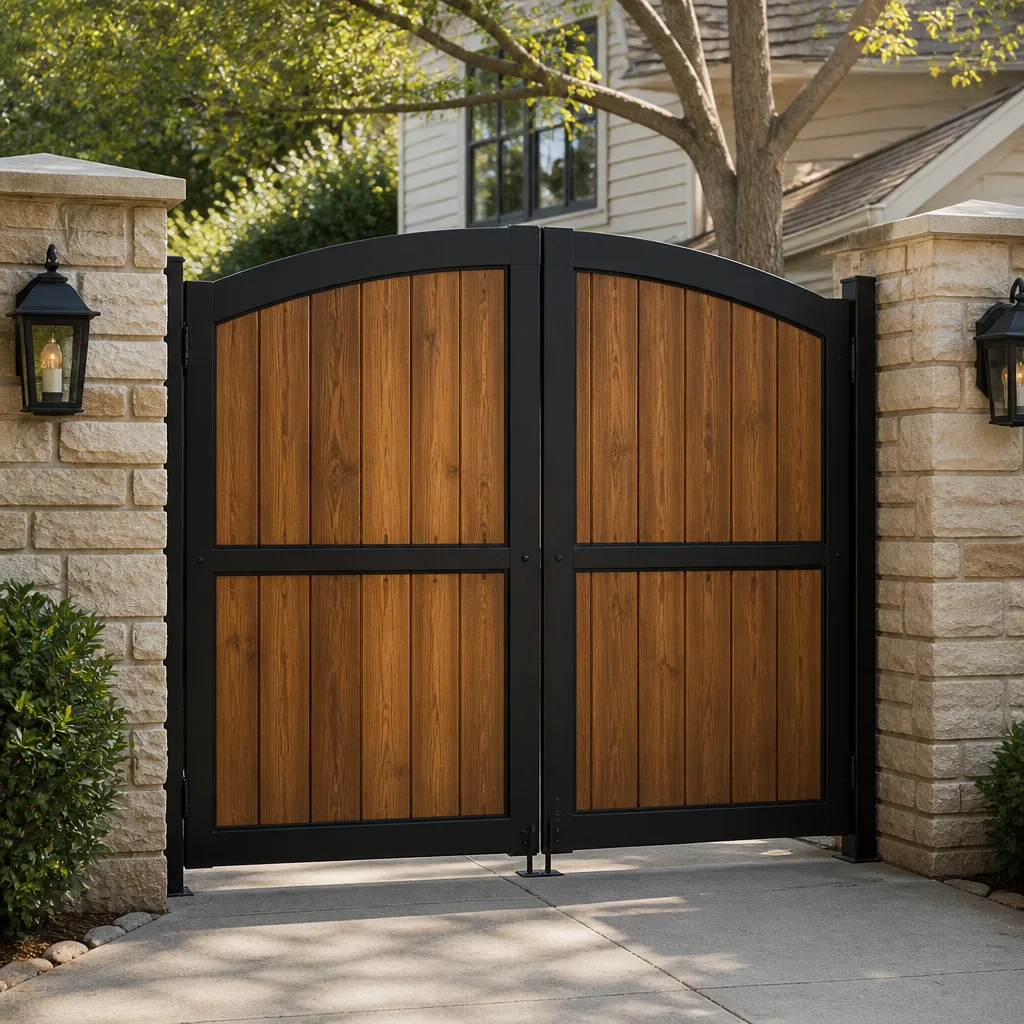 Wood & steel frame
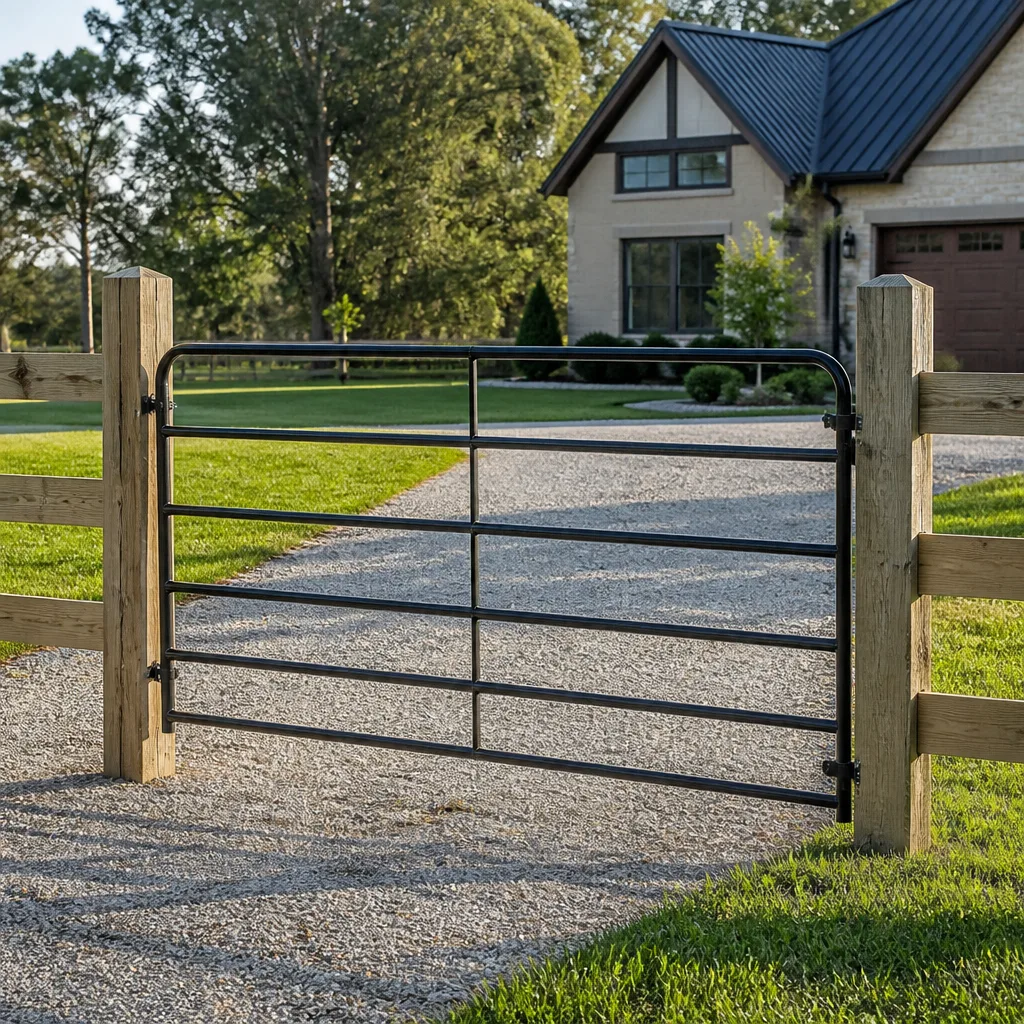 Farm & ranch
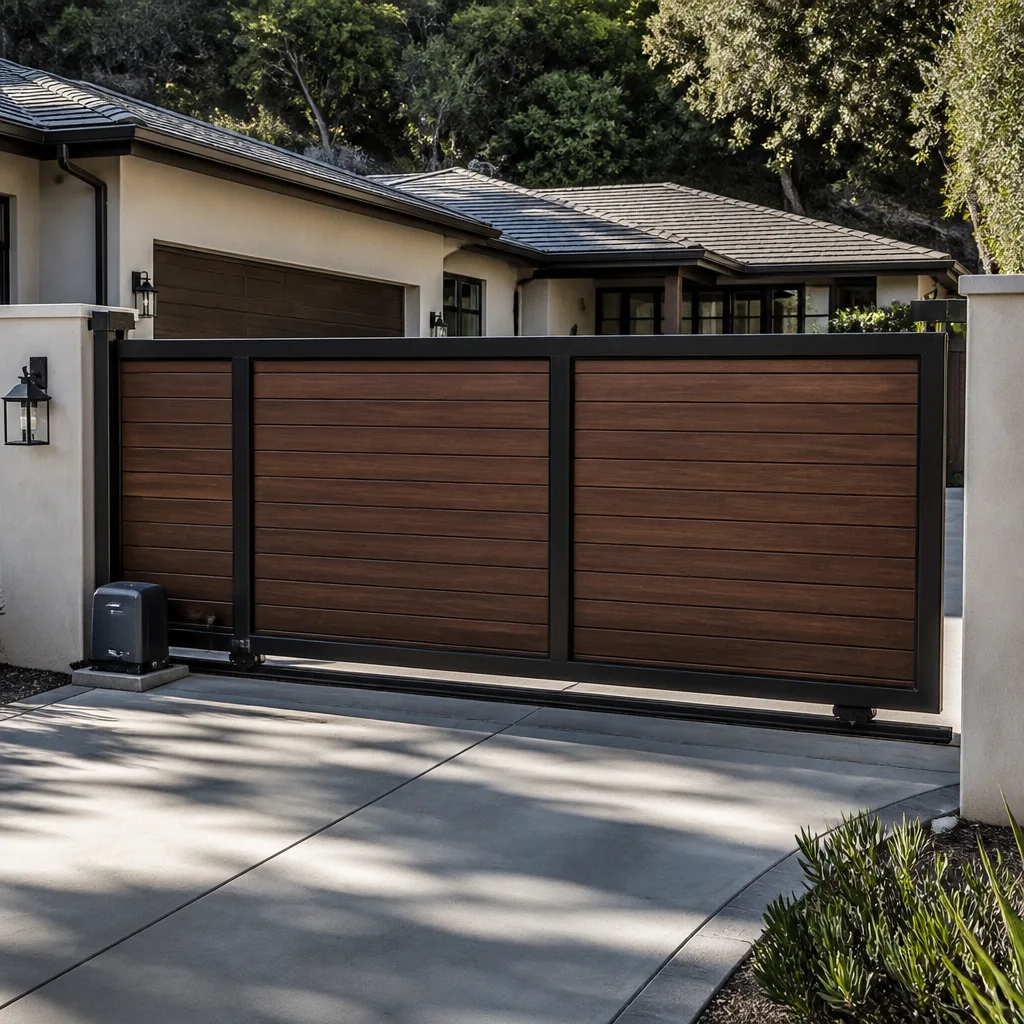 Sliding driveway gates
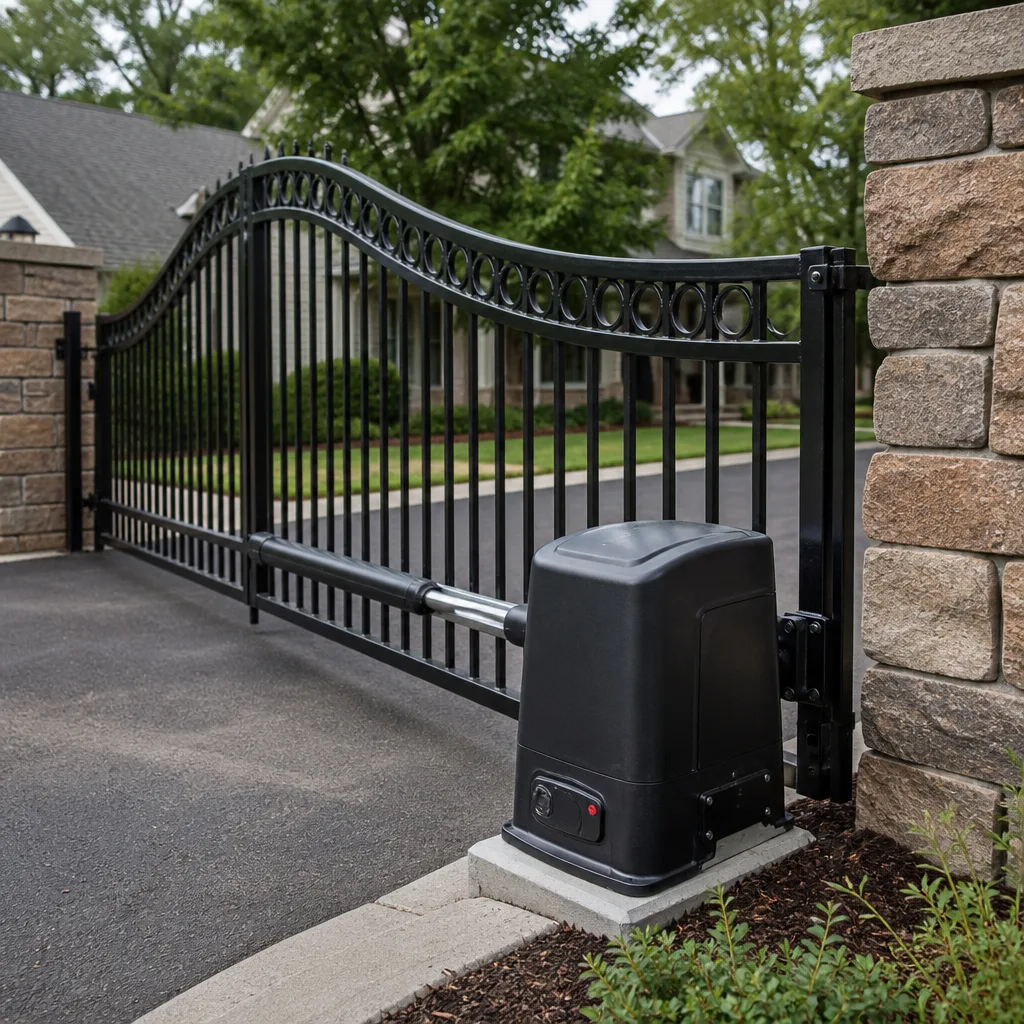 LiftMaster operators
Free on-site gate assessment - hinges, posts, and your LiftMaster or Nice gate operator checked before anything is quoted
The assessment is free and the quote is the invoice.
Get your free estimateSeasonal Gate Repair Care for Carmichael: Year-Round Homeowner’s Guide
The gate that works fine in October is the same gate that fails in February, and the reason usually has nothing to do with the gate itself. Carmichael sits on clay-heavy soil that swells with winter rain and shrinks through the dry season, and that movement travels straight up the posts into the hinges, latch, and automation hardware. When the ground shifts two inches, a swing gate that cleared its stop cleanly in October will bind in February because the geometry changed underneath it. Most homeowners assume the gate broke. What actually happened is the gate’s foundation moved, and the hardware that was never adjusted for that movement took the load. This guide walks through what Carmichael’s wet winters and triple-digit summers do to gate systems, season by season, so you can catch the problem before it bends a hinge arm or burns out a motor.
Quick Answer
Seasonal gate care in Carmichael means adjusting for two opposite stress cycles: winter rain expands the clay soil and throws swing gate geometry out of alignment, while summer heat pushes control boards and battery backups toward premature failure. The maintenance work that matters in January is checking post stability, hinge alignment, and photo eye drift. The work that matters in July is testing battery health, clearing control board enclosures of trapped heat, and checking connections for heat-related loosening. A 15-minute seasonal walkthrough, done four times a year, catches most failures before they leave your gate stuck open or closed.
Styles & brands we work with
- Wrought iron
- Wood & steel frame
- Farm & ranch
- Sliding driveway gates
- LiftMaster operators
Table of Contents
- Winter: Clay Soil Expansion and Swing Gate Geometry
- Spring: Post-Rain Rust, Settling, and Photo Eye Drift
- Summer: Heat Stress on Control Boards and Battery Backups
- Fall: PSPS Outage Prep and Manual Release Testing
- The 15-Minute Seasonal Walkthrough That Actually Gets Done
- Brand-Specific Notes: DoorKing, Elite, Mighty Mule, LiftMaster
- Common Mistakes to Avoid
- When to Call a Professional
Winter: Clay Soil Expansion and Swing Gate Geometry
Carmichael’s winter is the quiet season for gate failures, and that’s exactly why it catches people off guard. The rain that runs from November through February soaks the clay soil around the gate posts and makes it swell. That swelling lifts and skews the posts, and the first place you’ll notice it is in the swing of the gate itself. The gate that cleared the ground by two inches in summer may drag or catch in the same season’s wet weather. The latch that lined up cleanly in October now sits a quarter inch high, and the opener has to muscle the gate the last few degrees of travel.
What to check in winter:
- Gate-to-ground clearance. If the gate scrapes soil or wet leaves, the post has likely shifted. Forcing the gate only strains the motor.
- Hinge arm alignment. A shifted post puts the gate’s weight onto the hinge pin at an angle. Over a wet season, that angle wears the bushing and bends the arm.
- Latch-to-strike alignment. A gate that no longer seats cleanly into the latch is drawing more current to close, which shortens the operator’s life.
- Standing water near the post bases. Saturated clay holds water for days. If the post sits in a depression, water pools around it and accelerates both soil movement and corrosion.
Winter is not the season to force things back into place. A gate that is 1.5 inches off at the latch can often be corrected by adjusting the hinge shims, not the post. If the post itself has rotated or sunk, the right fix is a re-set, not a longer bolt. We treat winter as the season to maintain tolerance, because every Carmichael winter that goes by with the geometry off makes the permanent correction costlier. For gate repair work tied to soil movement, it’s better to schedule the adjustment while the ground is wet than to wait for the dry season, when the clay contracts and changes the angle again.
Spring: Post-Rain Rust, Settling, and Photo Eye Drift
By April, Carmichael’s rain has eased and the soil has begun its slow shrink back toward summer dryness. That is the moment to walk the gate more carefully than any other. What you’re looking for is what February left behind: rust that started under wet hardware, ground settlement that stripped support from one post, and safety photo eyes that drifted over the winter’s movement and no longer see each other. The photo eye alignment is the one most people skip, and it’s the one that causes the most confusing symptoms. A winding arm that opens but refuses to close, or closes halfway and reverses, is often a pair of photo eyes that shifted a fraction of an inch when the gate moved. The beam looks fine. It isn’t.
- Inspect every bolt, bracket, and hinge leaf for rust bloom. Surface rust may wipe off; deep rust on a gate leaf or post bracket is a structural warning.
- Check the gap between the gate and its stop, and the latch alignment again. The ground has started to dry, so the gate may have dropped back into place, or it may now be off in the opposite direction.
- Stand at the gate’s outer edge and look down the line. A post that has tilted even two degrees changes the whole travel path.
- Test the photo eyes by blocking the beam with your hand while the gate is closing. It should stop and reverse. If the beam is misaligned, the gate will behave erratically instead.
- Look at the wiring at the hinge side, especially on swing gates where the wire must flex with each cycle. Wet-season movement can stretch and fatigue that wire, which is the same wire automation depends on.
Rust on Carmichael gates tends to gather where the soil stays damp longest: the lower hinge, the bottom rail, the inside of the post cap. That’s because the clay holds moisture against the metal for weeks after the last rain, not because the rain itself fell on the gate. Treating rust as an automatic replacement signal is a mistake, but so is ignoring it. A hinge leaf that has lost a third of its thickness to rust will eventually let the gate drop, and when a heavy gate drops it snaps the hinge or bends the post. This is the season for electric gate repair of the kind that prevents a larger failure in July, when you actually need the gate to work every cycle.
Summer: Heat Stress on Control Boards and Battery Backups
Carmichael runs hot from June into September, and the component that suffers first is not the motor. It is the control board inside the gate enclosure. Automatic gate enclosures sit outdoors and in direct sun in most Carmichael yards, and the inside of a sealed gray box can climb thirty or forty degrees above the outside air. When the outside temperature reaches 100°F, the board inside is often operating well above its comfortable range. Heat accelerates the degradation of capacitors and solder joints, which shortens the board’s life and produces intermittent behavior before complete failure: a gate that works at 8 a.m. but refuses to cycle at 4 p.m. is a classic heat-related symptom.
Battery backup systems are in the same boat. The batteries that power the gate during a PG&E outage are rated for a temperature range, and a Carmichael summer afternoon exceeds the high end of that range on many days. Heat shortens battery life and reduces runtime during an actual outage. A battery backup that should carry four or five cycles might only manage two when the ambient temperature inside the enclosure is climbing.
What makes a difference in Carmichael’s summer:
- Locate the enclosure on the shaded side of the gate when possible. This is an installation decision, but if you are replacing an operator or moving an enclosure, it matters.
- Keep vegetation a foot away from the enclosure vents. Weeds and dead leaves block airflow and trap heat.
- Listen for a fan cycling or a faint hum. Some control enclosures use passive venting, others use small ventilation fans. If the fan is dead or the vents are clogged, the temperature inside climbs fast.
- Exercise the gate less during peak heat if it has been showing signs. If it already acts strange at the hottest part of the day, running it less often doesn’t fix the board, but it reduces the load until someone can actually diagnose it.
When a control board fails in summer, the decision is often between repairing the board and replacing the operator. We usually lean toward replacement when the board has failed in a heat-stressed enclosure and the operator is older, since the same environment will stress a replacement board the same way. For newer systems, board repair or replacement makes practical sense. We work on Gate Repair Carmichael systems with boards from DoorKing, Elite, Mighty Mule, LiftMaster, and others, so the recommendation follows the gate’s actual condition, not which brand is easiest to resell.
Fall: PSPS Outage Prep and Manual Release Testing
Carmichael sits in PG&E territory, and the autumn fire season has made public safety power shutoffs a regular feature of October and November in the Sacramento region. Most homeowners with an automated gate do not test the manual release mechanism until the power is already out, and that is exactly when they discover it is seized, stripped, or rusted into place. A gate that cannot be released manually during an outage becomes a vehicle trap, and it is the single most preventable failure we see in fall.
September and October are the months to test the release. The procedure is usually the same across most brands: locate the release handle or key on the operator, disengage the drive, and push the gate through its full travel by hand. You are checking three things: that the release engages and disengages without forcing it, that the gate moves smoothly with no binding, and that the mechanism re-engages cleanly when power returns. A gate that binds during a manual push was binding under power all along, just not enough to notice. A release that won’t turn means the operator was not installed with enough clearance to service it, and that is the first thing to fix.
Also worth a fall check:
- Battery backup condition. If your system has a battery backup, test it under load. Unplug the operator or throw its breaker, and cycle the gate once or twice on battery only. A battery that won’t hold a single full cycle is a battery that won’t save you during an outage.
- Wire connections at the board. Wire terminals that have loosened through a year of heat and cold cycles can arc, and an arcing connection at the control board is a fire hazard, not a convenience issue.
- Debris in the gate track. Sliding gates accumulate leaves and acorns through fall, and Carmichael has plenty of both. A track that is half full of debris makes the motor work harder every cycle.
- Photo eye lenses. A quick wipe with a dry cloth through fall keeps the beam clear through the short-day season, when the low sun angle can interfere with them.
Power outage preparation is not about the gate operating during an outage so much as it is about the gate not trapping you or a family member. The manual release is the core tool. Test it before the first red flag warning, not during it.
The 15-Minute Seasonal Walkthrough That Actually Gets Done
A maintenance checklist that takes two hours does not get done four times a year. A 15-minute list does. The trick is to do the walkthrough with your hands, not a clipboard, and to focus on the one thing each Carmichael season actually stresses. Here is the version we give homeowners who ask how to stay ahead of gate failures without making a hobby of it.
- Open the gate fully and close it fully, twice. Listen for any change in sound between season and season. A new grind, a slower close, a hesitation mid-travel, all of it means something.
- Block the photo eye with your foot as the gate closes. The gate should stop and reverse immediately. This takes fifteen seconds and tests the one safety feature that matters most.
- Look at the gap between the gate and the ground. In the wet season, look for a dragging leaf or a changed gap. In the dry season, look for the same. Compare it in your memory to last season.
- Push the gate manually for a few inches with the operator released. You are looking for binding or stiffness that the motor has been hiding from you.
- Open the control enclosure and look. Dead bugs, water staining, loose wire nuts, a swollen battery. You do not need to be an electrician to see that something is wrong.
- Wipe the photo eye lenses and check the post bases for standing water or rust. That’s the whole thing. Fifteen minutes, four times a year.
Do this on a schedule tied to the seasons themselves, not a calendar reminder. The week after the first real rain, the week after the rain stops, the first week of sustained heat, and the week before the usual fall outage season. Carmichael’s rhythm is wet, then dry, then hot, then fire weather. Put the walkthrough on those beats and it actually matches the environment.
Brand-Specific Notes: DoorKing, Elite, Mighty Mule, LiftMaster
Every automation brand has its own weak points and quirks, and Carmichael’s climate stresses each one differently. We work across all of the major openers in this area, so the notes below come from seeing the same gates through the same wet-dry cycle year after year.
DoorKing: DoorKing operators are common on Carmichael’s long driveway and estate-style gates, and their board enclosures tend to be sealed tighter than most. The downside in summer is heat buildup, so a DoorKing that runs intermittently in the late afternoon is often a board that is cooking in its own enclosure. In winter, watch the swing arm linkage. These units are torque-heavy, and a post that shifts in wet clay puts that torque into the arm until the arm binds.
Elite: Elite systems tend to live on the lighter-duty residential side of automation, and their boards are more exposed to moisture-related corrosion than most. Carmichael’s clay soil holds moisture through spring, and any enclosure mounted low near the post base is more likely to show corrosion at the board terminals in April or May. A waterproof wire connection is worth more on an Elite system here than on most other brands.
Mighty Mule: Mighty Mule openers use a simpler belt and arm design, and the most common Carmichael failure we see on them is a stripped drive or a bent arm after a post shift. When the clay swells in winter and one side of the gate rises, a Mighty Mule’s arm has very little angular tolerance before it binds or slips. Spring is the season to check the drive engagement and re-set the arm angle if the gate has moved.
LiftMaster: LiftMaster gate operators share parts with their garage door cousins, but the gate version runs hotter in a Carmichael summer because it is mounted outside in the sun rather than inside a garage. The main board and transformer are the usual heat casualties. In fall, pay attention to the battery backup. LiftMaster’s backup batteries are sensitive to the kind of repeated heat exposure that Carmichael delivers across a full summer, and their runtime degrades quietly.
We mention these four brands because they cover most of the automated gates in Carmichael, but they are not the only ones we service. Whatever system is on your gate, the seasonal stress patterns above hold. The brand changes exactly where and how the failure shows up, not whether the climate produces it.
Common Mistakes to Avoid
- Forcing a gate that has bound after the rain. The post has moved, and the motor is pulling against the gate’s own weight. Forcing it bends arms and wears hinge pins. Adjust the hardware first, then run the gate.
- Ignoring a slow or hesitant close during summer. A control board that acts up only at 4 p.m. is not fine at 7 a.m. The heat is exposing a component that is already failing, and it will get worse through the season.
- Testing the manual release for the first time during an outage. In Carmichael, fall outages are not rare enough to gamble on. If the release is seized, you find out when you least want to.
- Wiping rust off and calling it done. Surface rust is cosmetic. Rust that has thinned the hinge leaf or the post bracket is structural and will eventually drop the gate onto whatever is in the way.
- Re-tightening bolts without addressing why they loosened. A bolt that comes loose every season is a symptom of the gate moving through the wet-dry cycle. Tightening it without fixing the movement means you will tighten it forever, and eventually the hole will wallow out.
- Replacing a gate because the season moved it. Post re-setting and hinge adjustment address most wet-season movement. A new gate installed on the same moving posts will do exactly the same thing next winter.
When to Call a Professional
Some gate work is worth doing yourself, and a lot of it is not. If your gate has shifted more than about an inch at the latch or the ground gap has changed visibly between seasons, the post likely needs to be re-set, not adjusted. That is not a weekend fix. If you see burned or melted wire insulation, a swollen or leaking battery, or a control board that smells hot, step back and call someone who works on automation every day. If the gate moves with a bang, a shudder, or a grind that changes with the weather, stop running it. Gate Repair Carmichael offers free estimates in Carmichael, and the written price is set before any work starts. Call (877) 752-3866 for an estimate. We answer 24/7. Fast dispatch from 7am to 7pm, Sunday through Friday.
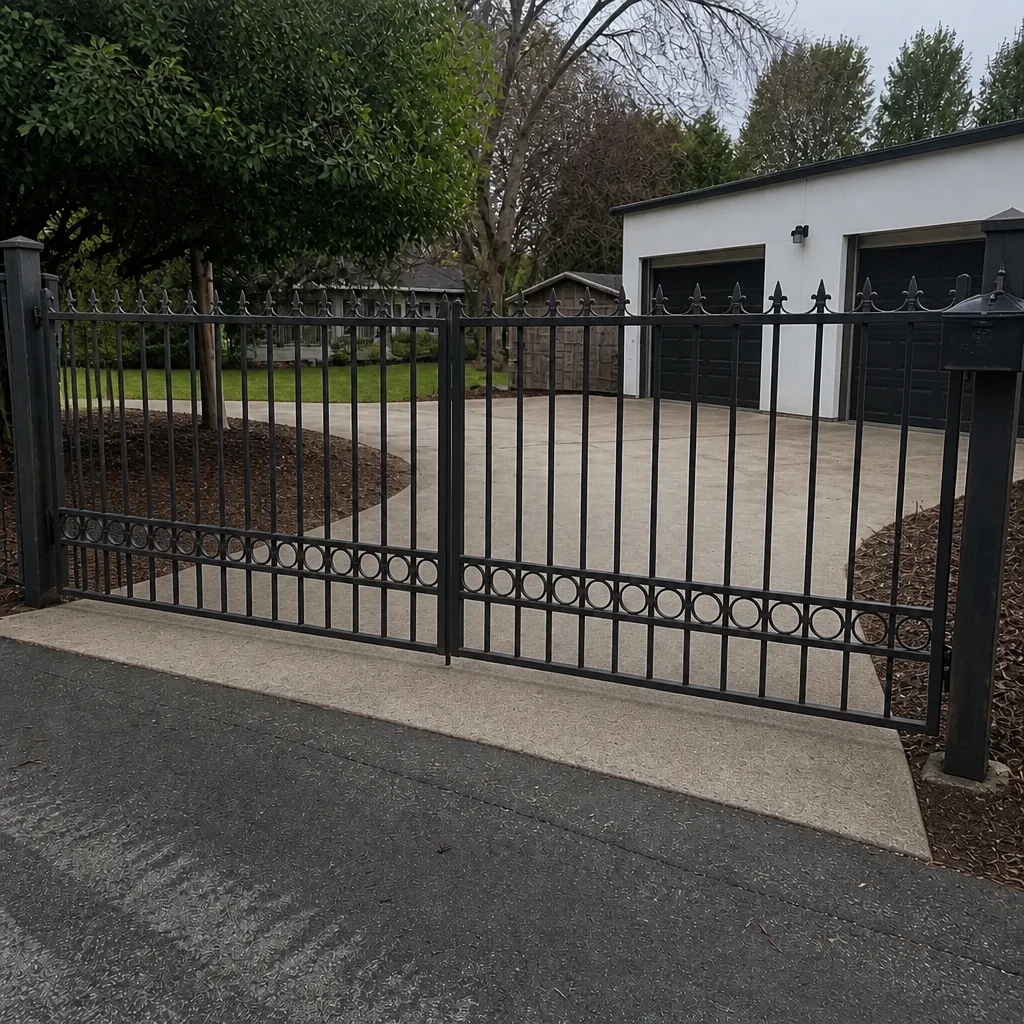
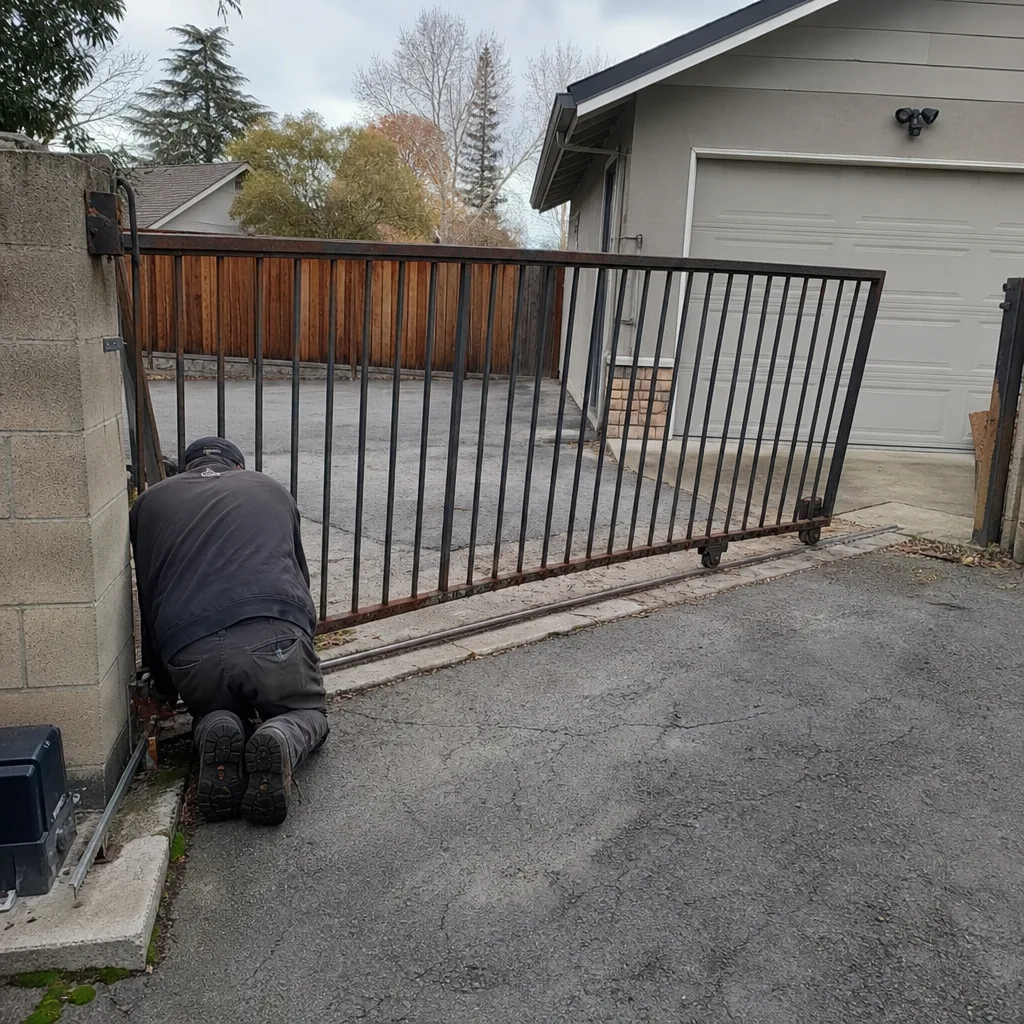
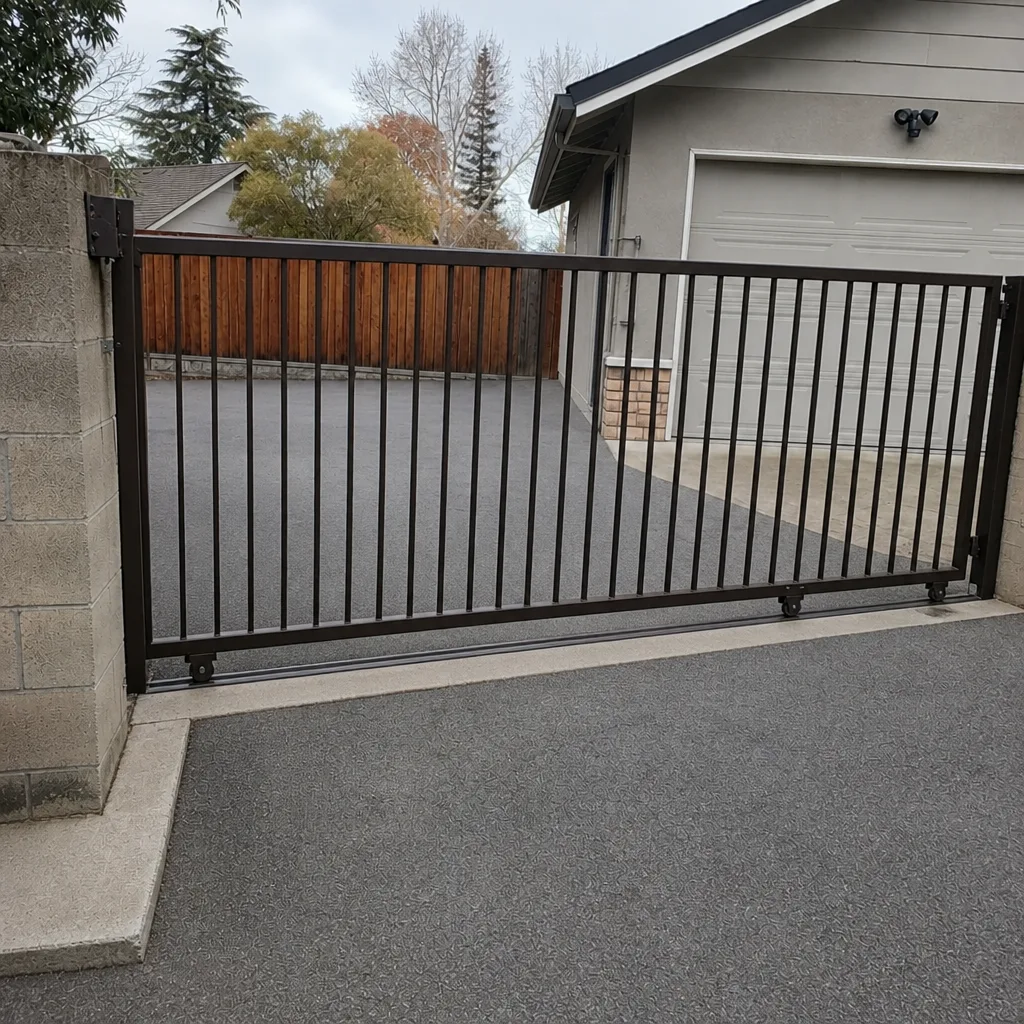
See the difference
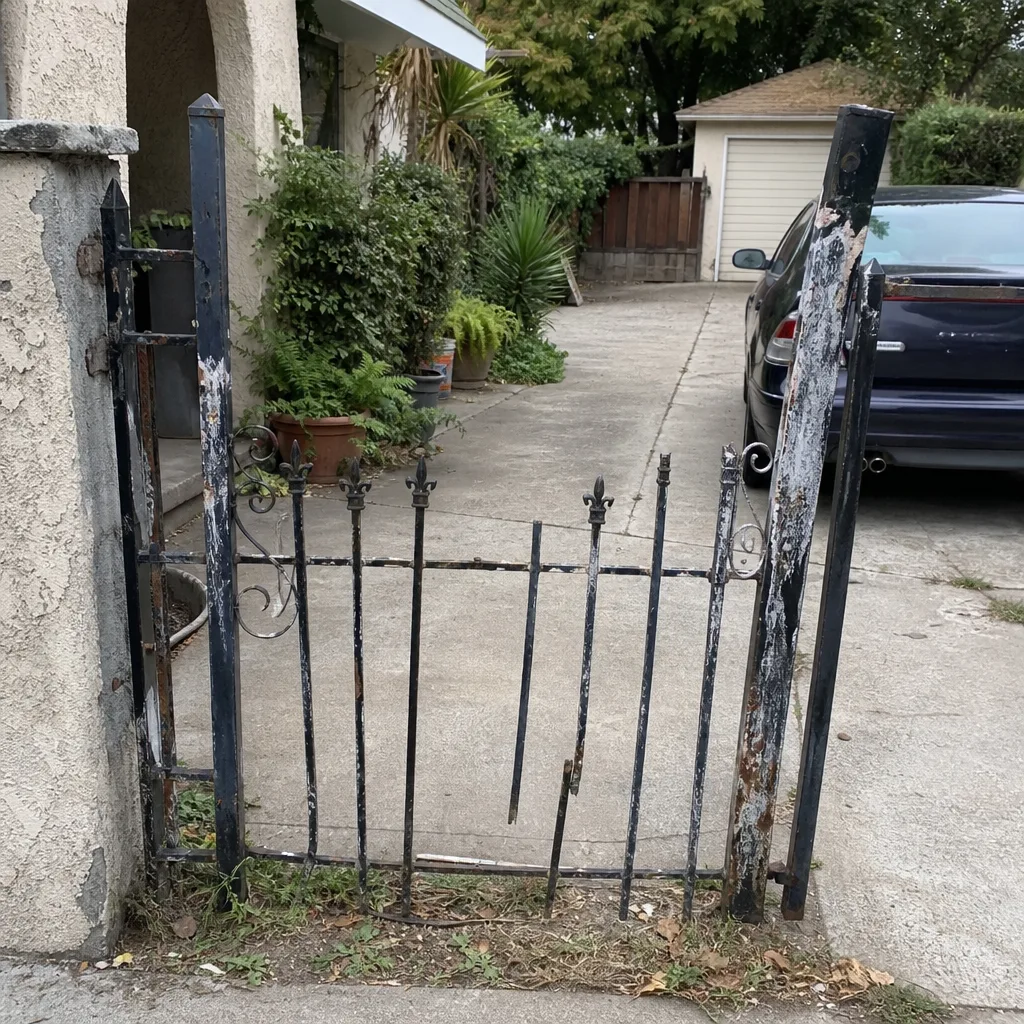 Before
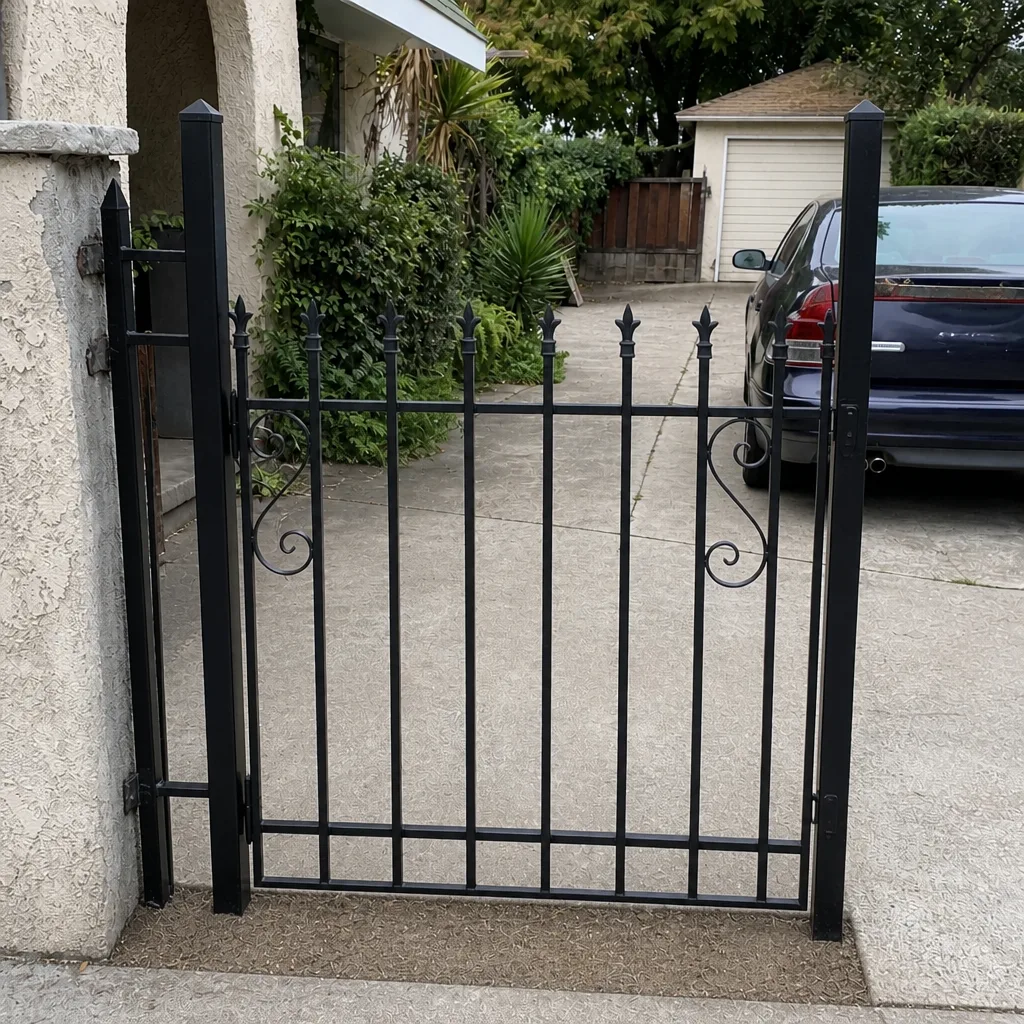 After
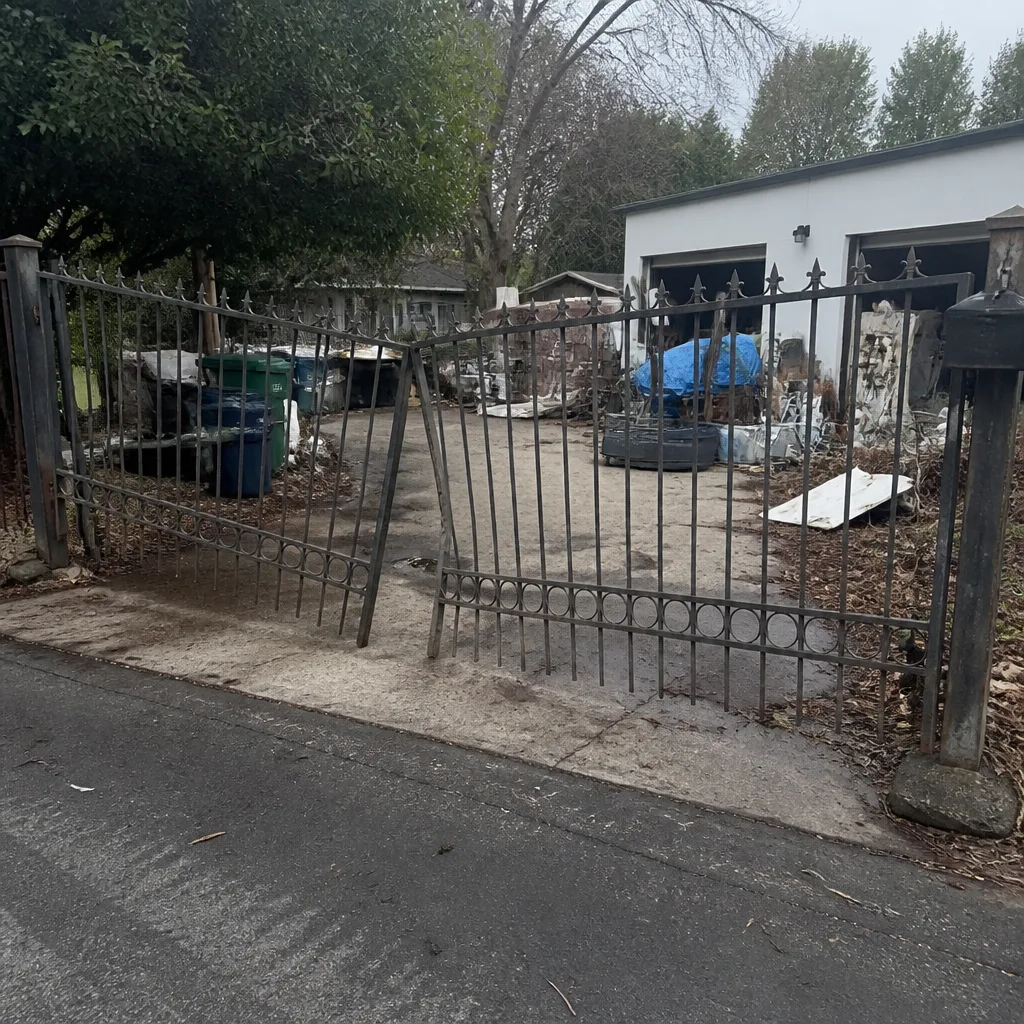 Before
 After
 Before
 After
Frequently Asked Questions
Carmichael’s clay-heavy soil swells when it absorbs winter rain and shrinks as it dries through summer, and that movement shifts gate posts by up to a couple of inches. A post that moves changes the gate’s geometry, which causes hinge binding, latch misalignment, and extra strain on the opener. The fix is usually a hinge or post adjustment rather than a new gate.
This is a classic heat-stressed control board symptom. The board inside the operator enclosure gets far hotter than the outside air in a Carmichael summer, and heat accelerates the failure of capacitors and solder joints. The gate may work perfectly when cool and fail or act erratically during the hottest part of the day.
Locate the release handle or key on your operator, disengage the drive, and push the gate through its full travel by hand. The gate should move smoothly without binding, and the release should re-engage cleanly. Do this once in early fall and again if warnings of a potential shutoff appear.
Yes. Carmichael’s heat shortens battery life over time, and a backup that tests fine in spring may fail under load by October. Test the battery once a season by cutting power to the operator and cycling the gate on battery alone. If it won’t complete a full cycle, it’s time to replace it.
Photo eye alignment. When the gate posts move through Carmichael’s wet-dry cycle, the photo eyes move with them. A gate that stops halfway, refuses to close, or reverses for no reason is often just a pair of photo eyes that no longer see each other. Block the beam with your hand to test them every season.
It depends on the age of the operator and what failed. A heat-stressed control board on an older operator often makes replacement the better value, since the same environment will stress the replacement board too. On a newer system, board repair or replacement makes sense. We work on DoorKing, Elite, Mighty Mule, LiftMaster, and other major brands, so we can give you a straight recommendation after we look at the gate. Call (877) 752-3866 and we’ll set up a free estimate.
The Bottom Line
Carmichael’s wet winters and dry, hot summers put gate systems through two opposite stress cycles, and the maintenance that prevents a failure changes with the season. Winter is about clay soil swelling and the swing gate geometry shifting with it. Spring is where the rust, settling, and photo eye drift left over from the rain show up. Summer is a steady assault on control boards and battery backups, and fall is the season to test the manual release before PG&E outages make it urgent. None of this requires constant work. A fifteen-minute walkthrough four times a year, done with your hands and ears rather than a notepad, catches most failures before they become expensive emergencies. The gate that fails in February usually started failing in October, and someone just didn’t look.
Written by the team at Gate Repair Carmichael, serving Carmichael since 2014.