
Last updated November 4, 2026
 Wrought iron
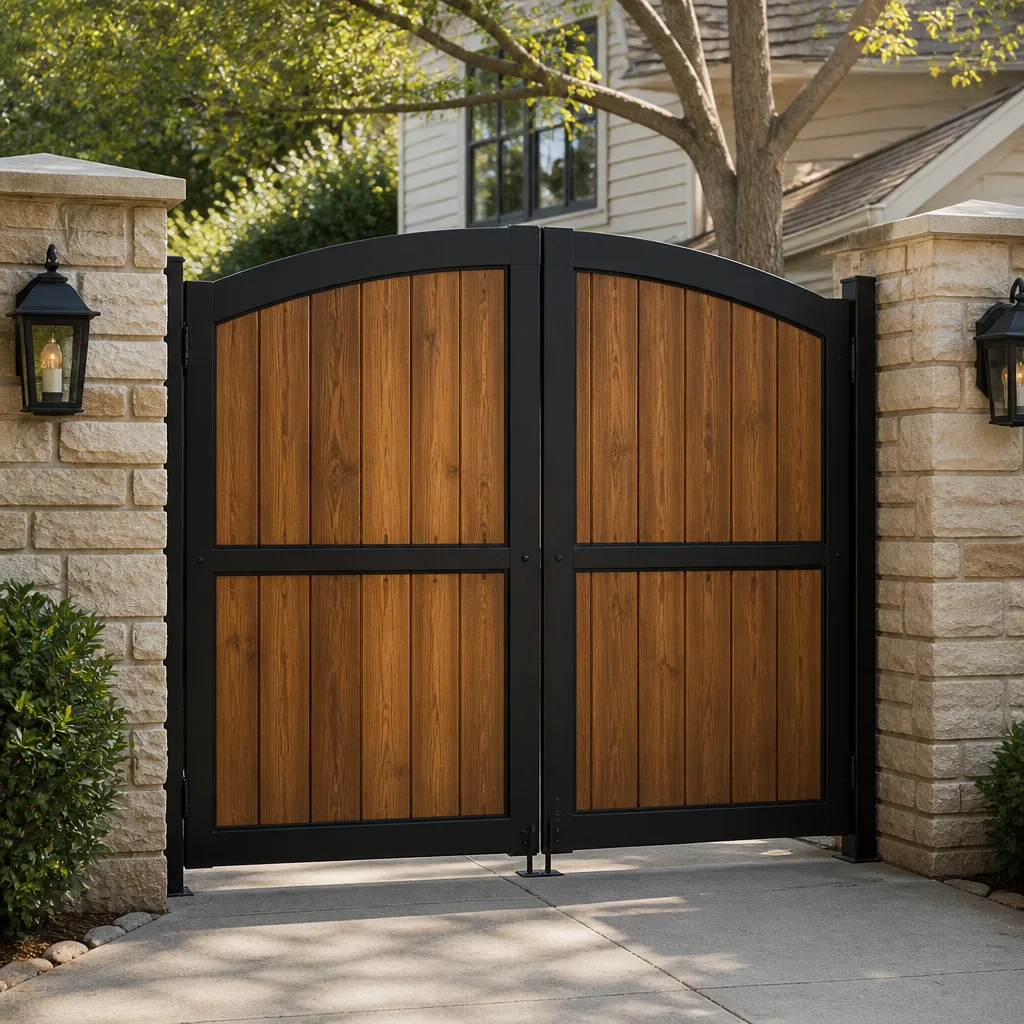 Wood & steel frame
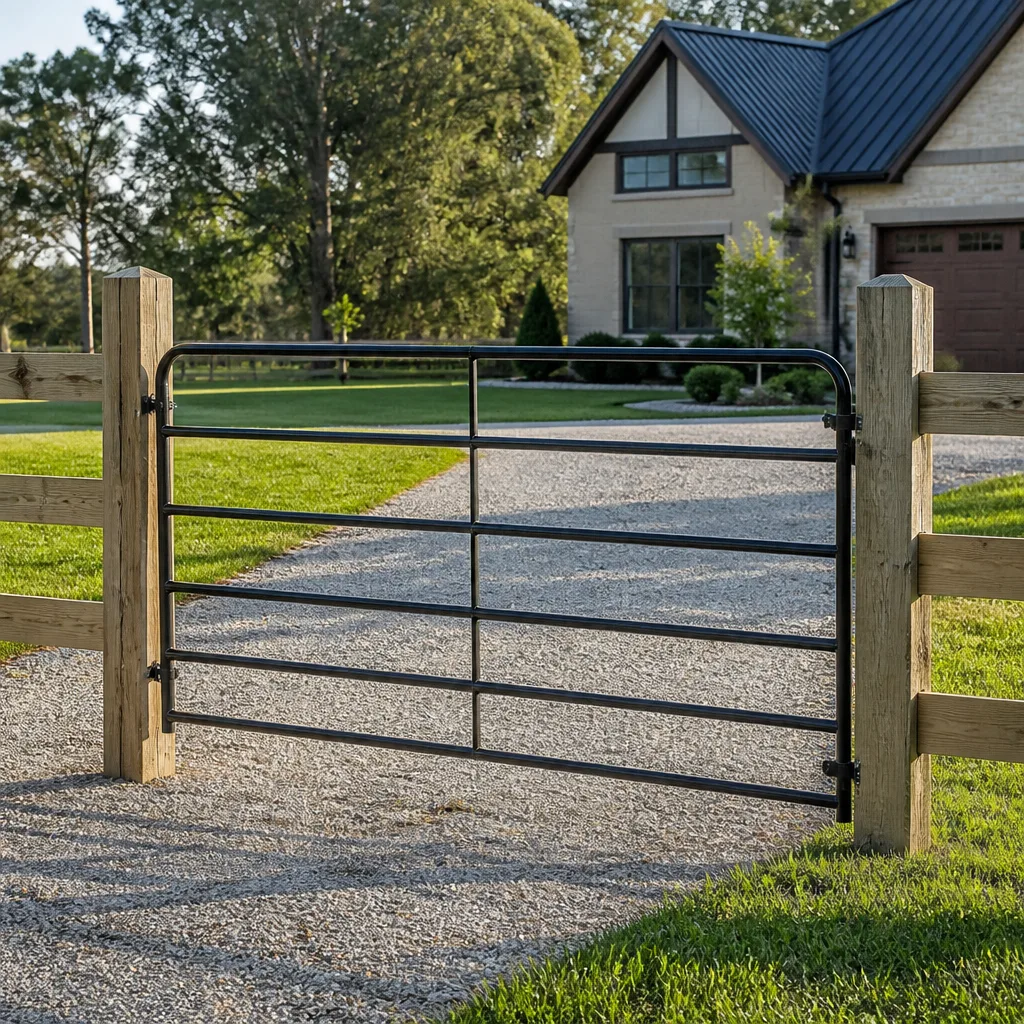 Farm & ranch
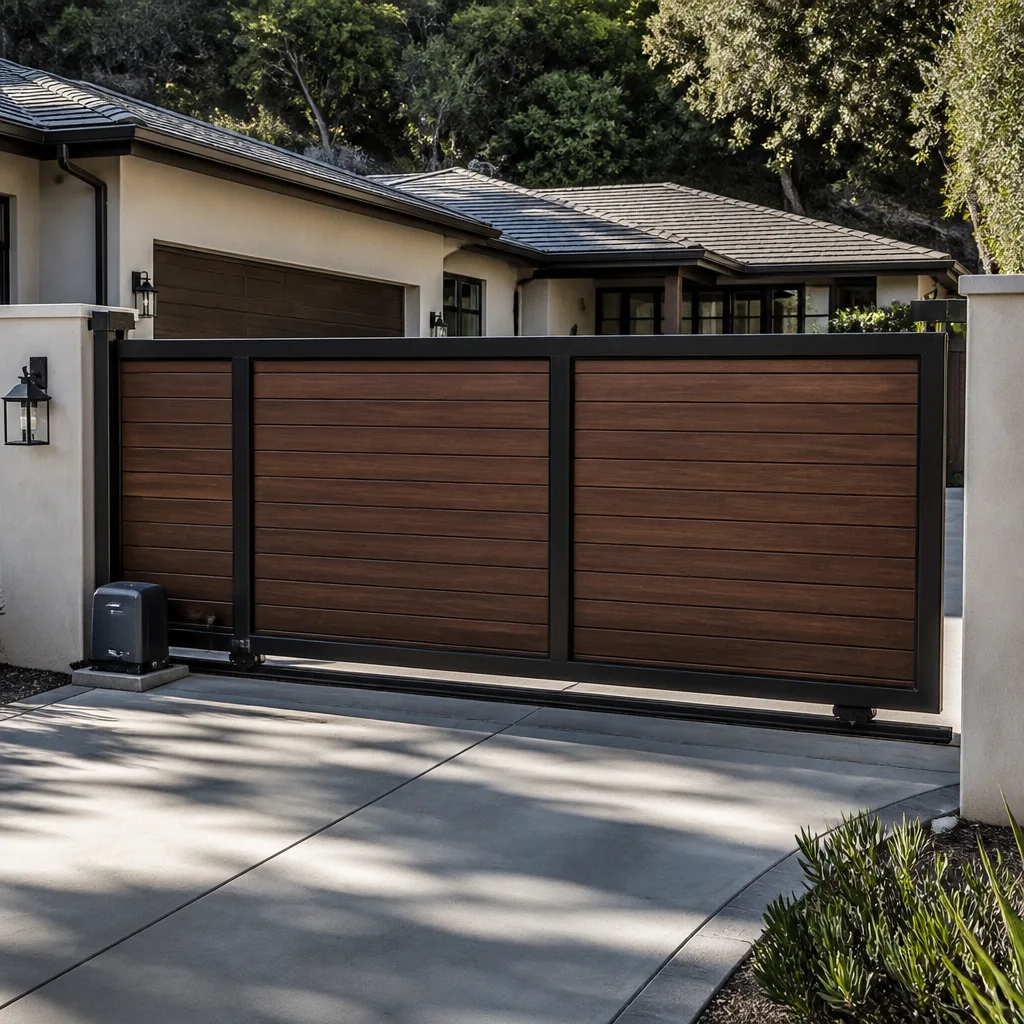 Sliding driveway gates
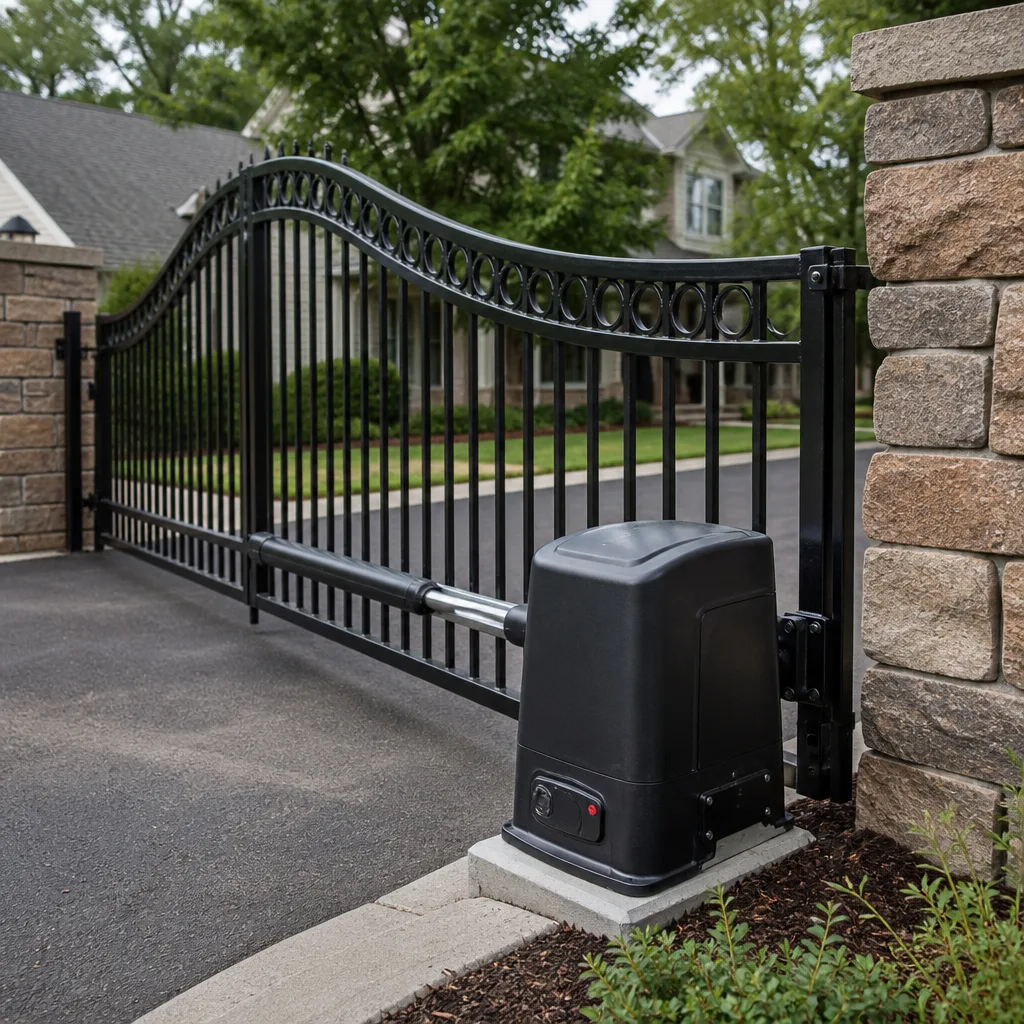 LiftMaster operators
Free on-site gate assessment - hinges, posts, and your LiftMaster or Nice gate operator checked before anything is quoted
The assessment is free and the quote is the invoice.
Get your free estimateDIY vs Professional Gate Repair: The Carmichael Homeowner’s Decision Guide
Most homeowners assume the DIY-versus-professional question is about how handy they are. It isn’t. It’s about which gate components fail in ways that quietly become dangerous, and which ones just need a screwdriver and ten minutes. A gate spring under tension stores enough energy to cause serious injury, but many Carmichael homeowners don’t know whether their gate has a spring system until they’re already reaching for it. This guide draws that line precisely: what you can safely do yourself, what to leave alone, and how to tell the difference before you start. We’ll give you the decision framework we use every day, the specific repairs in each category, and the five-question test that tells you whether to pick up a tool or pick up the phone.
Quick Answer
DIY gate repair in Carmichael is smart for simple mechanical upkeep: photo eye alignment, remote reprogramming, and basic lubrication. Professional gate repair is non-negotiable for anything involving torsion springs, limit switches, rack gear replacement, or control board diagnostics. The dividing line is whether a failed part can release stored energy or require resetting safety parameters that, done wrong, create a liability risk to anyone walking through your gate. If the job involves electricity, stored tension, or a commercial operator, call a gate specialist before you touch it.
Styles & brands we work with
- Wrought iron
- Wood & steel frame
- Farm & ranch
- Sliding driveway gates
- LiftMaster operators
Table of Contents
- Know Your Gate System First
- The Repairs That Are Actually Safe for a Carmichael Homeowner
- The Repairs That Look Simple But Aren’t
- Warranty, Liability, and the Hidden Costs of DIY
- The Five-Question Decision Tree
- What Carmichael’s Climate and Property Layout Means for Your Gate
- The Brands We See Most in Carmichael Driveways
Know Your Gate System First
Before you decide whether to fix something yourself, you have to know which system you own. Almost every residential gate in Carmichael falls into one of two categories: a manual swing gate with no motor, or an automated gate driven by an operator and controlled by a board. They fail differently, they cost differently, and they respond differently to homeowner attention.
A manual gate usually has a simple hinge system and maybe a latch or a drop rod. The failure points are mechanical: a sagging leaf, a worn hinge pin, a post that has shifted. These jobs are mostly accessible. You can see the problem, and if you’re careful, you can often correct it without touching anything dangerous.
An automated gate is different. The operator controls everything: how far the gate travels, how fast, how much force it applies, where it stops, and how it responds to pressure from the safety edge. The board inside the operator is the brain. When that board misbehaves, the gate may slam, stop halfway, reverse at the wrong moment, or ignore the photo eye. None of those are problems you can fix at the hinge. They require a diagnostic approach and, often, a brand-specific understanding of how that operator thinks.
We work on equipment from LiftMaster, FAAC, BFT, Linear, Viking, Ghost Controls, DoorKing, Elite, and Mighty Mule, and we can tell you this: an Elite swing operator and a Mighty Mule opener don’t diagnose the same way, even when the symptom looks identical. That matters when you’re reading a forum thread that tells you to “just adjust the limit.” The advice may not apply to your board at all.
The Repairs That Are Actually Safe for a Carmichael Homeowner
We’re not going to tell you to stay away from your gate entirely. There are a handful of maintenance and tuning jobs that we routinely teach Carmichael homeowners to do on their own. These are accessible, low-risk, and require only basic tools. They won’t void a warranty, and they rarely create a new problem.
Here’s what belongs in the DIY column:
- Photo eye realignment. If your automated gate starts, stops, and immediately reverses, the photo eye sensors are usually the culprit. You’ll find them low on each side of the gate opening, paired and facing each other. Wiping the lens clean and adjusting the bracket so the two eyes actually see each other resolves this about half the time. This is a line-of-sight job with no stored energy involved.
- Remote reprogramming. If a handheld remote stops working, the fix is often a fresh battery followed by a relearn sequence. Most manufacturers print the relearn steps on a sticker inside the operator cover. You can do this yourself in five minutes. If the board won’t enter learn mode after the correct sequence, that’s when it’s time to call someone who knows the board.
- Hinge lubrication. A manual swing gate that squeaks or feels stiff at the hinge typically just needs a heavier lubricant worked into the hinge pin. White lithium or a penetrating spray applied a few times a year keeps Carmichael’s dust from grinding the metal surfaces together. Wipe away the excess so it doesn’t attract more grit.
- Track cleaning on a slide gate. Carmichael’s dry summers mean dust and small gravel end up in the V-track. Keeping the track clear of debris is a safe, useful habit. If the gate is binding despite a clean track, that points to a wheel or bearing issue, and that’s the time to stop.
- Battery check on solar-assisted openers. Some operators, especially Mighty Mule and Ghost Controls units, run on battery power topped up by solar panels. If the gate runs slower than it used to, a corroded or aged battery is a common cause. Swapping a marked battery for the same size and voltage is a reasonable DIY job, provided you follow the manufacturer’s shutoff sequence first.
These jobs share two things: no stored spring tension, and no work inside the operator’s electrical enclosure. That’s the line. Stay on the safe side of it and you’ll handle the bulk of routine upkeep yourself.
The Repairs That Look Simple But Aren’t
The dangerous repairs aren’t the ones that look hard. They’re the ones that look approachable. A homeowner sees a small adjustment screw, a gear bolted to a rack, a board with clean-labeled terminals, and thinks: how complicated can it be? The answer is more complicated than it looks, and the failure mode is not a gate that stops working. It’s a gate that works wrong, with power behind it.
Here are the jobs we tell Carmichael homeowners to leave to a gate specialist, and why:
Limit switch adjustment
This looks like a ten-minute job. Turn a screw, move a stop, done. The problem is that the limit switch determines exactly where a 400-pound gate stops moving. Set it too far and the gate over-travels, stressing the operator, pulling on the hinges, and eventually bending the post. Set it too short and the gate won’t seal the opening, which creates its own security issue. And on commercial operators with electronic limit settings rather than mechanical ones, the process involves entering a programming sequence that’s specific to the board. A wrong keystroke erases the travel calibration entirely.
Rack gear replacement
A slide gate’s rack is the toothed rail the drive gear runs along. When a few teeth wear out, the gate jerks and shudders, and a homeowner sees what appears to be a bolt-on job. But rack replacement requires the gate to be properly supported, the new rack to align within tight tolerances with the existing section, and the drive gear to be checked for matching wear. A misaligned rack strips quickly, and a gate that jumps the rack can fall off its track. That’s a crushing hazard, not a cosmetic issue.
Control board replacement or diagnosis
This is where we see the most expensive DIY outcomes. A homeowner opens the operator cover, sees a board, orders a “direct replacement” online, and swaps it. Then the gate doesn’t work. Or it works but the safety edge isn’t communicating. Or it works for a week and then the new board fries because the root cause was a short in the loop detector, not the board itself. Control boards on FAAC, BFT, and commercial LiftMaster units carry safety logic that must be re-set and re-verified after replacement. Getting this wrong doesn’t just break the gate. It leaves a gate that may not reverse when it meets resistance, and that’s a serious injury risk to a child, a pet, or a delivery driver.
Anything involving a torsion spring or extension spring
We’ll be blunt: if you have a gate with a spring assist system and the spring has snapped or lost tension, stop. These springs are not like the little spring on a screen door. They are under enough load to move a gate leaf that weighs hundreds of pounds, and if they release while you’re working on them, the result is a metal bar moving through whatever happens to be in the way. This is the one job we never describe as doable with patience and a YouTube tutorial. Patience does not matter when a spring unloads.
Re-wiring a photo eye or safety edge
Low voltage does not mean no voltage. A safety circuit that’s wired wrong will test “fine” on a multimeter and then fail when the gate closes on a car. We’ve seen handyman repairs where the safety edge was bypassed entirely, leaving the gate running with no obstruction detection. You wouldn’t know it until the gate doesn’t stop. That’s not a repair; that’s a loaded mistake waiting for the wrong moment.
Warranty, Liability, and the Hidden Costs of DIY
There are two costs most homeowners never factor into a DIY decision. The first is the warranty on a newer operator. The second is the liability exposure of a gate that doesn’t work the way someone expects it to.
You can void a warranty with the best of intentions
If your automated gate is less than two years old, the manufacturer’s warranty is usually still live. And in the fine print of that warranty, you’ll find language that says coverage depends on installation and service by qualified hands. Open that operator and start swapping boards or re-running wires yourself, and you may have just ended your claim. For example, a homeowner with a LiftMaster operator under warranty who opens the cover and “reseats” the board may be denied coverage when the real fault turns out to be a factory defect. The repair you thought you were saving may now be a full-cost replacement.
The same applies with some Elite and FAAC operators, where diagnostic codes matter for the manufacturer’s own troubleshooting. If a homeowner clears the fault memory while exploring the board, the evidence the manufacturer needs to honor the warranty is gone. We see this in Carmichael semi-regularly: a well-meaning homeowner erases the very codes that would have made it a covered repair.
California liability extends beyond your property line
California’s premises liability law holds property owners responsible for injuries to people lawfully on the property. Delivery drivers, postal workers, service technicians, and visitors all count. An automated gate is a machine. If it falls, slams, pins, or drags someone, the question in any legal conversation becomes: who maintained it, and to what standard?
A homeowner who performs an electrical repair on an automated gate is now the person who maintained the gate. If the gate later injures a visitor because of a wiring fault or a misconfigured safety circuit, that homeowner’s work is part of the record. There’s no requirement to be a certified professional to work on your own gate, but if your work creates an unsafe condition, you own the result. That’s a different level of risk than a squeaky hinge.
For rental property owners in Carmichael, this exposure is sharper. A landlord’s gate failure that injures a tenant or the tenant’s guest raises issues that go beyond a deductible. The question becomes what a reasonable property owner should have known, and whether the gate had been serviced by someone qualified to assess its safety systems.
The Five-Question Decision Tree
When we’re talking to a Carmichael homeowner who isn’t sure whether to attempt a repair, we run them through five questions. These are the same questions we use mentally on every diagnosis call. Answer them honestly and the decision makes itself.
- Is there stored energy involved? If the part you’re about to touch is a spring under tension, or if the gate leaf is heavy enough that it could swing or slide under its own weight once you remove a component, that’s stored energy. Stored energy means professional. No stored energy means continue to question two.
- Are you working inside the operator’s electrical enclosure? If you’re opening the cover of the operator and touching anything with wires, you’re inside the safety enclosure. That’s professional territory. If you’re outside the cover, adjusting a bracket or lubricating a hinge, continue down the list.
- Does the repair change how the gate moves or how it stops? Cleaning the photo eye doesn’t change gate behavior; it restores it. Adjusting a limit switch changes the gate’s travel. That’s a different category. Any job that affects stopping force, travel, speed, or obstruction response is a professional job.
- Will a wrong result create a hazard rather than just an inconvenience? A squeaky hinge that still squeaks after you lubricate it is an inconvenience. A gate that fails to reverse when it touches an obstacle is a hazard. If the failure mode of your repair is a gate that moves unpredictably, do not do it yourself.
- Could you damage a component that costs more than a service call? The answer to this one is almost always yes on automated gates. A board that costs hundreds of dollars is one crossed wire away from replacement. If your potential mistake costs more than a professional diagnosis, the rational choice is the diagnosis.
Three yeses out of five on the professional side is a clear call. One yes on stored energy or electrical enclosure is automatically a professional job, regardless of the other answers.
What Carmichael’s Climate and Property Layout Means for Your Gate
Carmichael’s particular conditions shape how gates fail here and why some DIY repairs are more or less successful than they’d be in another climate. This isn’t a coastal environment. There’s no salt air accelerating corrosion. But there is real dryness, real dust, and summer heat that does its own work on gate hardware.
The biggest local factor for slide gates is dust. Carmichael’s dry season sends fine particulate matter into gate tracks, where it combines with grease to form a paste that wears down wheels and drive gears. Homeowners who keep the track clear and the drive gear clean see their gates last longer. Homeowners who ignore the track eventually pay for a new rack or drive gear. This is one of the simplest and most effective DIY maintenance habits in this area.
For swing gates, the issue is dry soil and post movement. When the ground dries out over a long Carmichael summer, soil contracts slightly and gates that were perfectly plumb in March can sag by August. That sag puts uneven load on the hinges and makes the gate fight the operator. A homeowner can often see this as a gate that’s visibly no longer level, or a latch that doesn’t line up the way it used to. Whether to dig out and re-set a post is not always a DIY job; you need to know whether the post is solid, whether the concrete footing is cracking, and whether the gate leaf can be safely supported during the work.
Heat is another quiet factor. Operator enclosures run hotter here than in the fog belt, and vents clogged with dust raise internal temperatures further. That shortens board life on operators from FAAC and BFT, among others. A simple seasonal check: clear the vents on the operator cover and make sure nothing is blocking airflow. That’s a safe DIY job that has a real effect on equipment life.
Carmichael has a blend of older ranch homes with long driveways and newer custom properties with decorative gates. The older installations often have operators that were installed decades ago and patched along the way. The newer ones may have integrated access systems. Neither is a one-size-fits-all repair scenario, and the brand of the operator matters more than the brand of the gate. We mention this because homeowners often call a generalist who doesn’t know the operator’s programming, and the result is a partial fix that holds for a few weeks. A dedicated gate specialist in Carmichael sees this wide mix of old and new equipment every week.
The Brands We See Most in Carmichael Driveways
Not all gate operators are equal, and Carmichael’s mix of properties means we see a genuine spread. Some of the most common units in this area come from LiftMaster, FAAC, Elite, BFT, Mighty Mule, Linear, Viking, Ghost Controls, and DoorKing. They all have different board layouts, programming logic, and common failure points. A homeowner with a Mighty Mule often has a fairly simple system that responds to basic tune-ups. A homeowner with an Elite or FAAC operator may have a more sophisticated board, and the diagnosis requires more steps.
What matters is that your gate specialist isn’t married to a single brand. A brand-agnostic approach means the recommendation is based on what’s right for your gate and your budget, not on what’s easiest for a stockroom. We work across the full range, from the most common residential openers to light commercial automation. Whatever opener you have, we know it.
We’re often called after a homeowner has already tried a DIY repair on a LiftMaster or FAAC unit and the gate now behaves differently than before. The second repair is always more complicated than the first, because we’re not just fixing the original fault, we’re untangling the previous attempt. One of the best arguments for calling early is that the first diagnosis is simpler than the cleanup.
Common Mistakes to Avoid
- Clearing fault codes before reading them. Many operators store diagnostic codes that point directly to the failed component. Homeowners who clear the memory erase the best evidence. Read the codes first, write them down, and only then think about next steps.
- Assuming all remotes work the same way. A LiftMaster remote program sequence is not the same as an Elite or FAAC sequence. Following the wrong instructions from a forum wastes time and can sometimes knock other remotes out of the operator’s memory.
- Lubricating a gate track with the wrong product. Heavy grease on a slide gate track attracts Carmichael dust and turns it into grinding paste. Use a dry lubricant on the track and a heavier product only on sealed bearings, if at all.
- Propping a heavy swing gate open with a board or a rock. This shifts load and can bend hinge posts. If you need the gate held open to work on it, block it properly under the gate leaf’s center of mass, not at the latch end.
- Ignoring a slow change in gate speed. A gate that gradually runs slower is telling you something. It may be a battery, a motor, or a binding wheel. Waiting until it stops completely changes a small repair into a larger one, and the sooner it’s checked the simpler the fix.
- Tightening a sagging gate’s hinges as a permanent solution. If the gate sags because the post has shifted, tightening the hinge bolts doesn’t address the cause. The gate usually sags again, and now the bolts are over-torqued. The post footing is the issue.
- Replacing an operator board without testing the power supply. Boards rarely fail in isolation. If a transformer is sending incorrect voltage, the new board will fail too. Testing the supply first is basic diagnostic discipline.
See the difference
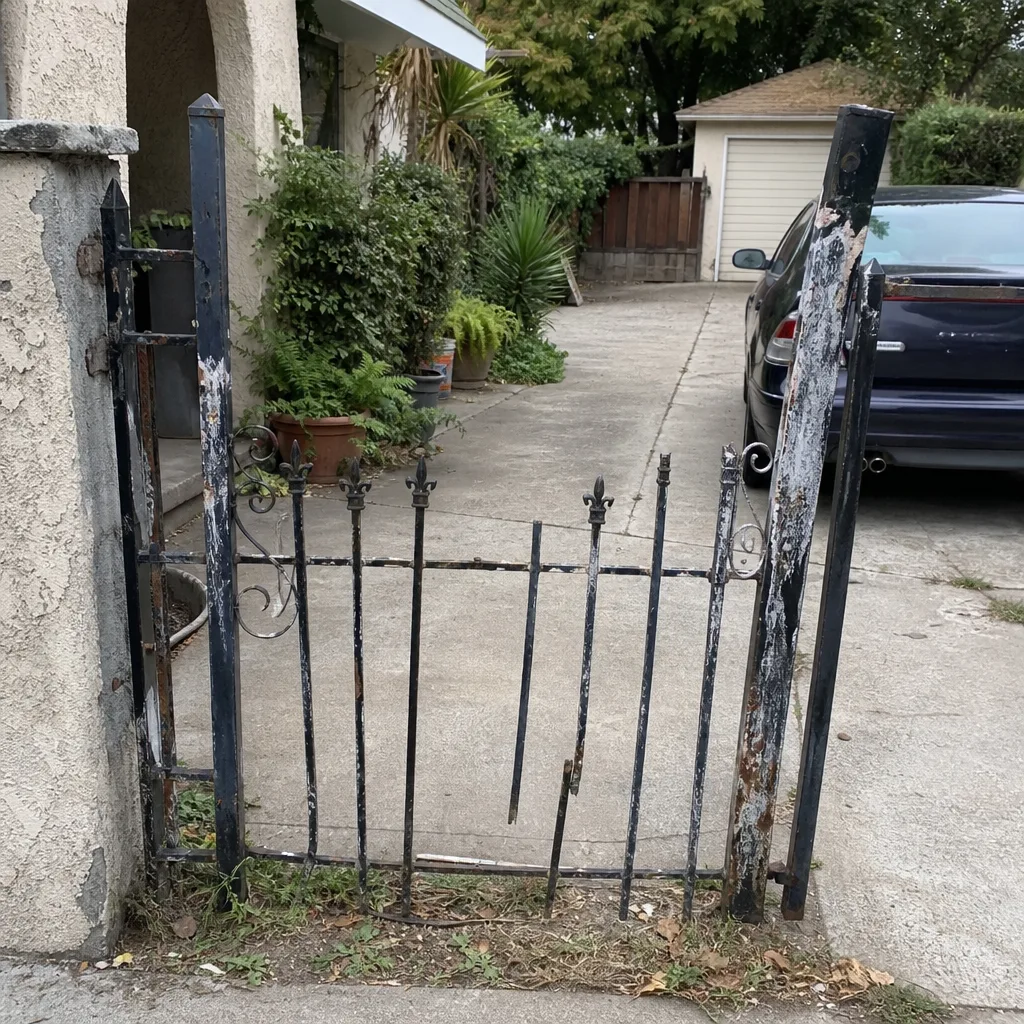 Before
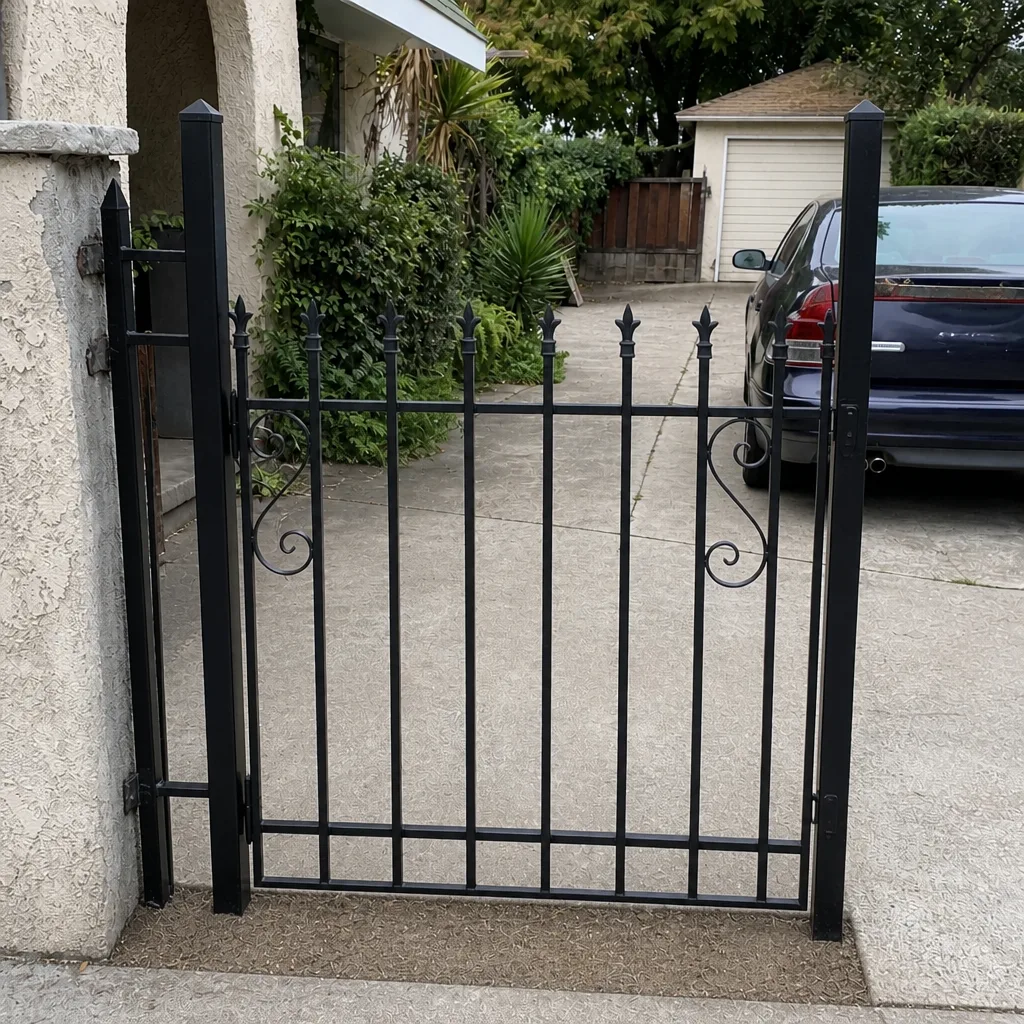 After
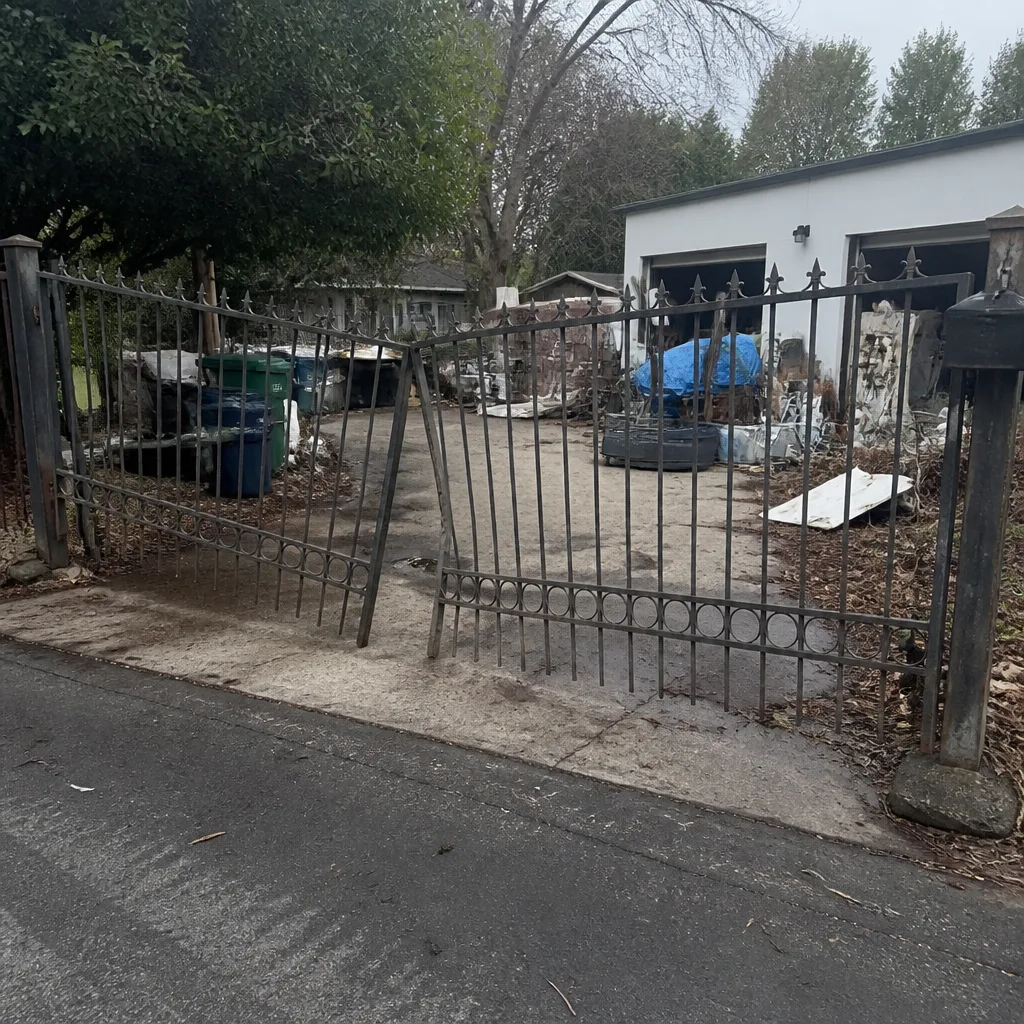 Before
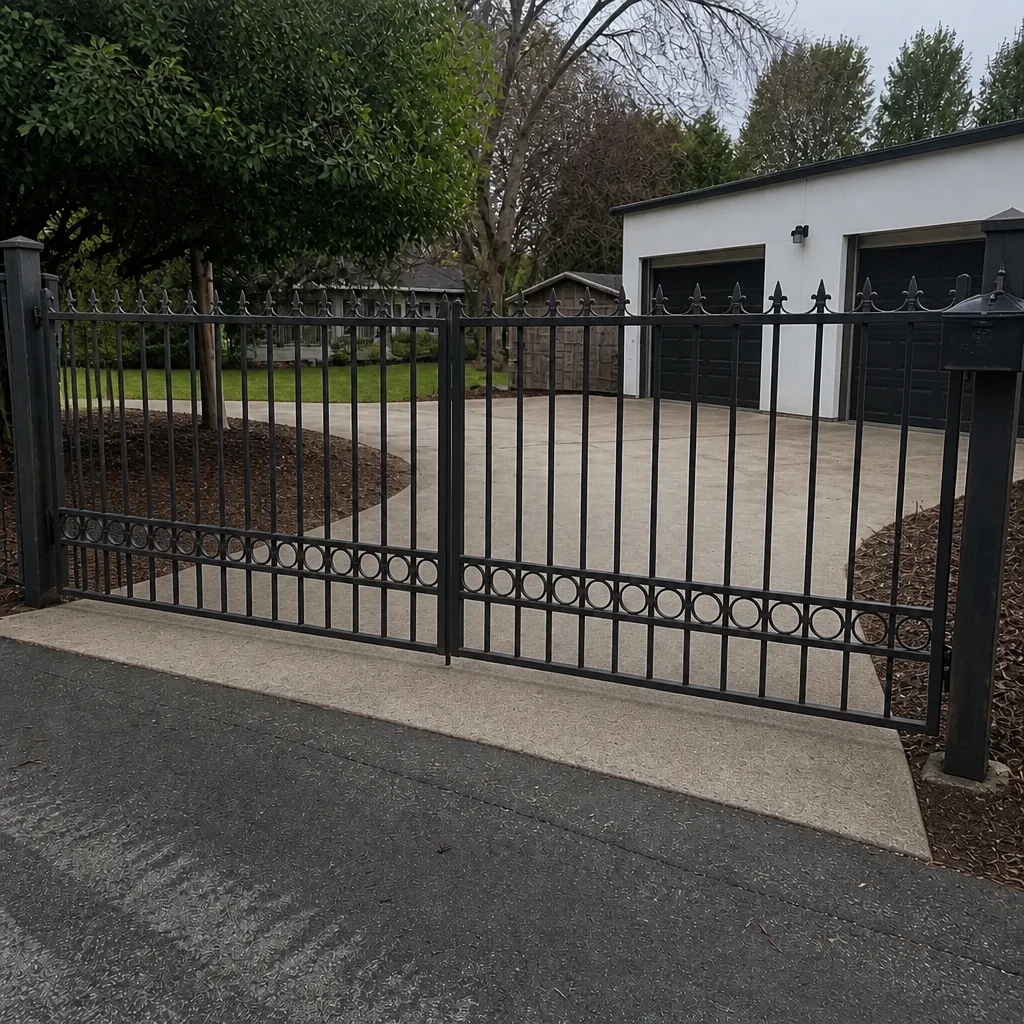 After
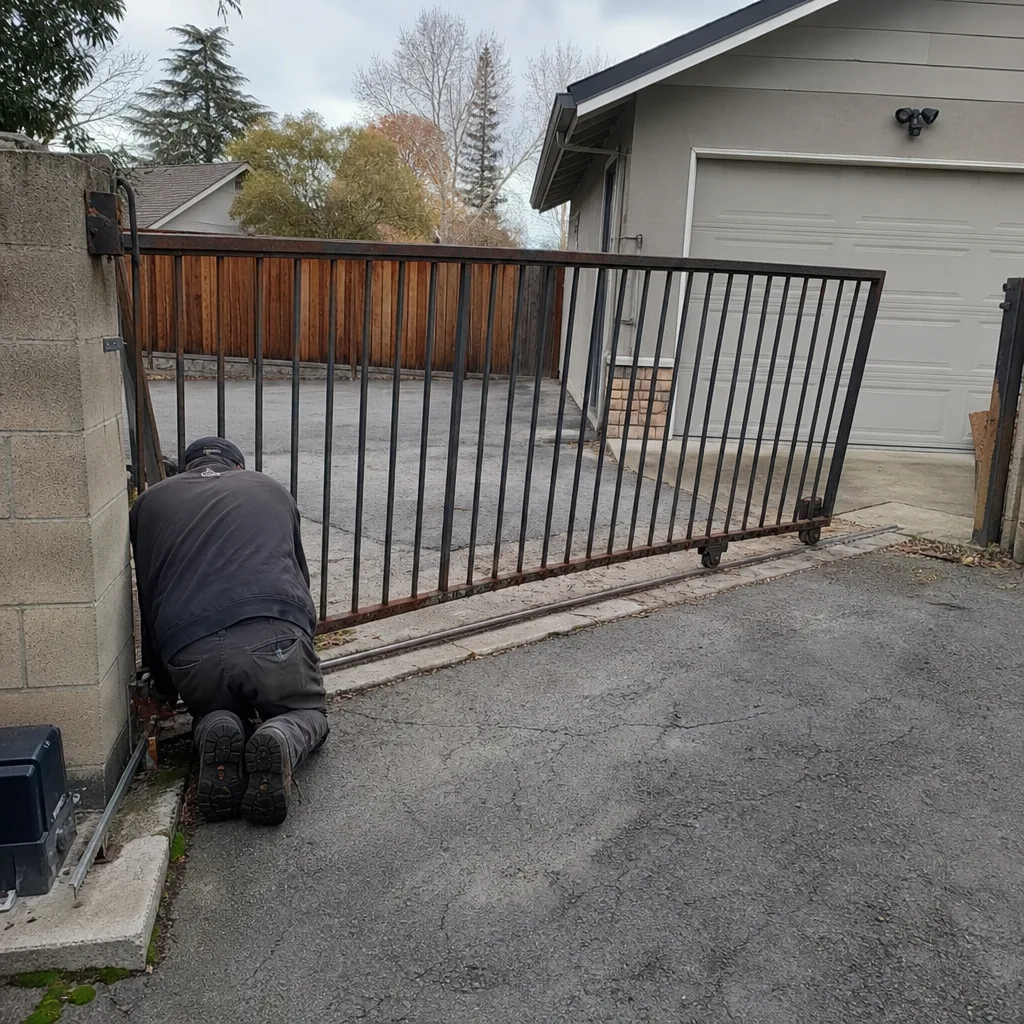 Before
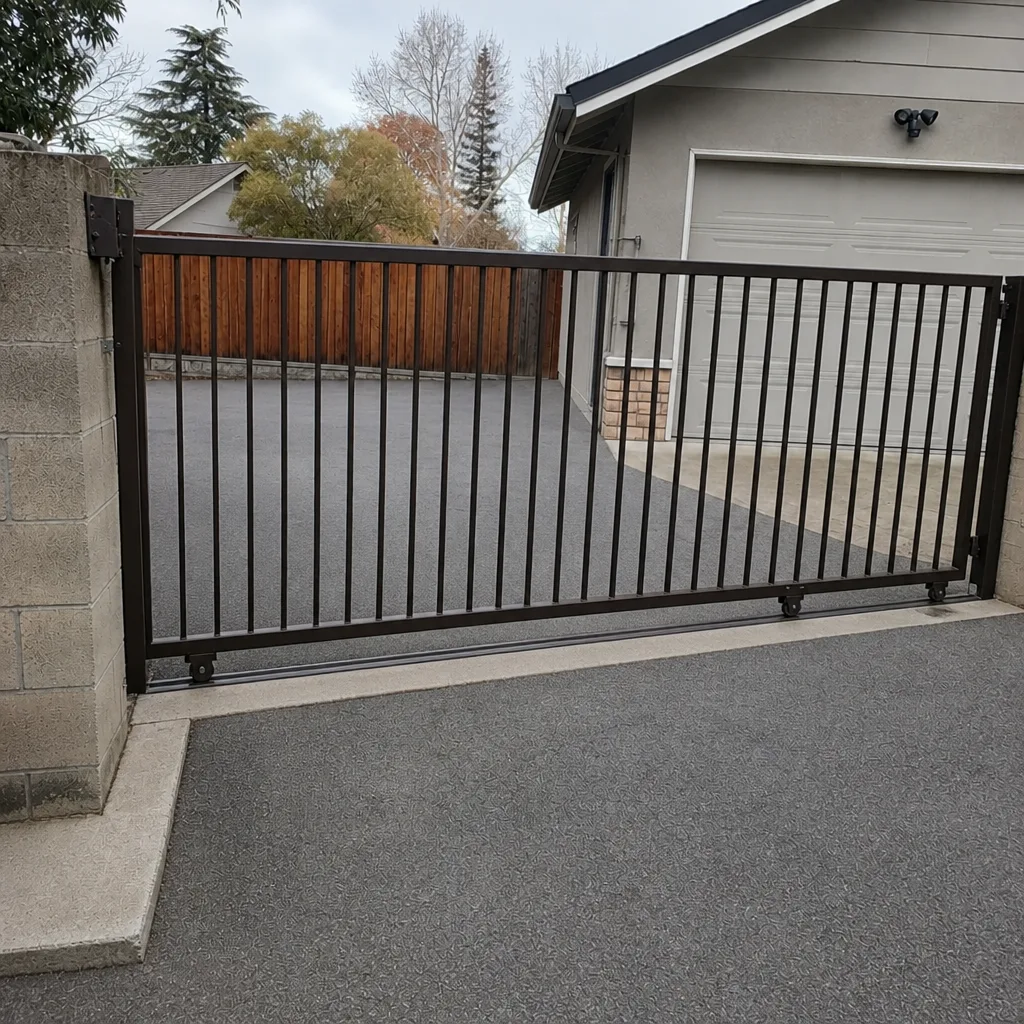 After
When to Call a Professional
Call a professional when the repair involves stored spring tension, any work inside the operator enclosure, limit switch calibration, rack or drive gear replacement, control board diagnosis, or a safety circuit that isn’t responding. Call when the gate jerks, slams, reverses unexpectedly, or makes a new sound while moving. Call when you’ve tried the simple fixes and the symptom persists, because a gate that doesn’t respond to basic troubleshooting is a gate with a problem you haven’t identified yet. In Carmichael, Gate Repair Carmichael offers free estimates. If your gate is misbehaving, call (877) 752-3866. We answer 24/7. Fast dispatch from 7am to 7pm, Sunday through Friday.
Frequently Asked Questions
A homeowner with the manufacturer’s manual and no stored energy involved can sometimes adjust a simple mechanical limit switch, but on most modern operators the limit settings are electronic and tied to the board’s programming. A wrong adjustment on a FAAC or LiftMaster unit leaves the gate under-traveling or over-traveling, which damages the operator and the structure over time. For most Carmichael homeowners, this is a job where a wrong result costs more than a professional adjustment.
The most common mistake is opening the operator enclosure and moving or re-seating the control board without first recording the diagnostic codes. The codes often identify the failed part, and once they’re cleared, the technician has to work backward from symptoms. That turns a quick diagnosis into a longer one.
Carmichael’s dry season contributes to track debris and dust buildup on slide gates, which accelerates wheel and gear wear if the track isn’t kept clean. The summer heat also raises temperatures inside operator enclosures, which shortens board life if vents are clogged. These are local factors we address on most service visits.
Turning off the power removes the immediate electrical risk but not the stored energy in a spring or the weight of the gate itself. A heavy gate leaf that’s been released from its operator can move faster than expected. Any job involving a spring, a counterweight, or the gate’s support while it’s disconnected from the operator is a job for someone who has done it before.
If the gate continues moving when it meets resistance, doesn’t reverse reliably, or has a photo eye that’s been bypassed or misaligned, it’s a safety hazard. Block the gate open or disable it at the operator so it can’t cycle, and call for service. A gate that cannot be secured should be the reason for the call, not a reason to delay it.
Before you call, write down the operator brand and model if you can, note what the gate is doing that it shouldn’t, and listen for where the sound is coming from. That’s useful information for the technician. Then call gate repair at (877) 752-3866 for a free estimate. We are a dedicated gate specialist, not a general contractor, and we handle both electric gate repair and new installation when the time comes.
The Bottom Line
The DIY versus professional gate repair decision isn’t about your skill level. It’s about whether the repair touches stored energy, electrical components, or safety systems. Simple maintenance is yours to handle: photo eye alignment, remote programming, lubrication, and track cleaning. Limit switches, racks, control boards, and springs belong to a gate specialist who knows the specific brand in front of them. In Carmichael, we see the full range of operators and we know which failures escalate when worked on incorrectly. For everything else, call (877) 752-3866. We answer 24/7. Fast dispatch from 7am to 7pm, Sunday through Friday.
Written by the team at Gate Repair Carmichael, serving Carmichael since 2014.