
Last updated November 4, 2026
 Wrought iron
 Wood & steel frame
 Farm & ranch
 Sliding driveway gates
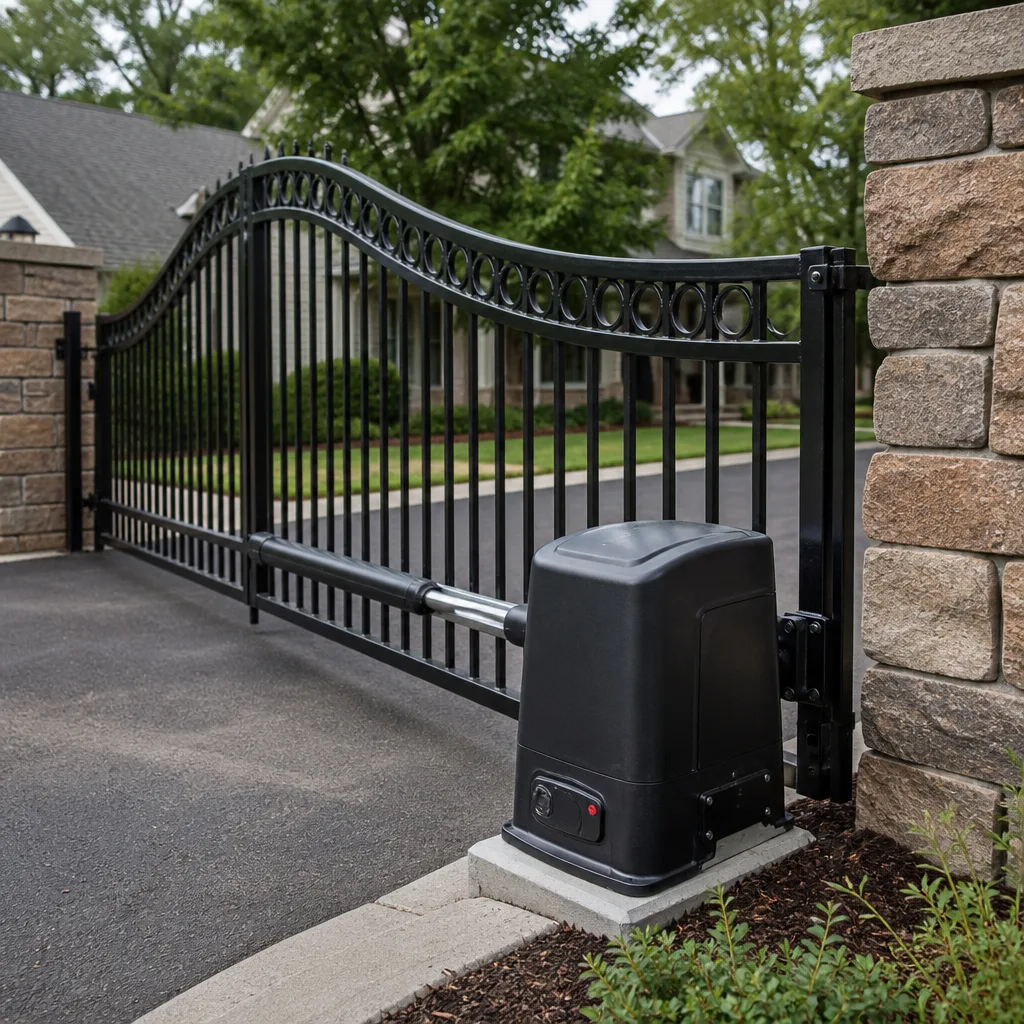 LiftMaster operators
Free on-site gate assessment - hinges, posts, and your LiftMaster or Nice gate operator checked before anything is quoted
The assessment is free and the quote is the invoice.
Get your free estimateGate Repair Maintenance Schedule: What to Do and When
The number one maintenance mistake gate owners make isn’t skipping maintenance entirely. It’s lubricating the wrong components with the wrong product and accelerating the wear they were trying to prevent. A can of WD-40 on a gate hinge feels productive, but it actually strips away the heavier grease that was doing the real work. This guide gives you a practical, month-by-month maintenance schedule built for how gates actually wear in Carmichael’s climate: dry, hot summers followed by mild, damp winters. You’ll learn which tasks matter, which products belong where, and how to spot a failing component before it strands you outside your own driveway.
Quick Answer
A gate maintenance schedule for Carmichael homes breaks into seasonal checks: inspect hinges and welds each spring, clean and lubricate the track monthly during dry summer months, test the battery backup every 90 days, and before winter rains arrive, verify all seals, wiring connections, and safety sensors. The most important routine chores are monthly visual inspections and correct lubrication with the right product for each component. If the gate moves slowly, groans, or reverses unexpectedly, stop using it and call a gate specialist.
Styles & brands we work with
- Wrought iron
- Wood & steel frame
- Farm & ranch
- Sliding driveway gates
- LiftMaster operators
Table of Contents
- Monthly Inspections: The 10-Minute Walk-Around
- Lubrication: Which Products Go Where and Why WD-40 Is Wrong
- Seasonal Schedule: Carmichael’s Dry Summers and Mild Wet Winters
- Battery Backup Testing: Testing Under Load, Not Just at Rest
- Hinge Inspection: Welded vs. Pinned and What Hairline Cracking Looks Like
- Keeping a Maintenance Log: Why It Saves You Money
- Common Mistakes to Avoid
- When to Call a Professional
Monthly Inspections: The 10-Minute Walk-Around
Most gate failures give you weeks of warning before they become emergencies. A monthly walk-around catches those warnings. Here in Carmichael, where summer dust settles into every crevice and winter rain finds every unprotected wire, a consistent visual check is the cheapest maintenance you’ll ever do.
Here’s the monthly routine we recommend, in order:
- Watch the full open-and-close cycle. Stand where you can see the entire gate move. Listen for grinding, squealing, or a change in pitch from the motor. A healthy gate sounds consistent. A gate that sounds different from last month is telling you something.
- Check the track for debris. Slide gates accumulate leaves, gravel, and dirt in Carmichael’s dry season. Even a small pebble in the track forces the motor to work harder, which shortens its life.
- Inspect the wheels and rollers. Look for flat spots, wobble, or uneven wear. Rollers are wear items. Replace them before they chew up the track.
- Check the chain or belt tension. On slide gates, the chain should have slight give but not sag. Too tight wears the sprocket. Too loose causes jerky movement.
- Test the safety sensors. Wave your hand in front of the photo eye while the gate closes. It should stop and reverse immediately. If it doesn’t, that’s a same-day repair priority, not a next-month item.
- Look at the control board housing. Check for ants, spiders, or moisture. Carmichael’s dry heat drives insects into electronics boxes. Ants in a control board are a surprisingly common cause of phantom gate failures.
None of these steps requires tools. Ten minutes a month prevents most breakdowns and gives you a baseline for what “normal” looks like on your specific gate. If something changes, you’ll notice it early.
Lubrication: Which Products Go Where and Why WD-40 Is Wrong
Here’s the sentence that saves more gates than any other advice we give: WD-40 is not a lubricant. It’s a solvent and water displacer. On a gate hinge, it washes out the grease that was doing the actual lubricating and then evaporates, leaving the metal drier than before. Within weeks, you get metal-on-metal wear and a squeak that’s worse than when you started.
The right lubricant depends on the component:
- Hinges (pinned or welded): Use a heavy lithium grease or a dedicated gate hinge grease. Apply it to the pin, not the plate. Work the gate back and forth a few times to distribute it. Twice a year is enough for most Carmichael gates, more often if the gate is exposed to full sun all day.
- Track and rollers: Use a dry silicone spray or a graphite-based lubricant. These don’t attract dust the way oil does, which matters during Carmichael’s dusty summer months. Wet lubricants on a track turn into grinding paste within weeks.
- Chain drives: Use a motorcycle chain lube or a light machine oil designed for chains. Apply sparingly. Excess oil flings onto the gate and attracts dirt.
- Motor internals: Don’t lubricate these yourself. Most modern gate operators from brands like LiftMaster and FAAC have sealed gearboxes. Opening them voids warranties and often introduces more problems than it solves.
- Locks and latches: A graphite lock lubricant works well. Avoid oil-based products that gum up in cold weather and collect dust in summer.
- Clean the track monthly. Carmichael’s dry season builds up dust and debris fast. A leaf blower works, but a quick brush and wipe is better.
- Check for UV damage on plastic components. Control board covers, sensor housings, and wire insulation all degrade faster in sustained heat. Look for cracking or brittleness.
- Verify the motor’s ventilation. Gate operators need airflow. Trim back any vegetation growing around the motor housing. A motor that runs hot in July shortens its own life.
- Test the auto-close function after heat waves. Extreme heat can cause thermal expansion that affects sensor alignment. After a stretch of 100-degree days, do a full sensor test.
- Inspect all electrical connections and conduit. Carmichael’s winter rains find any exposed wire. Look for cracked conduit, loose junction box covers, or corroded terminals.
- Check gate seals and weather stripping at the base. Water that pools at the bottom of a gate panel accelerates rust on steel gates. Make sure water drains away, not into, the gate frame.
- Test the battery backup more frequently. Power outages are more common during winter storms. A battery that worked in September may not hold a charge in January.
- Clean and re-lubricate after the first big rain. Rain washes away some lubricant and brings dust into the track. A post-rain cleaning prevents grit from wearing down rollers.
- Cut power to the operator. Use the disconnect switch or breaker. Don’t just unplug it if that’s not how your system is wired.
- Run a complete open-and-close cycle. Watch the gate move. Does it move at full speed or does it crawl? A healthy battery should power the gate at close to normal speed.
- Run a second cycle immediately. This is the part most people skip. A battery that barely survives one cycle and fails on the second is a battery that will fail during a real outage.
- Check the battery terminals. Look for corrosion, loose connections, or bulging in the battery case. Mighty Mule and Ghost Controls systems often have battery terminals that loosen over time from vibration.
- Restore power and verify the battery recharges. After restoring power, check that the operator indicates charging. If the battery doesn’t recharge, the problem is in the charging circuit, not the battery itself.
- Elongated holes around the pin. The hole the pin passes through slowly becomes oval-shaped. You’ll see movement when you push the gate side to side.
- Pin wear. The pin itself develops grooves or flat spots. Hold a flashlight at a low angle and rotate the pin. Wear is easy to spot this way.
- Gate sag. The latch end of the gate drops slightly. Measure the gap between the gate and the post at the latch when the gate is closed. Check it monthly. Any increase means something is wearing.
- Hairline cracking around the weld bead. This starts as a thin, dark line running along the edge of the weld. In Carmichael’s dry climate, a crack that starts in September can become a full hinge failure by spring.
- Rust staining around the weld. A crack lets moisture in, and the rust line follows the crack. If you see any rust-colored staining on or near a weld, inspect it closely.
- Paint flaking in a straight line. When the metal underneath flexes, the paint cracks first. A straight paint crack across a weld is a warning sign.
- Date and what you did. “March 12: cleaned track, lubricated rollers with silicone spray.”
- Products used. Brand and type. If a problem develops, the technician knows what’s been applied and can rule out product incompatibility.
- Observations. “Gate sounded slightly louder than usual on open.” Small notes like this are how problems get caught early.
- Battery test results. “January 3: battery held two cycles at near-normal speed.” Next test in 90 days.
- Parts replaced. Include the date, the part, and where it was purchased if you bought it yourself.
- Using WD-40 on hinges. It strips the existing grease and evaporates, leaving the hinge drier than before. Use a lithium grease or silicone-based product instead.
- Ignoring a slow gate. A gate that moves slower than it used to is not “just getting old.” It’s a motor working against increasing resistance. Something is binding, and it’s getting worse.
- Testing the battery with a voltmeter only. A battery can read full voltage at rest and fail instantly under load. Test it by running the gate through two complete cycles on battery power.
- Spraying lubricant into the motor housing. Most modern gate operators have sealed gearboxes. Lubricant on electrical components attracts dust and creates short circuits. If the motor is noisy, the problem is usually mechanical and needs a technician.
- Propping a gate open with a rock or block. This puts uneven stress on the hinges and the operator. If the gate won’t stay open, fix the operator or the hinge, don’t improvise a prop.
- Waiting to fix a crack in a weld. Hairline cracks in welded hinges go from cosmetic to catastrophic fast. A gate that drops can injure someone. If you see a crack, stop using the gate and get it repaired.
- Painting over rust without treating it. Rust never stops on its own. Painting over it hides the problem while the metal continues to degrade underneath. Treat rust, then paint.
The key rule: wet lubricants where parts slide slowly under heavy load, dry lubricants where parts move quickly or are exposed to dust. If you’re unsure which product your gate needs, take a photo of the component and bring it to a hardware store, or just call us. We’d rather answer a lubrication question than come out to replace a hinge that was sprayed with the wrong product for years.
Seasonal Schedule: Carmichael’s Dry Summers and Mild Wet Winters
Carmichael doesn’t have harsh winters, but it does have two distinct seasons that stress gates differently. Dry summers bake lubricants and crack plastics. Mild wet winters test seals, wiring, and electrical connections. Your maintenance schedule should follow those seasonal rhythms rather than a generic “spring and fall” checklist written for another climate.
Summer (June through October): Dust and Heat
Winter (November through March): Rain and Mild Cold
If you only do two seasonal tasks per year, make them these: clean and lubricate the track before summer, and inspect all wiring connections before winter. Those two tasks prevent the majority of avoidable gate repairs we see in Carmichael.
Battery Backup Testing: Testing Under Load, Not Just at Rest
A battery backup is only useful if it actually holds a charge when the gate needs to move. The most common false confidence we see comes from testing a battery with a voltmeter while it’s sitting idle. A battery can read 12.8 volts at rest and still collapse to nothing the moment the motor draws current.
Here’s the correct testing protocol:
Test every 90 days as a baseline. Test more frequently in winter, before storm season, and any time you’ve had a power outage longer than a few hours. Batteries in Carmichael’s heat degrade faster than the manufacturer’s rated lifespan. If your battery is older than three years, test it monthly and budget for replacement.
Hinge Inspection: Welded vs. Pinned and What Hairline Cracking Looks Like
Hinges are the most common mechanical failure point on a gate, and they fail in different ways depending on how they were built. Knowing which type you have changes what to look for.
Pinned Hinges
Pinned hinges have a removable or fixed pin that the gate pivots on. Wear shows up as:
Welded Hinges
Welded hinges are integral to the gate frame or post. They don’t develop elongated holes, but they have their own failure mode:
Welded hinge failures are more dangerous than pinned hinge failures because they happen suddenly and can drop the entire gate. If you spot a hairline crack in a welded hinge, stop using the gate and call a gate specialist. That’s not a “watch and see” situation. That’s a same-week repair.
Most hinge failures we see in Carmichael could have been caught months earlier with a monthly visual check. Ten minutes with a flashlight saves hundreds of dollars and a gate falling on a car or a person.
Keeping a Maintenance Log: Why It Saves You Money
A maintenance log is the single most underrated tool in gate ownership. When a gate breaks, the technician’s first question is always the same: “What’s been done recently?” Most homeowners can’t answer that. They remember they did “something” a few months ago but not what, with what product, or whether it helped.
Keep a simple log. A notebook in the garage or a note on your phone works fine. Record:
This log does two things. It gives a technician immediate context instead of making them diagnose from scratch, which saves labor time. And it protects you from paying for diagnosis of something you already fixed. If you call us out because the gate is making a noise, and you can tell us exactly what you lubricated and when, we can rule out a dozen possibilities before we even arrive.
A maintenance log also tells you when a failure is abnormal. If you replaced a roller six months ago and it’s worn again, that’s not a roller problem. That’s a track alignment problem. Without the log, you’d replace the roller again and wonder why it keeps happening.
Common Mistakes to Avoid
When to Call a Professional
Some maintenance tasks are homeowner territory. Others cross into work that requires a trained eye and the right tools. If your gate makes a sudden loud noise and stops working, that’s a call for a gate specialist. If the motor runs but the gate doesn’t move, the problem is inside the operator and opening it yourself can void the warranty. If you see a crack in a weld, stop using the gate immediately. That’s same-week repair territory, not a weekend project. If you see exposed or damaged wiring, that’s an electrical hazard. Don’t touch it. Cut power to the operator if you can do so safely and call a professional.
Gate Repair Carmichael offers free estimates in Carmichael. Call (877) 752-3866 and we’ll send someone to look at your gate. We answer 24/7. Fast dispatch from 7am to 7pm, Sunday through Friday.
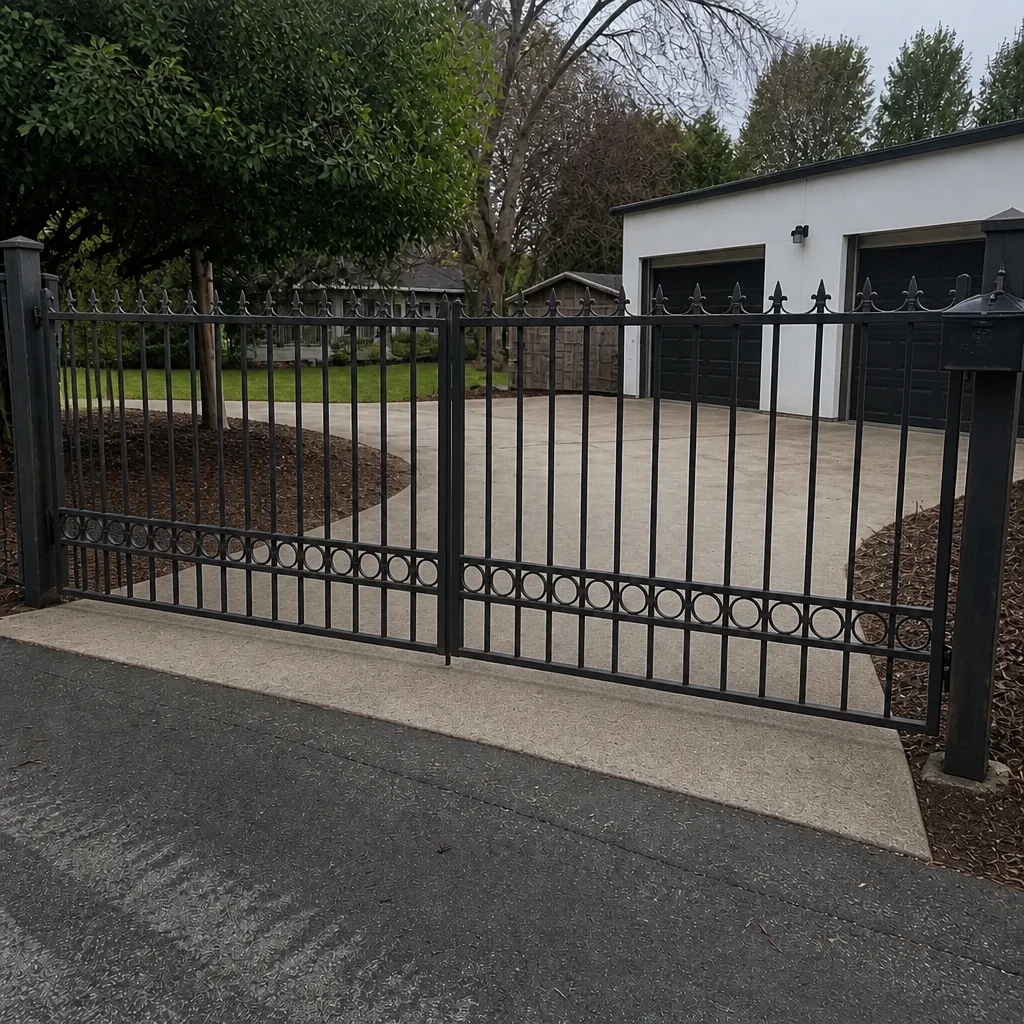
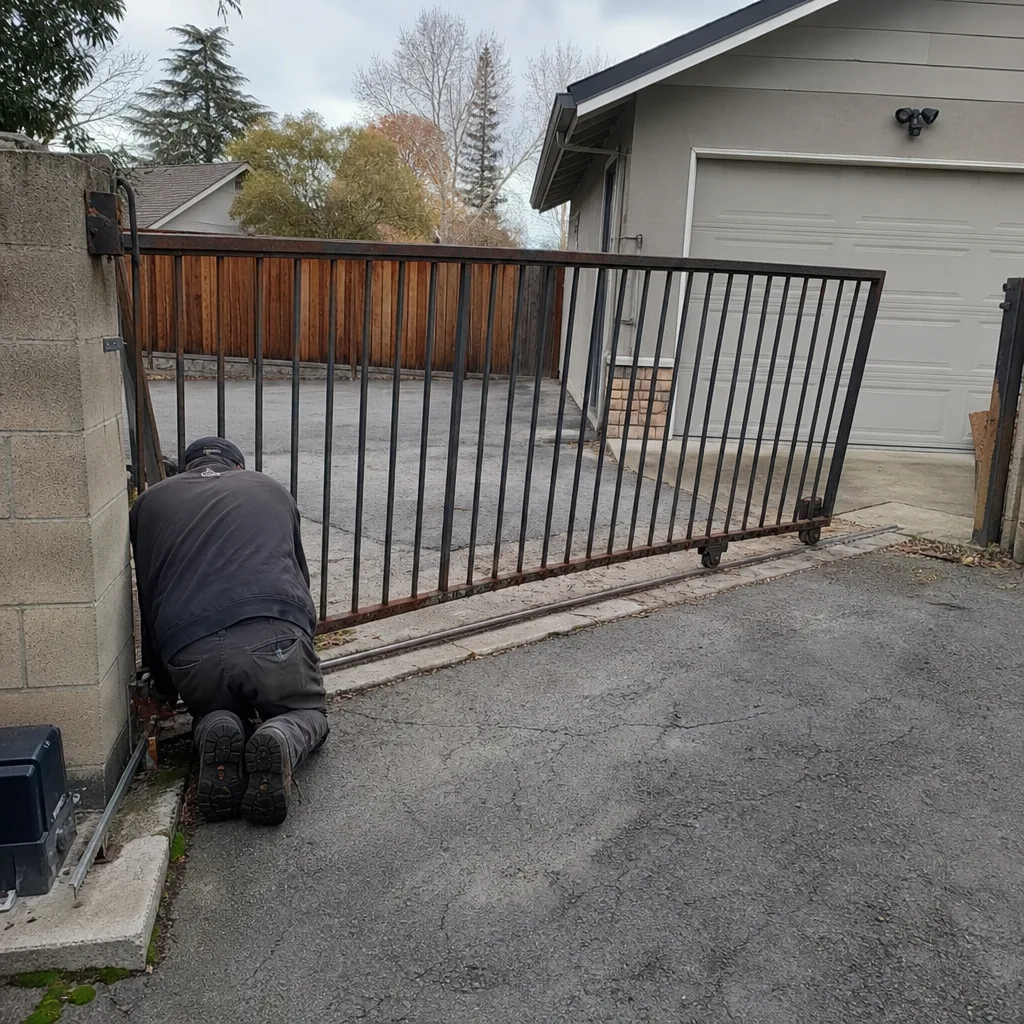
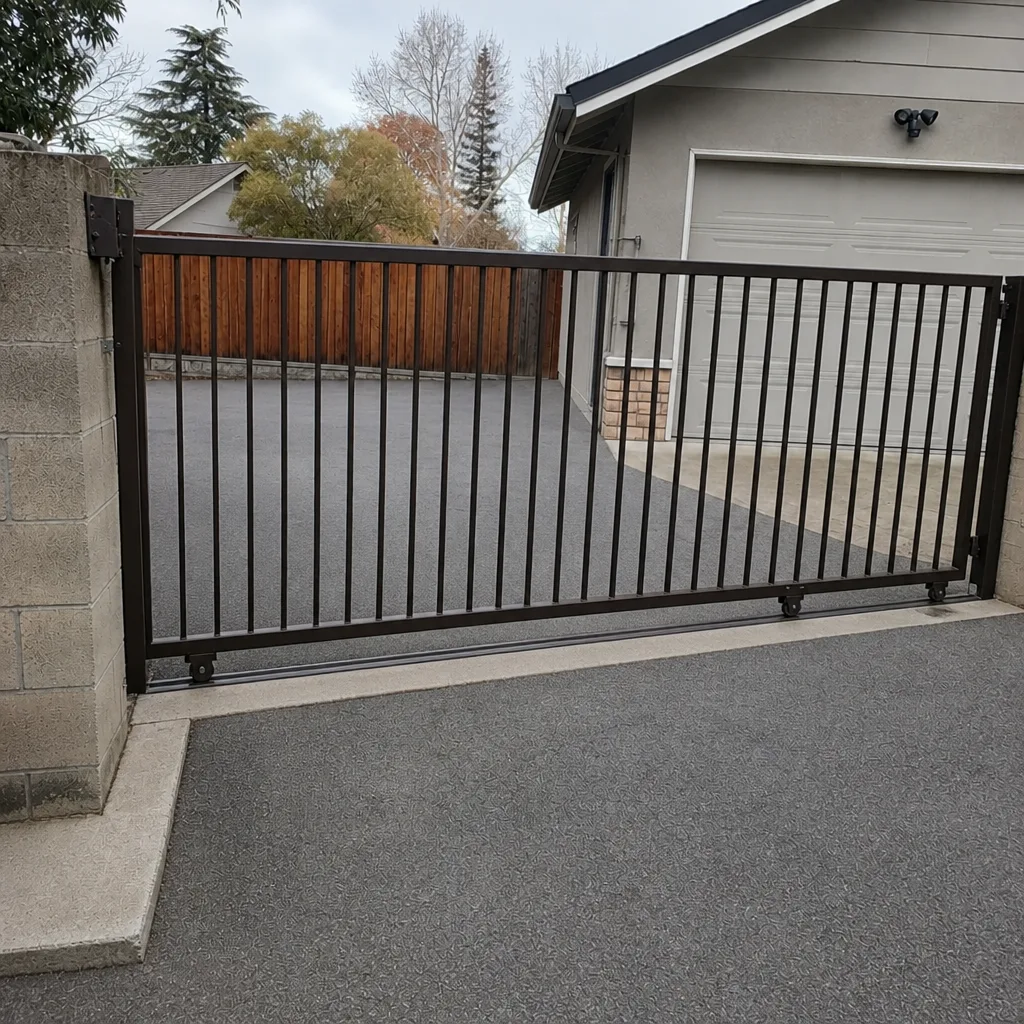
See the difference
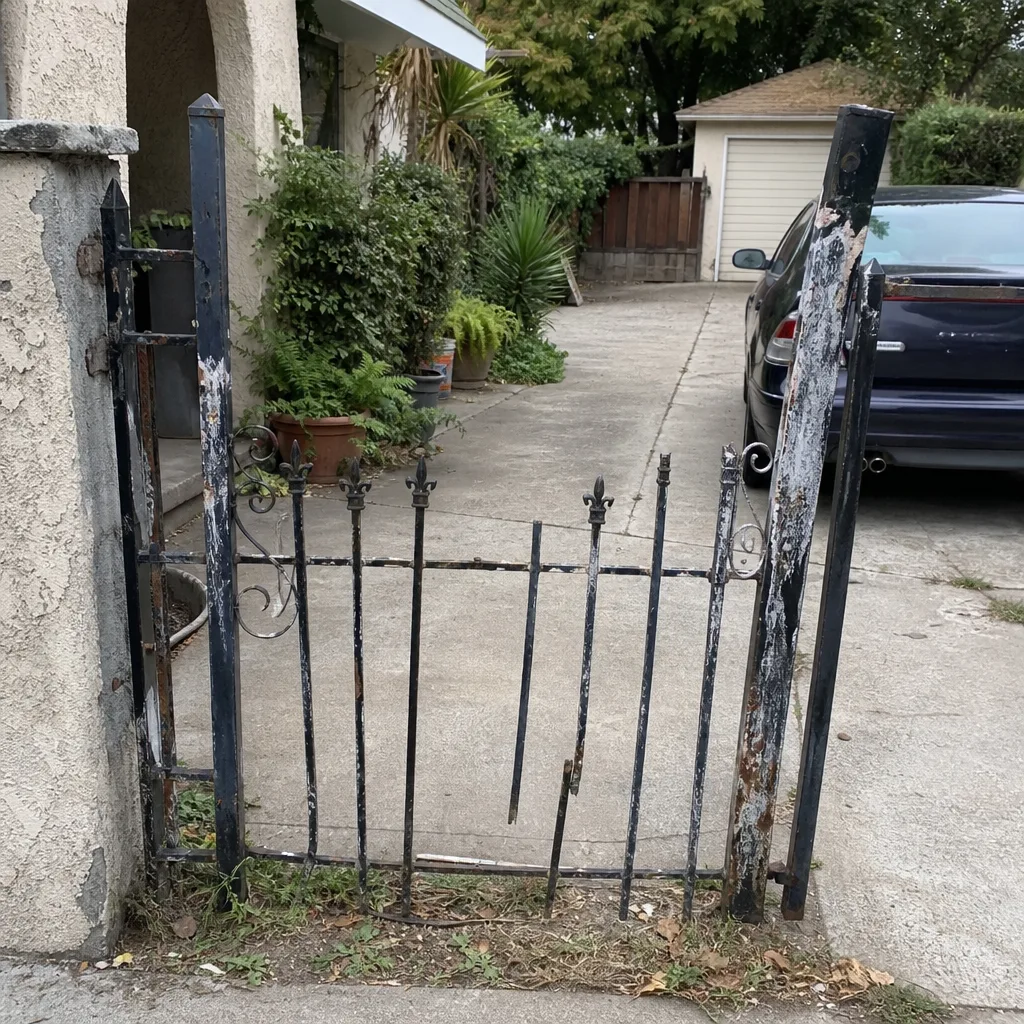 Before
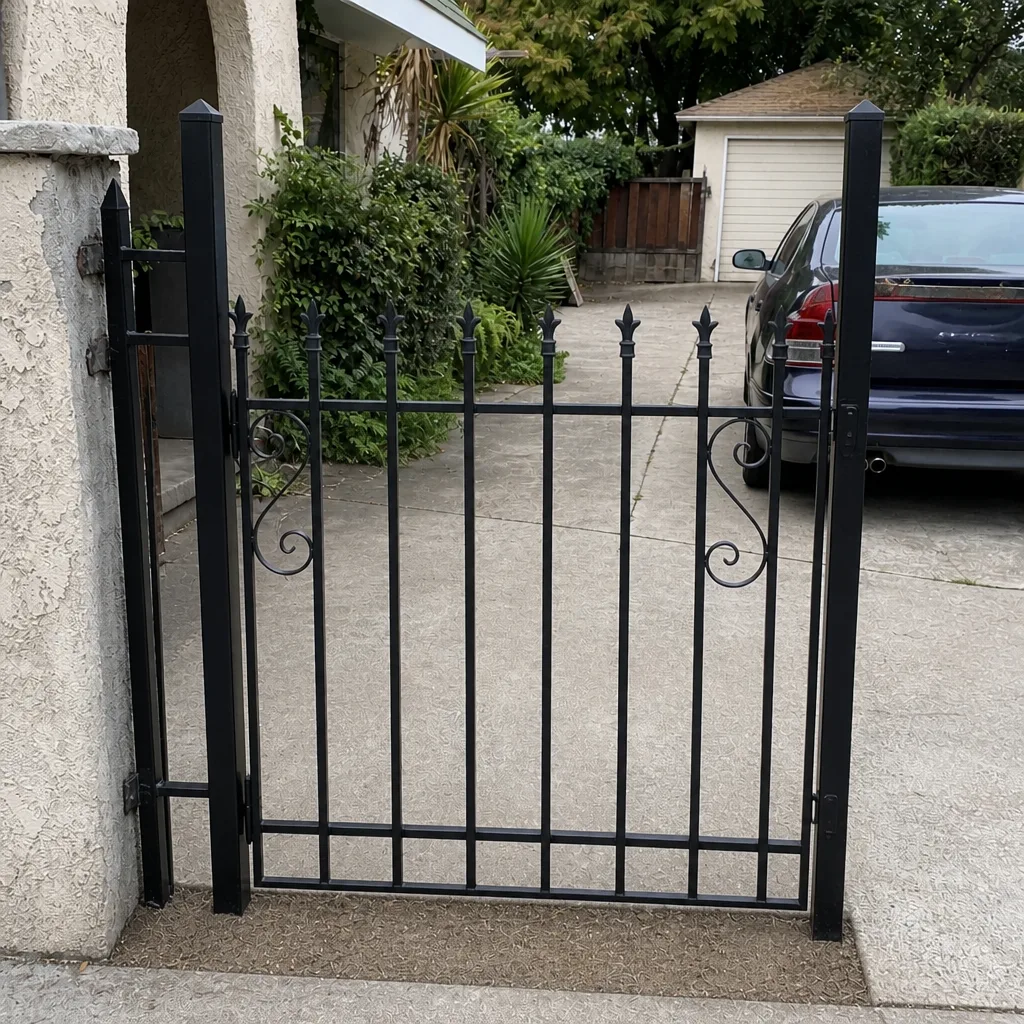 After
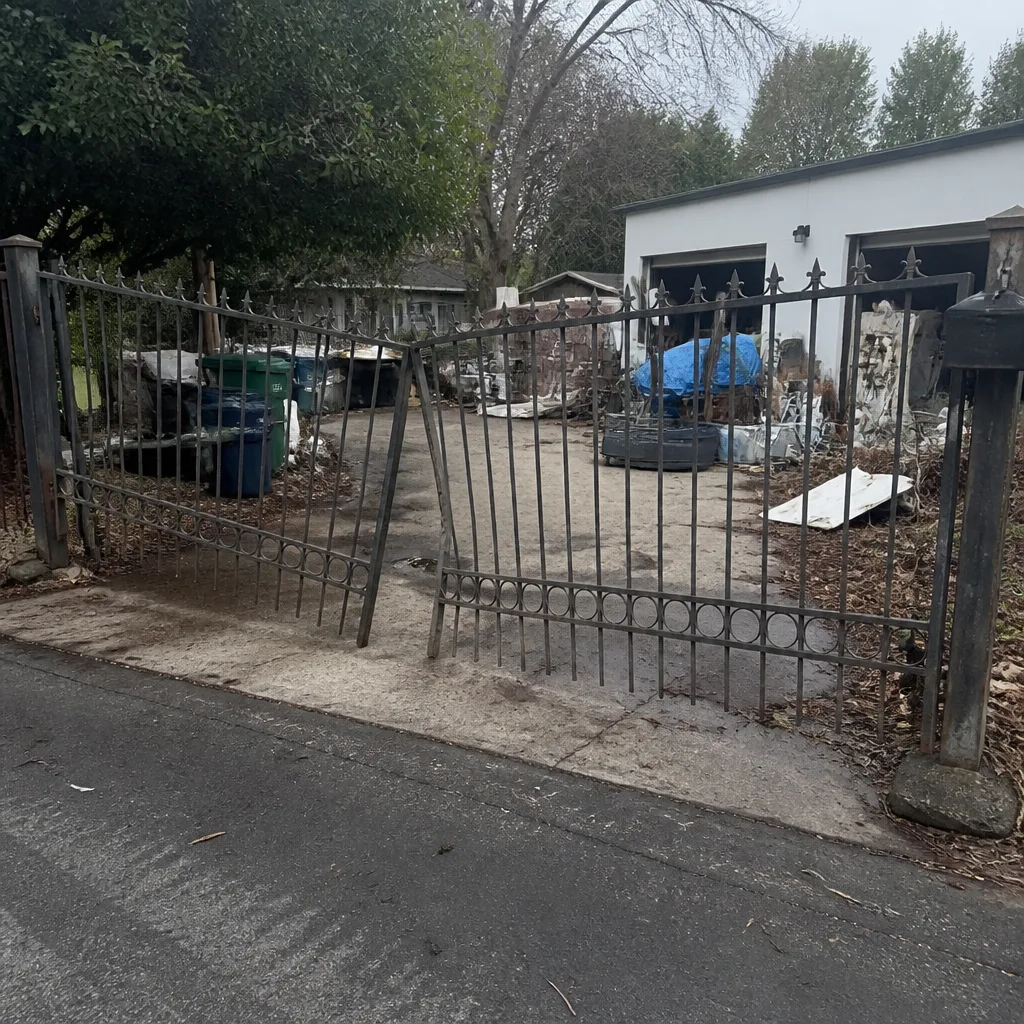 Before
 After
 Before
 After
Frequently Asked Questions
Lubricate hinges twice a year, and clean and lubricate the track monthly during Carmichael’s dry summer season from June through October. Dust accumulation is the bigger issue here, so dry lubricants on the track matter more than heavy grease.
A heavy lithium grease or a dedicated gate hinge grease is the right product for pinned and welded hinges. Avoid WD-40 on hinges because it strips the existing grease and accelerates wear.
Cut power to the operator, then run the gate through two complete open-and-close cycles on battery power. If the gate moves at near-normal speed on both cycles, the battery is healthy. If it crawls or fails on the second cycle, replace the battery.
Check for gate sag at the latch end, elongated holes around the hinge pins, or hairline cracks and rust staining around welded hinges. Any of these means the hinge needs repair or replacement. A crack in a weld means stop using the gate and call a professional.
Inspect all electrical connections and conduit for cracks or exposed wire, check that water drains away from the gate base, and test the battery backup. Rain finds every unprotected wire, and water pooling at the gate base accelerates rust.
Most inspection and cleaning tasks are safe for homeowners. Lubricating the motor internals, repairing welds, and working on electrical components are not. If you’re unsure whether a task is safe, call a gate specialist before you start. The price of a service call is less than the cost of a hospital visit or a fried control board.
The Bottom Line
Gate maintenance in Carmichael isn’t a once-a-year chore. It’s a monthly habit of looking, listening, and catching problems before they become breakdowns. The schedule that works here is built around Carmichael’s two seasons: clean and lubricate during the dry summer, inspect electrical and seals before the winter rains. Use the right lubricant for each component, test the battery under load, and keep a simple log of everything you do. Most gate failures give weeks of warning. The homeowners who catch them are the ones who look at their gate every month, not the ones who wait for the annual reminder to do something. If you ever find something that doesn’t look right, call Gate Repair Carmichael at (877) 752-3866 for a free estimate. We’re a dedicated gate repair specialist in Carmichael, and we handle electric gate repair on nine major brands including LiftMaster, FAAC, Elite, and Mighty Mule. We answer 24/7. Fast dispatch from 7am to 7pm, Sunday through Friday.
Written by the team at Gate Repair Carmichael, serving Carmichael since 2014.