
Last updated November 4, 2026
 Wrought iron
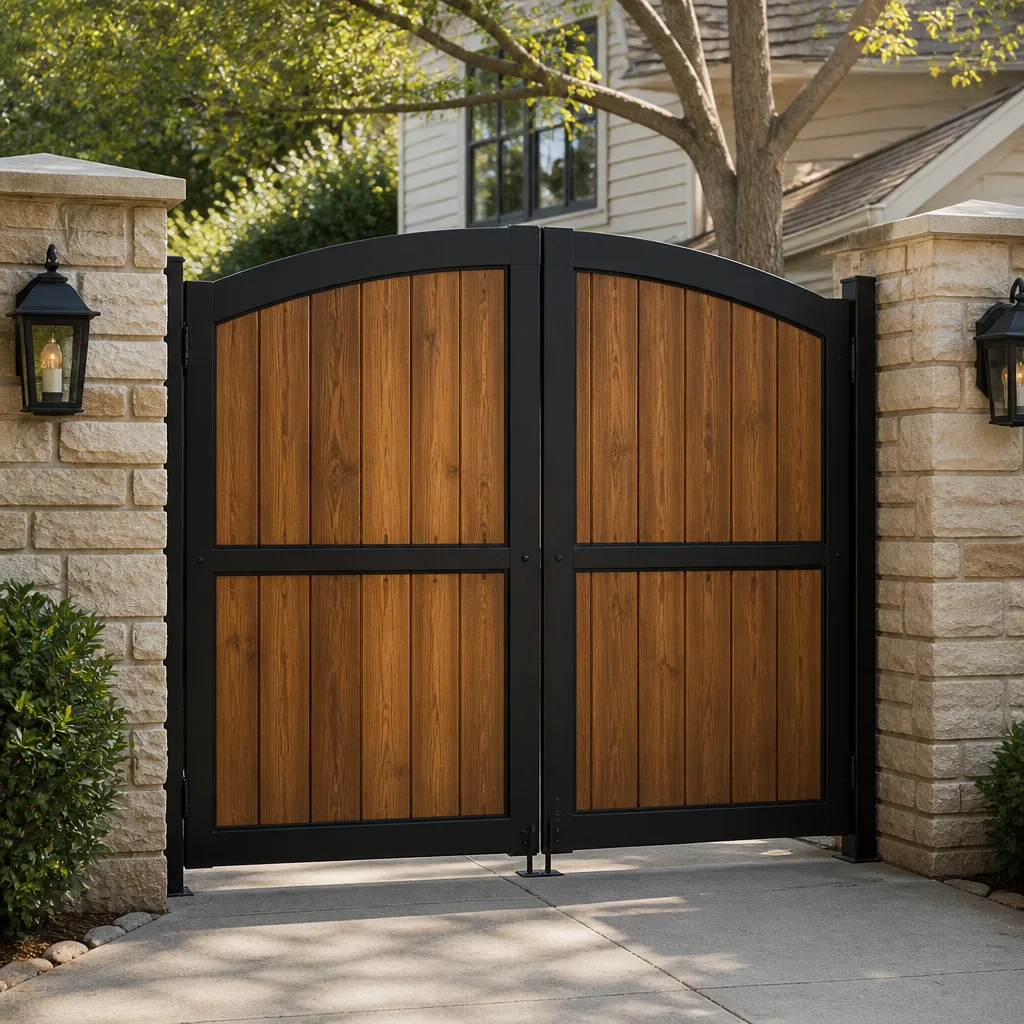 Wood & steel frame
 Farm & ranch
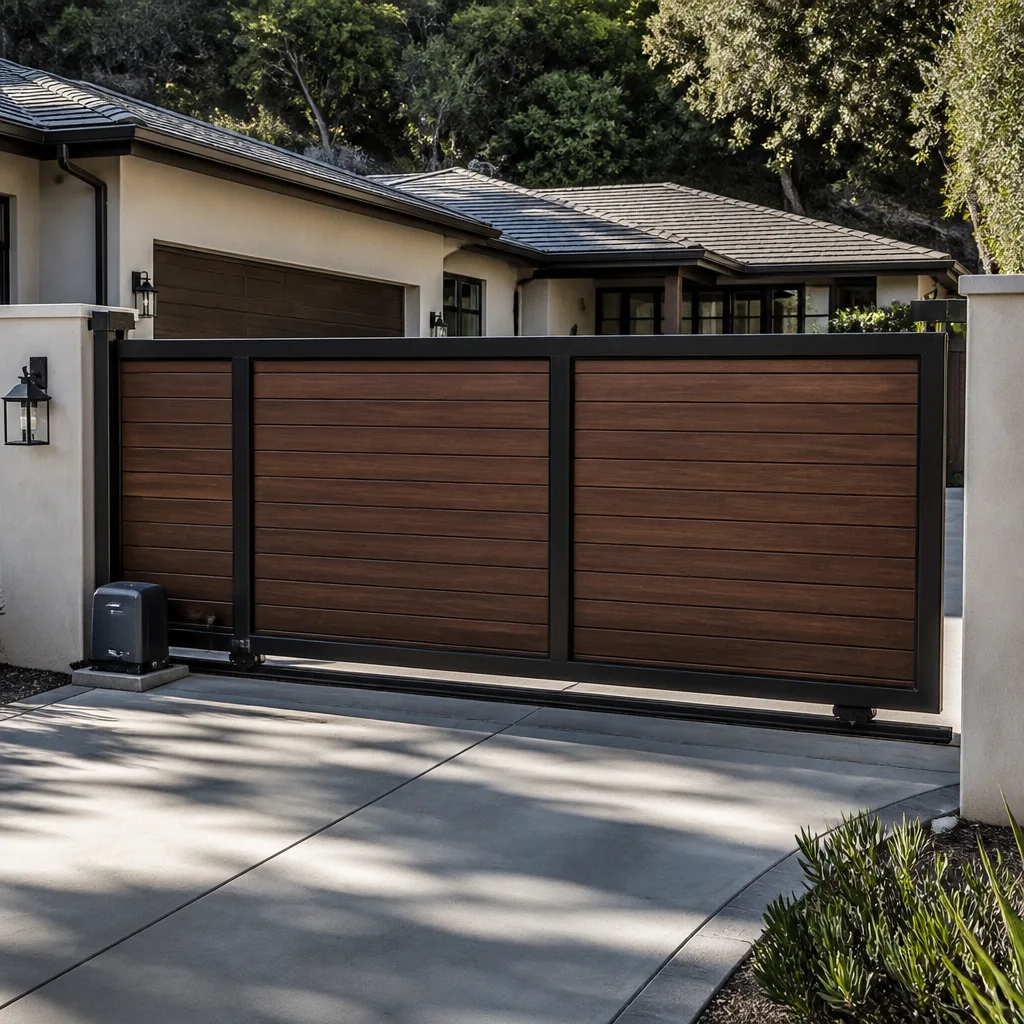 Sliding driveway gates
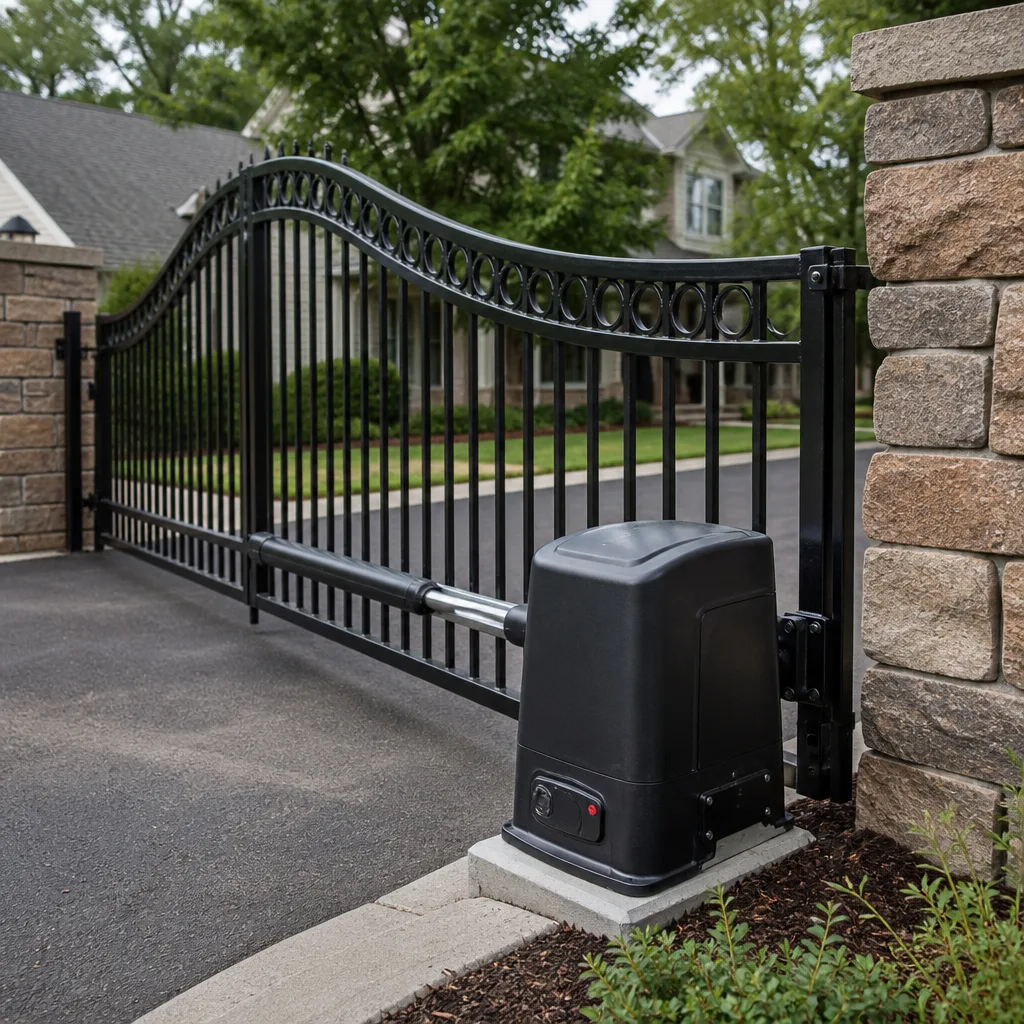 LiftMaster operators
Free on-site gate assessment - hinges, posts, and your LiftMaster or Nice gate operator checked before anything is quoted
The assessment is free and the quote is the invoice.
Get your free estimateGate Repair Troubleshooting in Carmichael: Common Problems and How to Fix Them
A gate that “won’t open” is a symptom, not a diagnosis. Calling a technician without knowing whether the failure is electrical, mechanical, or in the control board is why some Carmichael homeowners end up paying for the wrong repair twice. The truth is most gate failures fall into one of six root causes: power supply, limit switches, photo eyes, loop detectors, mechanical wear, or control board failure. If you can read your gate’s behavior accurately before you call, you’ll save money, avoid misdiagnosis, and likely fix simple problems yourself in under ten minutes. This guide walks you through exactly how to do that, written from years of working on gates across Carmichael.
Quick Answer
Most gate problems in Carmichael trace back to one of six root causes: lost power, drifted limit switches, misaligned photo eyes, failed loop detectors, worn mechanical parts, or a failing control board. Start by checking whether the gate has power and whether anything is physically blocking the track. About half of the calls we get involve a gate that can be fixed in minutes with a reset or a visual inspection before any parts need replacing.
Styles & brands we work with
- Wrought iron
- Wood & steel frame
- Farm & ranch
- Sliding driveway gates
- LiftMaster operators
Table of Contents
- How to Diagnose a Gate With No Power
- Limit Switch Problems: Why Your Gate Stops Short or Slams Shut
- Photo Eye and Safety Sensor Issues in Carmichael Heat
- Loop Detector Failures: When the Gate Ignores Your Car
- Mechanical Wear: Hinges, Rollers, and Track Problems
- Control Board Failure: The Most Misdiagnosed Problem
- How to Manually Release a Swing Gate vs. a Slide Gate
- Which Symptoms Are Safe to Investigate (and Which Aren’t)
How to Diagnose a Gate With No Power
This is the most common call we get in Carmichael, and in a meaningful number of cases the gate operator itself is completely fine. The first question is whether the gate is a swing gate or a slide gate, because the power path differs. Swing gate operators typically run on 12V or 24V DC supplied through a transformer that plugs into a standard outlet. Slide gate operators usually pull 115V AC directly from a dedicated circuit.
Here is the diagnostic sequence we follow, in order:
- Check the outlet or circuit. Many Carmichael homes have the gate operator on a GFCI circuit. A tripped GFCI in the garage or on an exterior outlet will kill the whole system. Reset it and try the gate.
- Look at the operator’s display or LED. LiftMaster and FAAC boards have status LEDs that tell you whether the board is receiving power. No light usually means no power, not a bad board.
- Check the transformer. For Mighty Mule and Ghost Controls swing operators, the transformer is the single most replaced part. If the gate was working yesterday and does nothing today, the transformer is suspect number one.
- Isolate the battery. Many systems include a backup battery. If the outlet has power but the gate only runs on battery, the charging circuit or transformer has failed.
One Carmichael-specific note: summer heat above 100°F shortens the life of transformers and batteries faster than the mild winters ever will. A transformer that sits in direct afternoon sun on a west-facing wall will fail years before one mounted in shade. If you’re replacing one, ask about relocating it.
Limit Switch Problems: Why Your Gate Stops Short or Slams Shut
Limit switches tell the operator when the gate has reached its fully open or fully closed position. When they drift or fail, you get two very specific behaviors: the gate stops partway and reverses, or it travels too far and slams against the stop. A gate that opens six inches and stops is rarely a motor problem. It is almost always a limit switch that has shifted or a control board that has lost its limit settings.
Here is how to tell the difference:
- Stops short every time, same spot: The limit switch is physically out of position or the magnet that triggers it has moved. This is a mechanical adjustment, not a board failure.
- Stops at random positions: The board is losing its limit memory, or the encoder on the motor is failing. This points to a board or motor issue.
- Slams at the end of travel: The limit is set past the physical stop, or the limit switch has failed entirely. This damages the gate, the operator arm, and eventually the motor gears.
- Opens fine, closes wrong (or vice versa): A single limit switch or limit input is failing. On linear and swing arm operators this is often a separate close-limit switch.
Adjusting limit switches is brand-specific. LiftMaster, BFT, and FAAC each have different procedures, and doing it wrong on a slide gate can send the gate through the end stop and off the track. If you are not sure which brand programming you are in, this is a good point to call a gate specialist rather than guess.
Photo Eye and Safety Sensor Issues in Carmichael Heat
Photo eyes are the small sensors mounted near the bottom of the gate opening, one on each side. They project an invisible beam. If anything breaks the beam while the gate is closing, the gate must reverse. This is a safety feature, and in Carmichael it fails in predictable ways.
The most common failure is not the sensor itself. It is alignment. Carmichael summer heat expands the metal posts and brackets that hold the photo eyes. Over repeated 100°F days, the brackets shift a few millimeters. The beam misses the receiver, and the gate behaves as if something is always in the way. It will not close, or it closes halfway and reverses.
Here is what to check before calling anyone:
- Clean the lenses. Dust, spider webs, and sprinkler spray are the top three culprits. A dry cloth fixes a surprising number of “broken” photo eyes.
- Check the alignment. Most photo eyes have a small LED that goes solid when aligned and blinks when not. Adjust the bracket until the LED changes.
- Look for shade patterns. Direct afternoon sun aimed into the receiver can blind it. A simple hood or shade made from a scrap of PVC solves this in many Carmichael yards.
- Test with an obstruction. Place a broom handle in the beam’s path and close the gate. It should reverse. If it doesn’t, the sensor circuit has failed and needs replacement.
- Broken loop wire: The wire inside the driveway saw cut has cracked or corroded. This requires re-cutting the asphalt or concrete and laying new wire, which is why it is the most expensive loop failure to fix.
- Detector board failure: The loop detector plugged into the control board stops reading the loop. This is a $100 to $300 part on most systems and is often replaceable without touching the driveway.
- Sensitivity drift: The detector is still working but its sensitivity setting has drifted, usually due to heat or age. It now ignores smaller vehicles like motorcycles or the back half of a pickup. Re-tuning the sensitivity often fixes this without parts.
- Gate hinges: On swing gates, the hinge bearings wear out, especially on heavy steel gates. The gate sags, drags on the ground, and eventually bends the operator arm or burns out the motor trying to move the extra weight.
- Rollers and wheels: Slide gates ride on steel wheels along a track. Worn wheels make a scraping or rumbling noise and cause the gate to bind. A gate that binds mid-travel burns up motors and gearboxes fast.
- Track alignment: The track itself shifts over time, especially where the driveway or soil settles. A track that is a half inch out of level makes the gate fight itself every cycle.
- Chain and sprockets: Chain-drive slide gates stretch chains and wear sprockets. A loose chain causes jerky movement. A skipping chain means the sprocket is worn to the point of failure.
- Operator arm and bushings: Swing gate arms have internal bushings that wear and cause play. You hear a knock at the start and end of travel.
- Error codes: Most modern LiftMaster and FAAC boards display a numeric code. If you have the manual, look it up. Codes point to specific circuits, which eliminates guesswork.
- Water or insect damage: Open the operator cover and look for moisture, rust trails, or ants. Ants are attracted to the warmth and will short board traces. This is a real and common failure in Carmichael yards with irrigation nearby.
- Random behavior: A gate that opens itself, closes itself, or reverses for no reason often has a failing board relay or a damaged input circuit.
- Lightning or surge damage: After a summer thunderstorm, a board that worked fine the day before and is now dead or erratic likely took a surge. Surge protection on the power feed is worth asking about for any gate in an exposed area.
- Locate the release on the operator arm or the operator housing. On most linear arm and articulated arm operators, it is a lever or a pull handle near where the arm connects to the gate.
- Disengage the release by pulling the handle or turning the key. The arm should now move freely from the gate.
- Push the gate open by hand. Move it slowly. A swing gate has momentum, and a fast push can bend the leaf or the gate post.
- When power is restored, return the release to its engaged position before running the operator. Running the operator while disengaged can damage the internal limit mechanism.
- Turn off the power to the operator first. This is not optional on a slide gate; a live operator trying to run while you release it can pull the chain or rack out of your hand.
- Locate the manual release. On most slide operators it is a keyed or lever release on the face or bottom of the housing.
- Once the release is disengaged, the gate should roll freely on its track. If it does not roll, the problem is mechanical, not electrical.
- Manually roll the gate to the desired position and re-engage the release before restoring power.
- Visual inspection of hinges, wheels, track, and chain
- Cleaning photo eye lenses and checking alignment
- Resetting a tripped GFCI outlet
- Checking whether the operator has power supply to the transformer
- Operating the manual release with the power off
- Any work inside the operator housing with the power on
- Any diagnostic that requires removing the control board cover while powered
- A slide gate that has come off its track or is leaning
- A swing gate that is sagging hard enough to drag
- Any repair that involves wiring, relays, or the capacitor inside the operator
We work on photo eyes from every major brand, and in our experience the sensor is rarely the problem. Align first, then clean, then replace.
Loop Detector Failures: When the Gate Ignores Your Car
Loop detectors are the buried copper wire loops in the driveway that sense a vehicle and tell the gate to open. They fail silently. The gate works fine from the remote or keypad, but it will not respond when you pull up in your car.
Loop failures fall into three categories:
Carmichael’s summer heat affects loop detectors the same way it affects photo eyes. The expansion and contraction of the pavement over repeated hot seasons is what eventually cracks loop wires. If your gate opens for you in the morning but not in the afternoon, sensitivity drift is likely. A technician with the right meter can test loop continuity in about ten minutes and tell you whether the wire itself is still intact before anyone starts cutting concrete.
Mechanical Wear: Hinges, Rollers, and Track Problems
Mechanical problems are the easiest to diagnose because you can see and hear them. A gate that grinds, scrapes, squeals, or jerks during travel is telling you something is worn out. The tricky part is finding which part before the wear damages everything else.
The parts we replace most often in Carmichael:
The pattern to understand is that mechanical failures cascade. A worn hinge makes the gate heavy. A heavy gate makes the motor work harder. A hard-working motor burns out its own gears. Fix the hinge early and the motor lasts years longer. Wait until the gate won’t open at all and you are replacing both the hinge and the operator.
Control Board Failure: The Most Misdiagnosed Problem
Control boards are the brains of the operator, and they fail in ways that mimic other problems. A board that won’t close the gate can look like a photo eye issue. A board that loses limits can look like a limit switch issue. A board that won’t respond at all can look like a power supply problem.
Here is how to spot true board failure versus everything else:
Boards are brand-specific and not interchangeable. A FAAC board does not run a LiftMaster operator, and vice versa. We carry or can source boards across all nine brands we service, including the older models that are harder to find. That matters because a gate that is down for two weeks while a board ships is a security issue for your property.
How to Manually Release a Swing Gate vs. a Slide Gate
Every automated gate has a manual release mechanism so you can open it when the power is out or the operator has failed. The process is different for swing and slide gates, and doing it wrong can damage the arm, the operator, or the gate itself.
For a swing gate:
For a slide gate:
If the gate is stuck and won’t move even after the release is disengaged, do not force it. A seized wheel, a bent track, or a failed bearing needs a technician with the right tools, not a harder push.
Which Symptoms Are Safe to Investigate (and Which Aren’t)
Most mechanical and sensor-level issues are safe for a homeowner to inspect. The dangerous parts of a gate system are the live electrical components inside the operator housing, and the stored energy in a slide gate that is off its track or a swing gate that is under tension from a bent arm.
Safe to investigate yourself:
Call a professional for:
A slide gate that comes off its track is the one scenario where we tell people to stop investigating and keep everyone and every animal away from the gate until a technician arrives. A 400 pound steel gate leaning against a bent track is an injury waiting to happen. In Carmichael, where a lot of driveways slope toward the street, the risk is even higher because gravity is working against you.
Common Mistakes to Avoid
- Replacing the operator when the transformer is dead. We see this constantly. A $60 transformer gets replaced with a $900 operator because nobody checked the simple thing first. Always rule out power supply before touching anything else.
- Forcing a gate that won’t move. If the manual release is disengaged and the gate still won’t roll or swing, forcing it bends metal and makes the repair worse. Stop and call.
- Adjusting limit switches without knowing the brand procedure. LiftMaster limits program differently than FAAC limits. The wrong procedure can wipe the board’s memory and force a full reprogramming.
- Ignoring a gate that reverses for no reason. That reversal is the safety circuit doing its job. If you override it or keep pressing the remote, you train the gate to ignore a real safety issue, and eventually the board will fail from conflict.
- Replacing the battery without testing the charging circuit. A new battery on a failed charger dies in weeks. Test the voltage at the charger before replacing the battery.
- Driving over the loop over and over while frustrated. If the loop detector is failing, your car sitting on it or rolling back and forth doesn’t help. It also wears the driveway. Test the loop properly or call.
- Calling a general contractor instead of a gate specialist. This is the expensive one in Carmichael. A generalist who “can probably figure it out” usually replaces parts until the gate works, which costs more than a diagnostic from someone who works on your specific brand every week.
See the difference
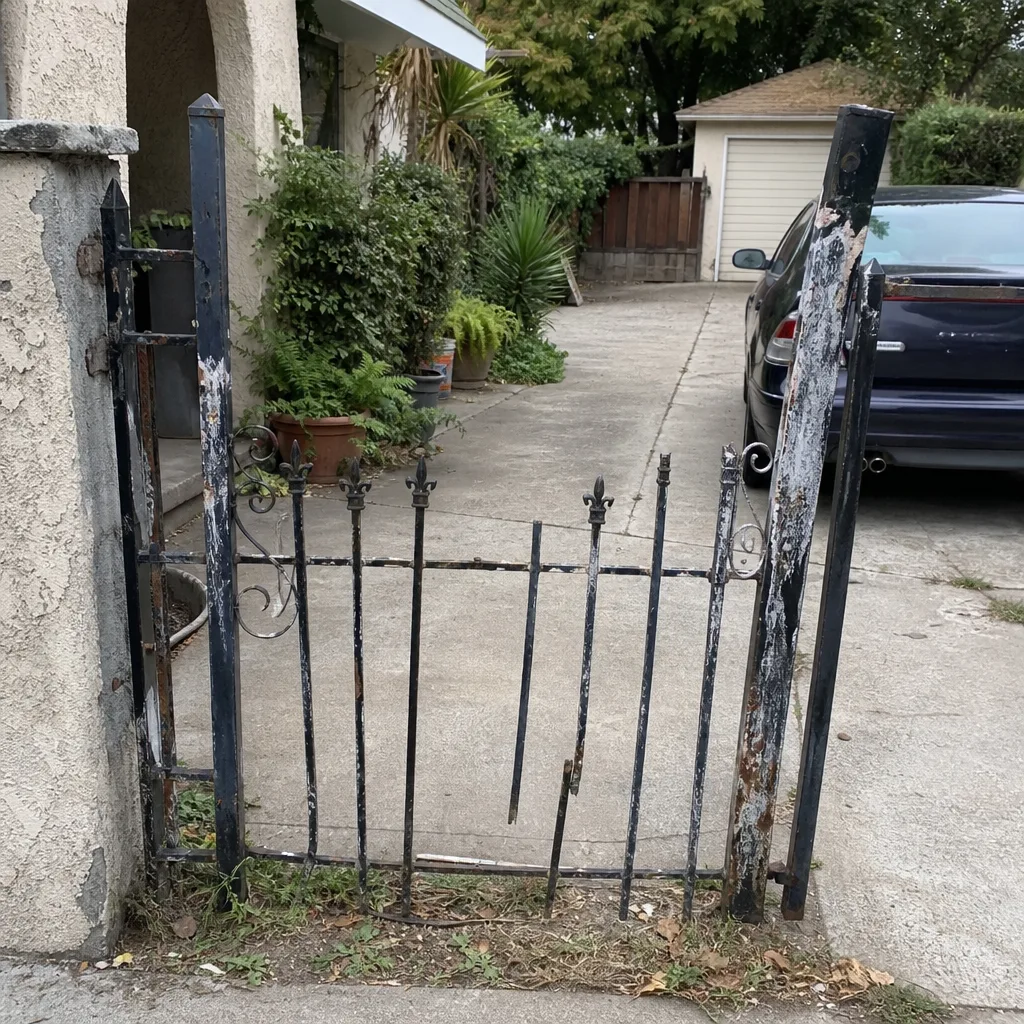 Before
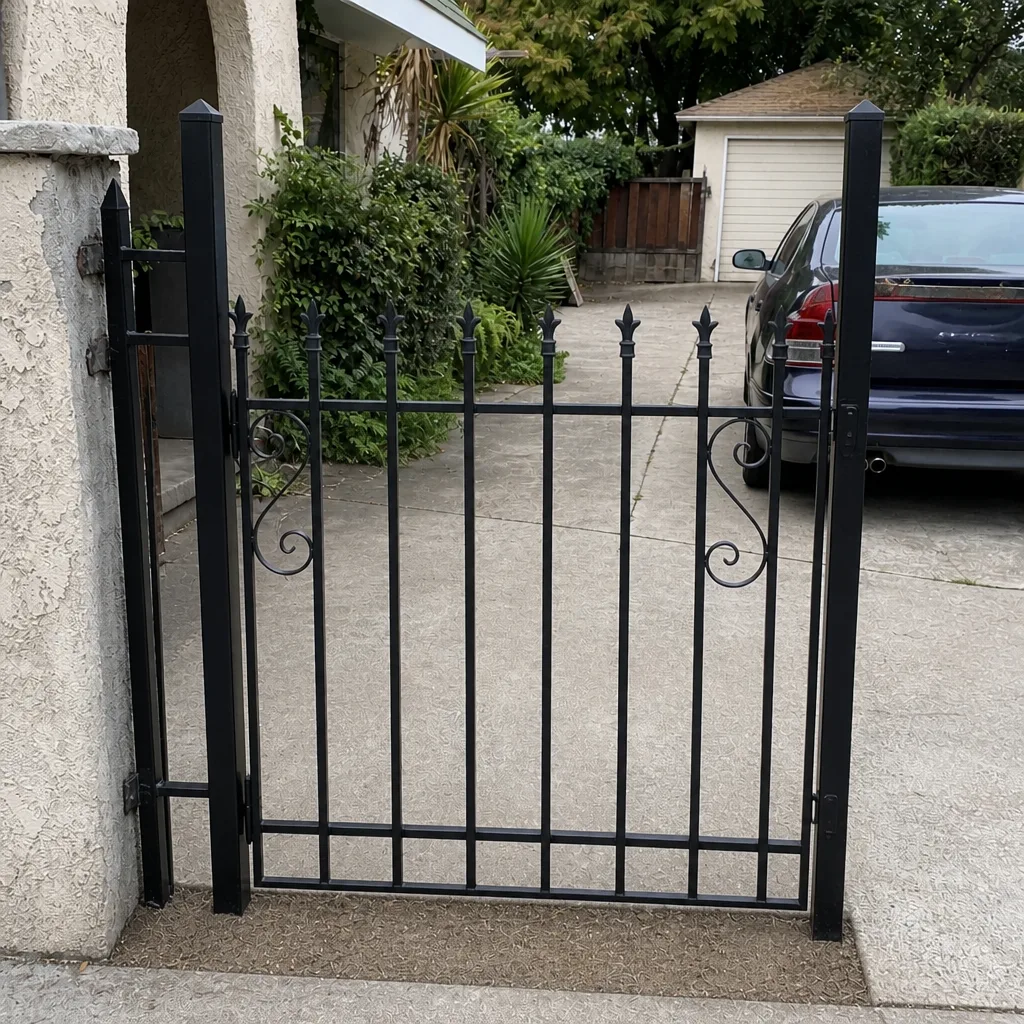 After
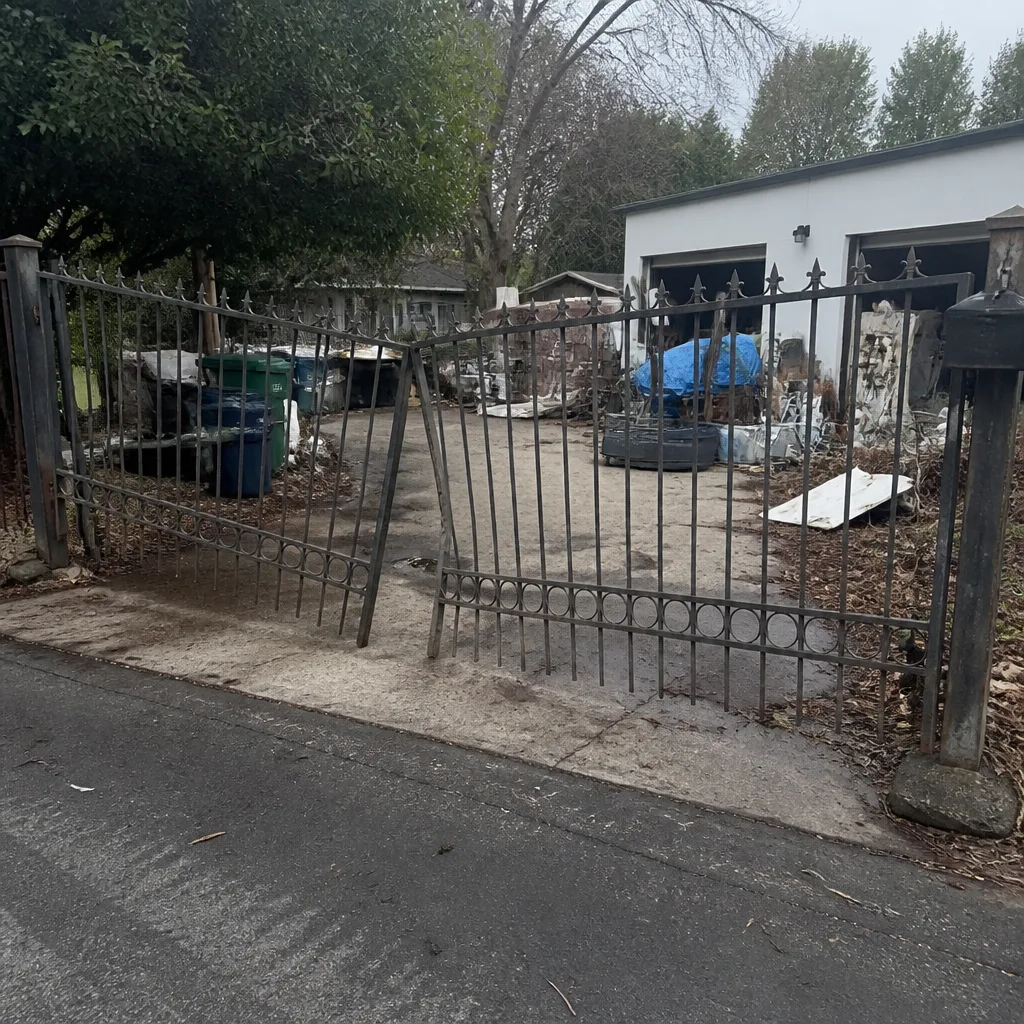 Before
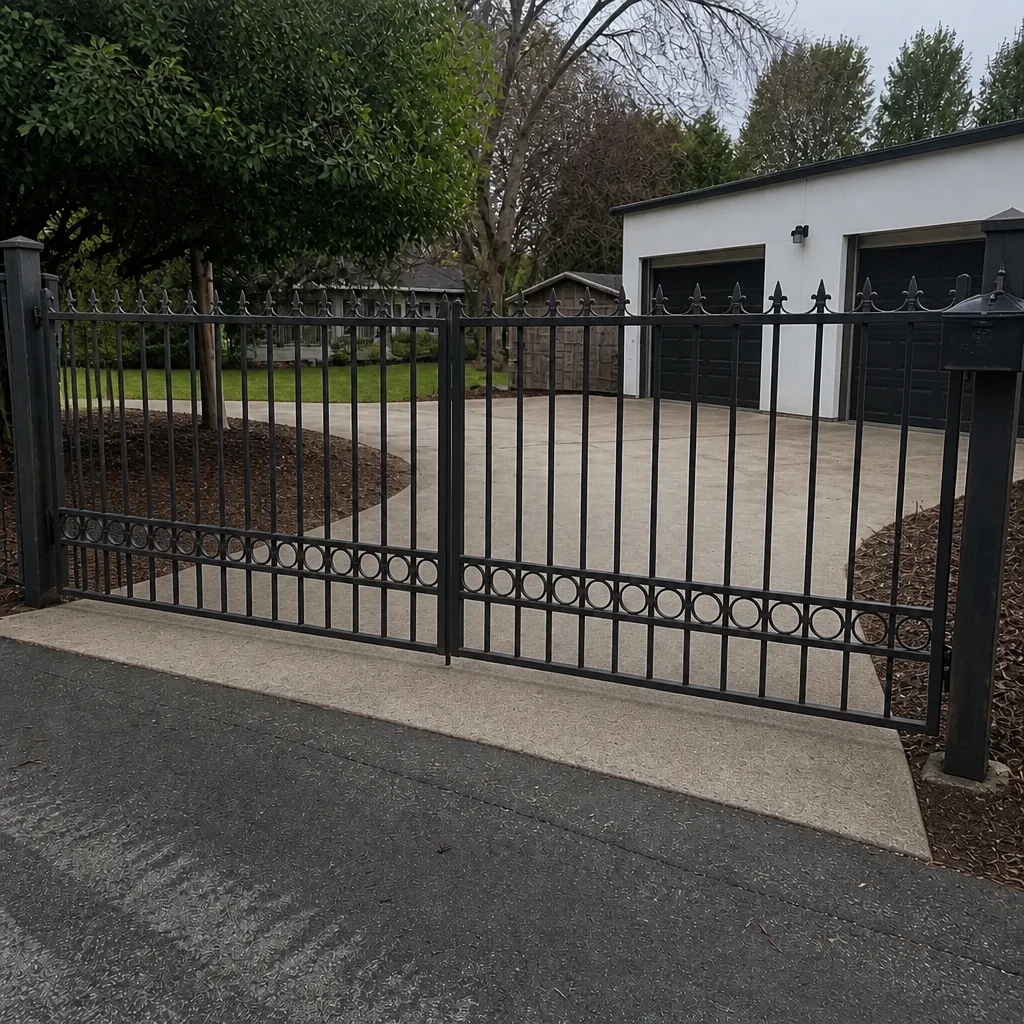 After
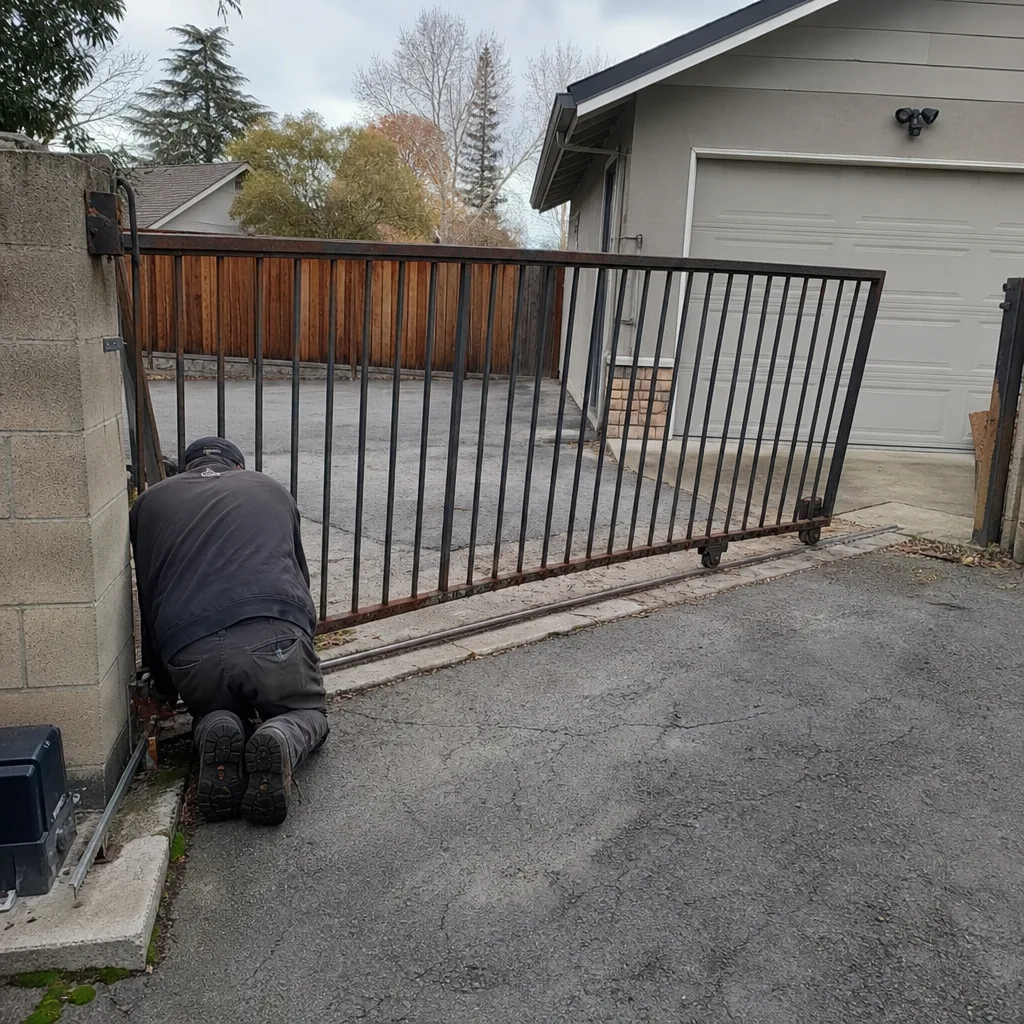 Before
 After
When to Call a Professional
You should call a professional the moment you have ruled out power supply, cleaned the photo eyes, and checked for obvious mechanical obstruction, but the gate still won’t behave. That is the point where the diagnostic moves inside the operator, and inside the operator is where live voltage lives. The scenarios we would not let a homeowner work through alone are a control board that shows error codes you can’t interpret, a slide gate that has jumped the track, a swing gate that has bent the operator arm, and any system that has taken water or lightning damage. We are a dedicated gate specialist, not a fence company that also swings by to look at openers. Our technicians work on LiftMaster, FAAC, BFT, Mighty Mule, and five other brands, and the diagnostic starts with observable behavior, not parts swapping. Gate Repair Carmichael offers free estimates in Carmichael and the surrounding area. Call (877) 752-3866 for scheduling. We answer 24/7. Fast dispatch from 7am to 7pm, Sunday through Friday.
Frequently Asked Questions
A gate that opens but won’t close is almost always a photo eye or safety edge problem. The safety circuit is telling the board that something is in the path, so the board refuses to close. Clean the photo eye lenses and check alignment first. If the gate still won’t close, the sensor circuit itself may have failed, which is a common and inexpensive fix.
This points to obstruction sensor miscalibration, not mechanical failure. The gate hits the closed limit and then reverses because the board is reading a safety input as active at the wrong moment. This is often a photo eye that drifts out of alignment as Carmichael heat expands the mounting bracket over the course of the day. It can also be a safety edge that has compressed or failed. Call (877) 752-3866 for a diagnosis, because the fix depends on which sensor is feeding the false signal.
Most Carmichael gate repairs fall between $150 and $600 depending on the part and the labor involved. A transformer or photo eye replacement is on the lower end. A control board or loop detector replacement runs higher, and cutting concrete to replace a loop wire is the most expensive repair in the typical range. The written estimate sets the final price, and it is always agreed before work begins.
We answer 24/7 and dispatch technicians from 7am to 7pm, Sunday through Friday. If you call early enough in the day, a same-day visit in Carmichael is usually possible depending on call volume. A call outside dispatch hours is booked into the next opening.
We service nine major gate and operator brands: LiftMaster, FAAC, BFT, Linear, Viking, Ghost Controls, DoorKing, Elite, and Mighty Mule. Whatever opener you have, we know it. Our diagnostic approach is brand-agnostic, so the recommendation is based on what your gate needs, not what we happen to stock most of.
Most repairs do not require a permit. New gate installations, especially automated ones, often do. Every city handles this differently, so ask the Carmichael building department directly for your specific project. We can tell you what we have seen on similar jobs in the area, but the city is the authority. We always recommend checking before starting a new installation.
The Bottom Line
Most gate failures in Carmichael are not mysteries. They are power supply problems, limit switch drift, sensor misalignment, mechanical wear, or board failure, and each one produces a specific, observable behavior. If you learn to read what your gate is doing, you will avoid paying for misdiagnoses and probably fix a third of the problems yourself with nothing but a reset and a visual check. The other two thirds are where a gate specialist earns the call. We work on your brand, from the motor to the hinge, and we give you a straight written estimate before any work starts. For gate repair or electric gate repair in Carmichael, call (877) 752-3866.
Written by the team at Gate Repair Carmichael, serving Carmichael since 2014.