
Last updated November 4, 2026
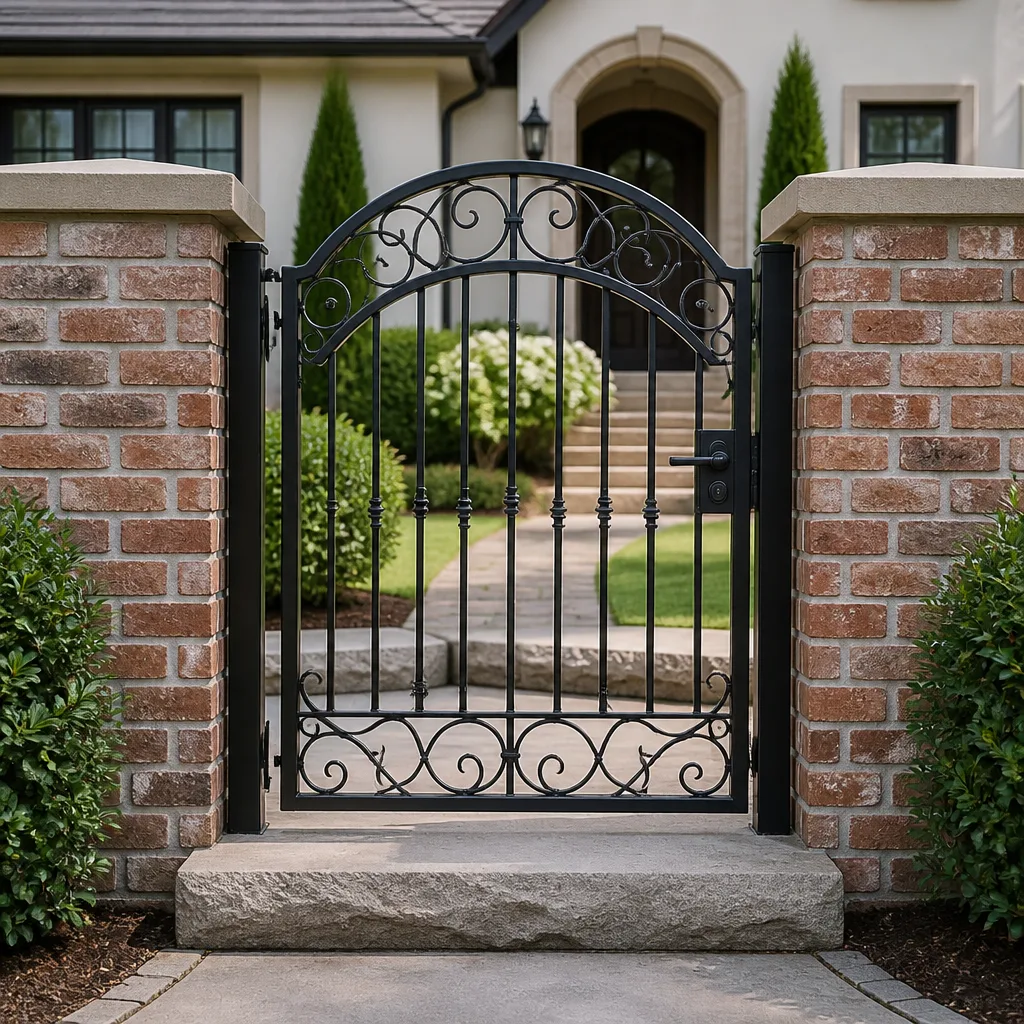 Wrought iron
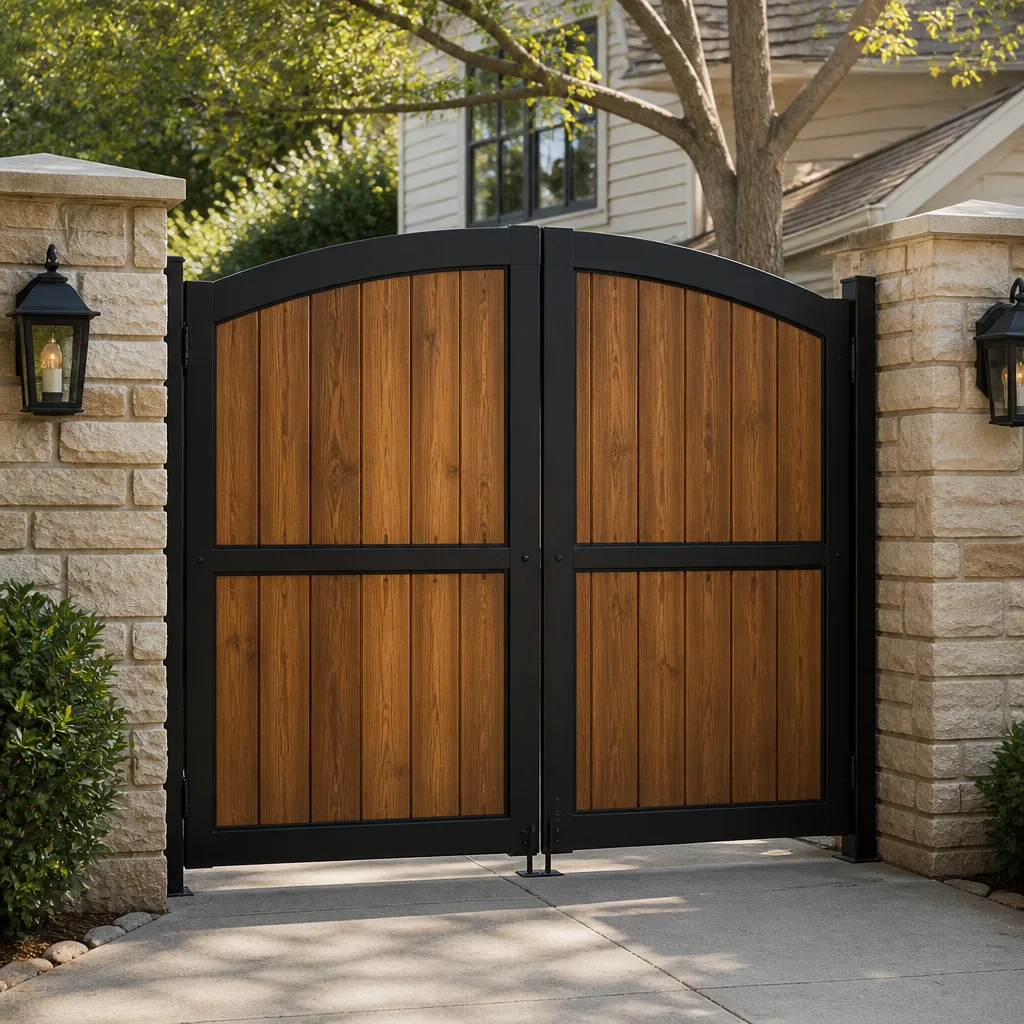 Wood & steel frame
 Farm & ranch
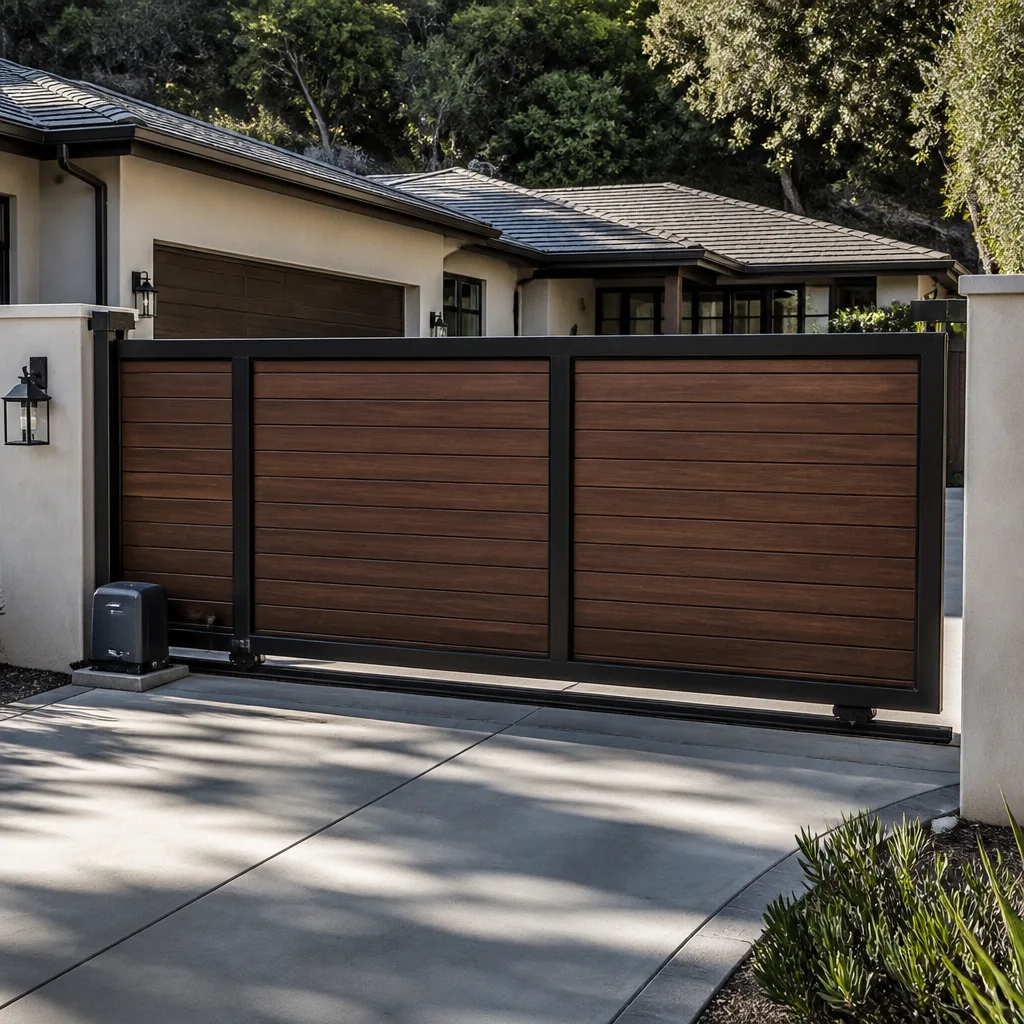 Sliding driveway gates
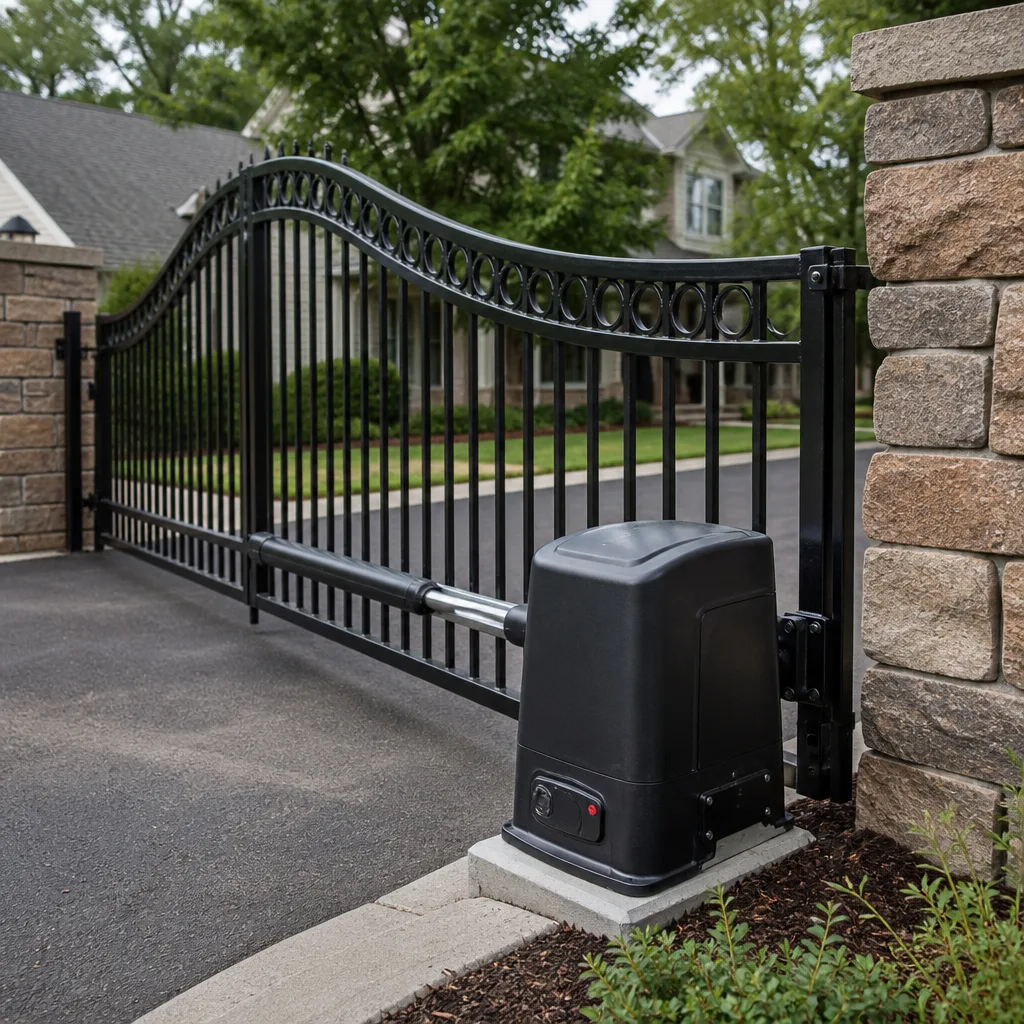 LiftMaster operators
Free on-site gate assessment - hinges, posts, and your LiftMaster or Nice gate operator checked before anything is quoted
The assessment is free and the quote is the invoice.
Get your free estimateGate Repair Maintenance Checklist for Carmichael Homeowners
Most gate maintenance checklists lead with lubrication, usually the chain or the track. That’s backwards. Grease applied over accumulated grit and rust doesn’t protect anything; it grinds the debris deeper into the metal and accelerates wear. The correct sequence starts with structure and works inward: structural integrity before mechanical parts, mechanical parts before electrical components, electrical before the operator brain. If the post has shifted, no amount of fresh grease on the hinges will save that gate. This guide is built around failure probability for Carmichael properties, not a generic list of chores, so you’ll spend your maintenance time on what actually strands gates open or locked shut in this area.
We’ve structured this as a prioritized inspection sequence you can work through, with clear frequencies for swing gates and slide gates, a safe way to test the battery backup, and the red flags that mean you should stop and call a gate repair specialist rather than continue down the list.
Quick Answer
A gate maintenance checklist in Carmichael works in this order: check post bases for soil movement, inspect hinges and rollers for play, clean debris from the track and photo eyes, test the reversing mechanism and battery backup, then lubricate only after surfaces are clean. Monthly checks cover obstruction sensors and track cleanliness; quarterly checks cover hardware and operator force settings; annual checks cover post plumb, weld integrity, and full electrical diagnostics.
Styles & brands we work with
- Wrought iron
- Wood & steel frame
- Farm & ranch
- Sliding driveway gates
- LiftMaster operators
Table of Contents
- The Inspection Sequence: Why Order Matters
- Structural Check: Posts, Soil, and the Carmichael Ground
- Mechanical Check: Hinges, Rollers, and Track
- Electrical Check: Photo Eyes, Wire Runs, and Connections
- Operator Check: Force Settings, Limits, and Odd Noises
- Testing the Battery Backup Without Disabling Your Gate
- Monthly, Quarterly, and Annual Frequency Guide
- Red Flags That Mean Stop and Call
The Inspection Sequence: Why Order Matters
A gate system fails in a predictable hierarchy. The post sits in the soil and carries the entire weight of the gate leaf. If the post shifts, the leaf sags. If the leaf sags, the hinges bind and the roller carriages drag. If the mechanical parts bind, the motor strains. If the motor strains, the control board overheats and trips. That chain of causation is why the checklist must start at the ground and move inward, because fixing an operator issue without addressing the structural cause means the operator fails again within months.
Here is the sequence we teach Carmichael homeowners to follow:
- Eye and hand check the post bases. Look for cracked concrete collars, visible soil gaps around the footing, or a leaf that no longer meets the latch squarely.
- Inspect every hinge, roller, and bracket for movement. Lift the gate leaf slightly with a pry bar placed under the free end. Any vertical play over a quarter inch means a bearing or hinge pin is worn.
- Check the track and guide rollers on slide gates. Look for compacted debris at stops, worn wheel surfaces, or a track that has shifted out of alignment.
- Inspect wiring and photo eyes before the operator. Loose wire nuts, cracked insulation, and dusty lenses cause more fault codes than most motor problems.
- Run the operator and listen. A gate that labors, hums without moving, or moves slower in one direction is reporting a load problem, not a motor defect.
- Clean, then lubricate. Only after debris and old grease are removed should fresh lubricant go on pivot points and chain or rack.
This order prevents a common Carmichael scenario: a homeowner spends an afternoon spraying lubricant on a hinge while the real problem is a post base that settled after a wet winter. The lubrication masks the symptom for a few weeks, then the gate binds again, and now the motor has been working against added resistance the whole time.
Structural Check: Posts, Soil, and the Carmichael Ground
Carmichael sits on soil that shifts with seasonal moisture. Our wet winters saturate the ground and can cause expansion and minor heave around post footings; our long dry summers pull moisture out and let soil settle. Over a span of wet season to dry season, a gate post that was poured too shallow or without enough concrete mass can move enough to throw the gate leaf out of square. This is the single most common root cause of swing gate failures we see in Carmichael.
What to check monthly on a swing gate:
- The reveal gap between the gate leaf and the post. It should be consistent from top to bottom. A wedge-shaped gap means the leaf is sagging off the hinge side or the post has leaned.
- The latch and strike alignment. If the gate now needs a lift or a shove to engage the latch, something moved.
- Cracking in the concrete collar at the base of the post. Hairline cracks are normal; cracks that open into gaps are not.
- The gate’s rest position. A properly hung swing gate holds its position when opened halfway and released. If it drifts open or shut on its own, the post has lost plumb or the hinges have worn.
Slide gates have their own structural checklist. The track should sit level and straight, the v-wheels should ride in the track without wobble, and the end stops should be secure. A slide gate that bounces or chatters while moving usually has a track that has shifted at a joint or a wheel that has gone out of round. These issues start small and get expensive when the gate derails under power.
Mechanical Check: Hinges, Rollers, and Track
Once the structure checks out, move to the mechanical layer. Swing gates hinge on bearing hinges or barrel hinges, and both wear eventually. Bearing hinges develop play you can feel by lifting the gate; barrel hinges develop a gritty feeling and sometimes a creak that lubrication can’t fix because the metal walls have worn through.
For slide gates, the mechanical wear items are the v-wheels or rollers, the guide rollers at the top, and the track itself. Carmichael’s dry season dust settles into the track and mixes with whatever grease is already there, forming a paste that abrades wheel surfaces. Monthly sweeping of the track with a stiff brush and wiping the wheels takes five minutes and extends the hardware life noticeably.
Check these mechanical points each quarter:
- All hinge welds and bolts. Hold the gate and push and pull. If it clicks, clunks, or shifts, a fastener is loose or a weld has cracked.
- Roller wheels for flat spots. Run the gate and watch each wheel. A flat-spotted wheel thumps and shakes the whole leaf.
- Track fasteners on slide gates. Every anchor bolt should be tight. A loose section lets the track deflect under load.
- Cantilever roller carriages if you have a cantilever slide gate. These take the full gate weight and wear predictably.
Lubrication is the last mechanical step, and only after cleaning. For hinges, use a light machine oil or white lithium spray, not heavy grease, which attracts Carmichael dust and turns into grime. For chains and racks, wipe first, then apply a dry-style or graphite lubricant sparingly. The goal is a thin film, not a coating.
Electrical Check: Photo Eyes, Wire Runs, and Connections
Electric gate problems are as often wiring as they are components. Carmichael’s dry heat bakes insulation, and the wet winters test every connection for moisture intrusion. Photo eyes, also called obstruction sensors, are the most frequent false-fault source on any automated gate. Their lenses collect a film of dust through summer, and even a thin coating scatters the beam enough to trigger a reversal or refuse to close.
Monthly electrical checks should cover:
- Photo eye lenses. Wipe both lenses with a dry microfiber cloth. Check alignment by reading the indicator light on each eye; most show a solid green or red when aligned and a blink when not.
- Wire insulation at flex points. Gate wires flex every cycle at hinge crossings and where they enter the operator housing. Look for cracked or abraded jacket, especially on swing gates that move the wire bundle constantly.
- Junction box interiors. Open the cover and look for moisture, corrosion, or ants. Carmichael’s ant pressure is real, and insects nesting in a junction box can bridge terminals.
- Operator housing interior. Look for dust buildup on the control board and signs of overheating, like discolored components or a burnt smell.
Quarterly, check every wire nut and terminal for tightness. Vibration loosens connections over time, especially on slide gates that travel with some impact at each stop. A loose neutral connection causes intermittent faults that look like a failing board but are actually a thirty-second fix.
If you’re not comfortable working around line voltage inside the operator, that’s exactly when to stop. The output side of an automated gate operator runs at household current in many installations, and a wrong move on a Live terminal is dangerous. For any electrical work beyond wiping a lens or checking a wire nut, call a specialist who works on electric gate repair systems daily.
Operator Check: Force Settings, Limits, and Odd Noises
After the structure, mechanical, and electrical layers pass inspection, test the operator itself. Every automated gate operator has adjustable force settings and travel limits. These are supposed to be set at installation and rechecked periodically, but most get ignored until the gate starts behaving badly. In Carmichael, where gates see daily use in both residential and light commercial settings, we recommend checking operator behavior quarterly.
Run the gate through a full open-close cycle and note:
- Speed and smoothness. A gate that pauses, surges, or varies speed mid-travel has a load issue upstream or a failing capacitor. Note where the hesitation happens; that points to the problem area.
- Obstruction reversal. Place a rolled-up towel or a 2×4 block in the gate’s path and close it. The gate should stop and reverse immediately on contact, before applying significant pressure. On a properly adjusted gate, the reversal is fast and deliberate.
- Travel limit accuracy. The gate should stop softly at both open and close limits without slamming into the stops. A hard slam wears stops, welds, and rollers fast.
- Audible hums and clicking. A persistent hum after the gate stops often means the operator is holding torque; a click repeated rapidly can be a relay chattering, usually from a low battery or loose connection.
Operator brands differ in how they signal faults. A LiftMaster may flash its diagnostic LED in a sequence; a FAAC board has a different set of indicator lights; an Elite or Mighty Mule uses yet another pattern. If you know your system’s manual, the blinking codes are genuinely useful. If you don’t, that’s part of what we do daily: read fault codes across competing manufacturers and fix the underlying cause rather than clearing the code and hoping it stays away.
Testing the Battery Backup Without Disabling Your Gate
Battery backups are the most neglected component on automated gates. Most Carmichael homeowners never think about the backup until a PG&E outage hits, and then they discover the battery has been dead for months. Testing it correctly means running the gate through a cycle on battery power without creating a gap in security or getting the gate stuck open.
Here is the safe sequence we recommend:
- Trip the breaker, not just the disconnect. Turning off the circuit that feeds the operator simulates a real power failure. This is a test, not a repair, so it takes thirty seconds.
- Run one full open and one full close on battery. Many backup systems only power the operator, not accessories like keypads and photo eyes. Confirm the safety sensors still function because a gate that moves without reversing protection is dangerous.
- Restore power and note the recharge time. A healthy battery recharges within a few hours. A battery that won’t hold a charge or recharges immediately is at end of life.
- Check battery age annually. Most gel-cell backup batteries last three to five years in Carmichael heat. After five years, replace on principle, not on failure.
If tripping the breaker makes you uneasy or you don’t have a clearly labeled circuit for the gate operator, don’t guess. The risk of opening the wrong breaker and finding the gate inoperable on Sunday is real. We can run the backup test as part of a maintenance visit and give you a written note on the battery’s condition and the exact replacement type if it’s due.
Monthly, Quarterly, and Annual Frequency Guide
Maintenance frequency depends on gate type and how many cycles per day the gate sees. A single-family swing gate in Carmichael cycles maybe ten to twenty times a day. A light commercial slide gate on a traffic route might cycle a hundred times a day. That difference is why quarterly checks on a busy slide gate are the minimum, not the target.
Here is a practical frequency guide for Carmichael homeowners:
Monthly
- Wipe photo eye lenses and check indicator lights.
- Sweep slide gate track and inspect for debris or shifted sections.
- Run the reversal test with a soft obstruction.
- Look at post bases and the gap between gate leaf and post.
- Listen to the operator for new noises during one full cycle.
Quarterly
- Lift-test swing gate hinges for play; watch slide gate wheels for flat spots.
- Check all fasteners, track anchors, and hinge bolts for tightness.
- Open the operator housing and look for dust, moisture, and heat discoloration.
- Check wire insulation at flex points and any junction boxes for ants and corrosion.
- Clean and then lubricate hinge pins, wheel axles, and chains or racks.
Annually
- Check post plumb with a level on both faces.
- Inspect weld integrity on all brackets and gate frame joints.
- Run a full electrical diagnostic on the operator, including force settings and limit accuracy.
- Test the battery backup under breaker trip and note recharge behavior.
- Check the gate’s physical condition: rust spots, paint wear, and surface damage.
The annual check is the one we recommend doing with a professional if any part of the sequence is outside your comfort zone. A trained eye catches the post that’s beginning to lean before the gate refuses to latch, and catching that early is far cheaper than a post reset and a new operator.
Red Flags That Mean Stop and Call
Some findings during any inspection mean you should stop working on the gate and call a specialist. These are conditions that will not improve with DIY effort and often get worse quickly:
- The gate no longer latches or closes fully without manual force. This means something structural has moved. Continuing to force the gate strains the operator and accelerates wear.
- The operator hums but the gate doesn’t move. This points to a failing capacitor, a bound drive mechanism, or a gearbox issue. Running the motor in this state overheats it fast.
- The gate reverses on every cycle even with a clear path. This is usually a photo eye alignment or wiring problem, but it can also indicate a control board failing. Bypassing the safety sensors to force the gate closed is dangerous and should never be done.
- The gate has come off its track or the leaf is visibly sagging. A derailed slide gate or a hinge post that has shifted is beyond routine maintenance. Continued movement can cause injury or property damage.
- You see burned or melted insulation inside the operator. This is a fire hazard and a sign of an electrical fault that needs diagnosis before the gate is powered again.
If any of these appear, stop and call Gate Repair Carmichael. We work on LiftMaster, FAAC, Elite, Mighty Mule, and the rest of the major brands, and we can tell you over the phone whether the issue sounds like a quick fix or a full replacement. The estimate is free, and the price is set before any work begins.
Common Mistakes to Avoid
- Lubricating before cleaning. Grease over dirt creates an abrasive paste that wears pins, wheels, and chain rollers faster. Clean, then lubricate, every time.
- Skipping the reversal test because it’s inconvenient. The reversing mechanism is the primary safety system on any automated gate. Testing monthly takes ninety seconds and catches failing sensors before they cause an injury.
- Ignoring a sagging gate leaf. Carmichael soil movement is gradual. By the time you notice the gate needs a lift to latch, the post has likely shifted enough to require a reset, not just a hinge adjustment.
- Powering down the operator for maintenance and flipping the breaker back on without checking settings. A power cycle can reset some operator defaults, and a gate that used to stop gently may now slam. Check limits and force after any full power cycle.
- Replacing photo eyes without verifying wire condition. Fault codes often blame the sensor when the real problem is a chewed or cracked wire underground. New eyes won’t fix a broken conductor.
- Assuming a dead battery backup is fine because power rarely goes out. Carmichael outages come from summer heat events and storm downed lines. The outage is exactly when you need the battery, and dead batteries only announce themselves at the worst moment.
See the difference
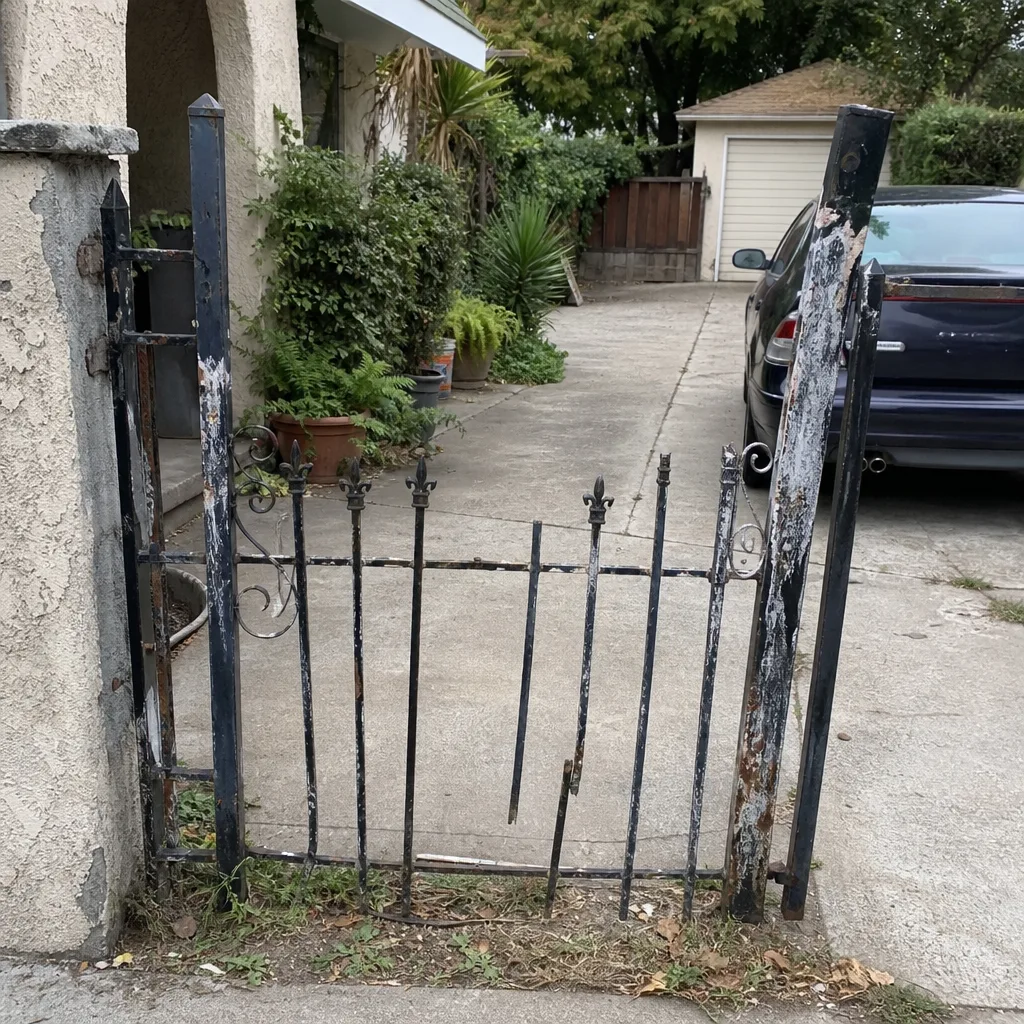 Before
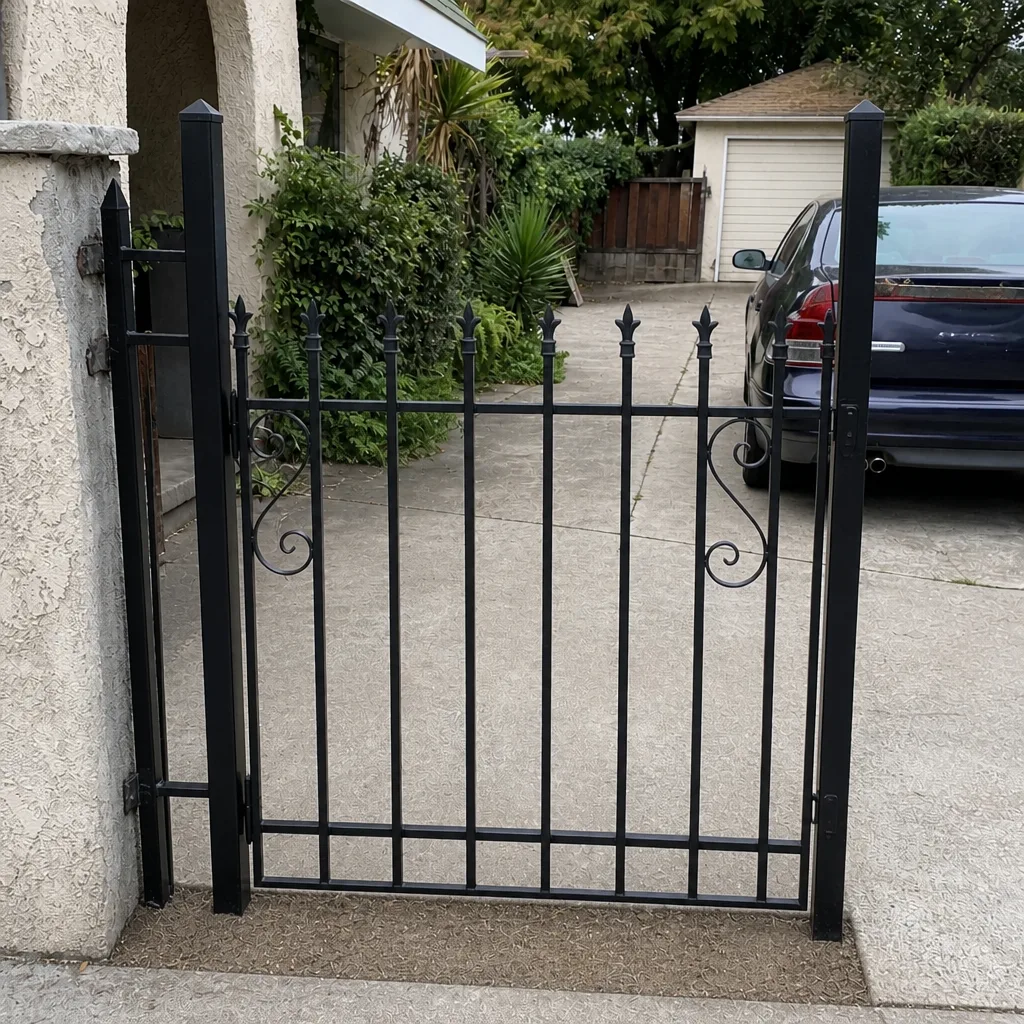 After
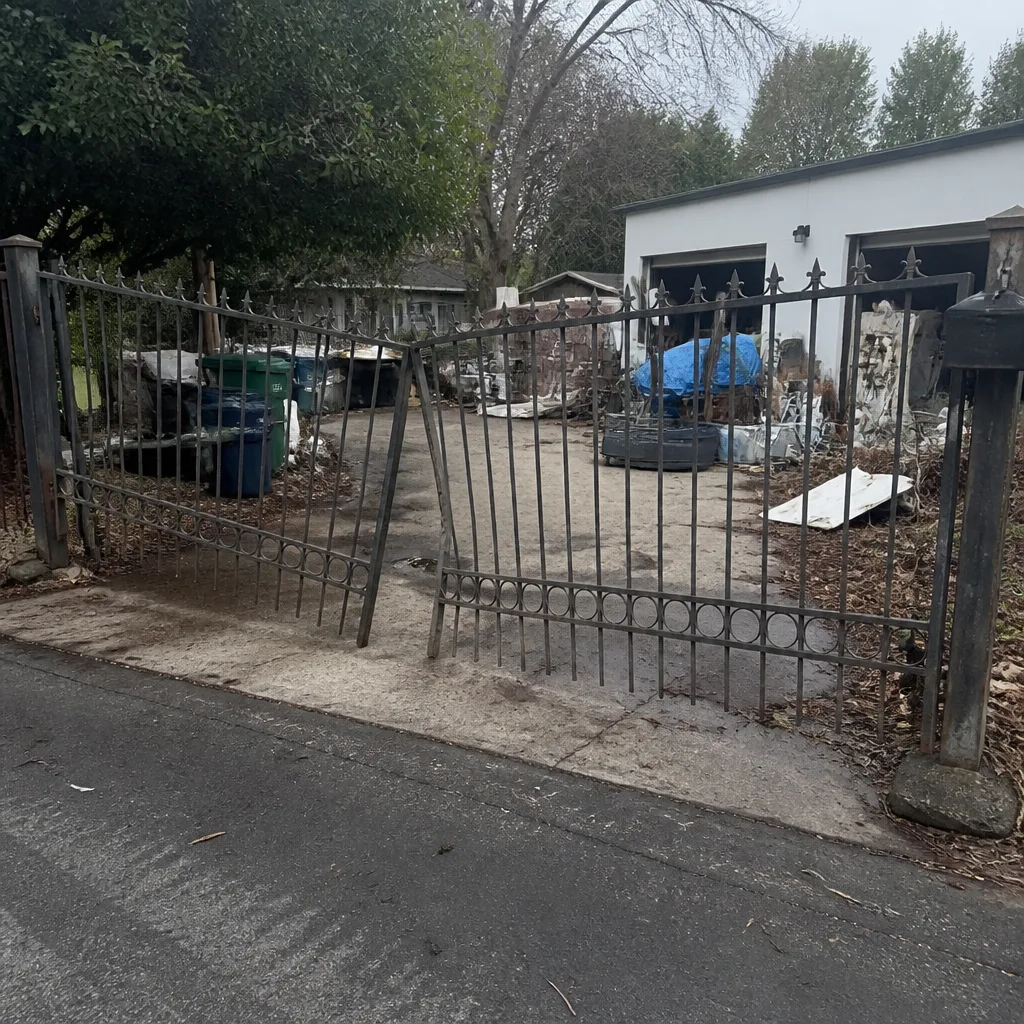 Before
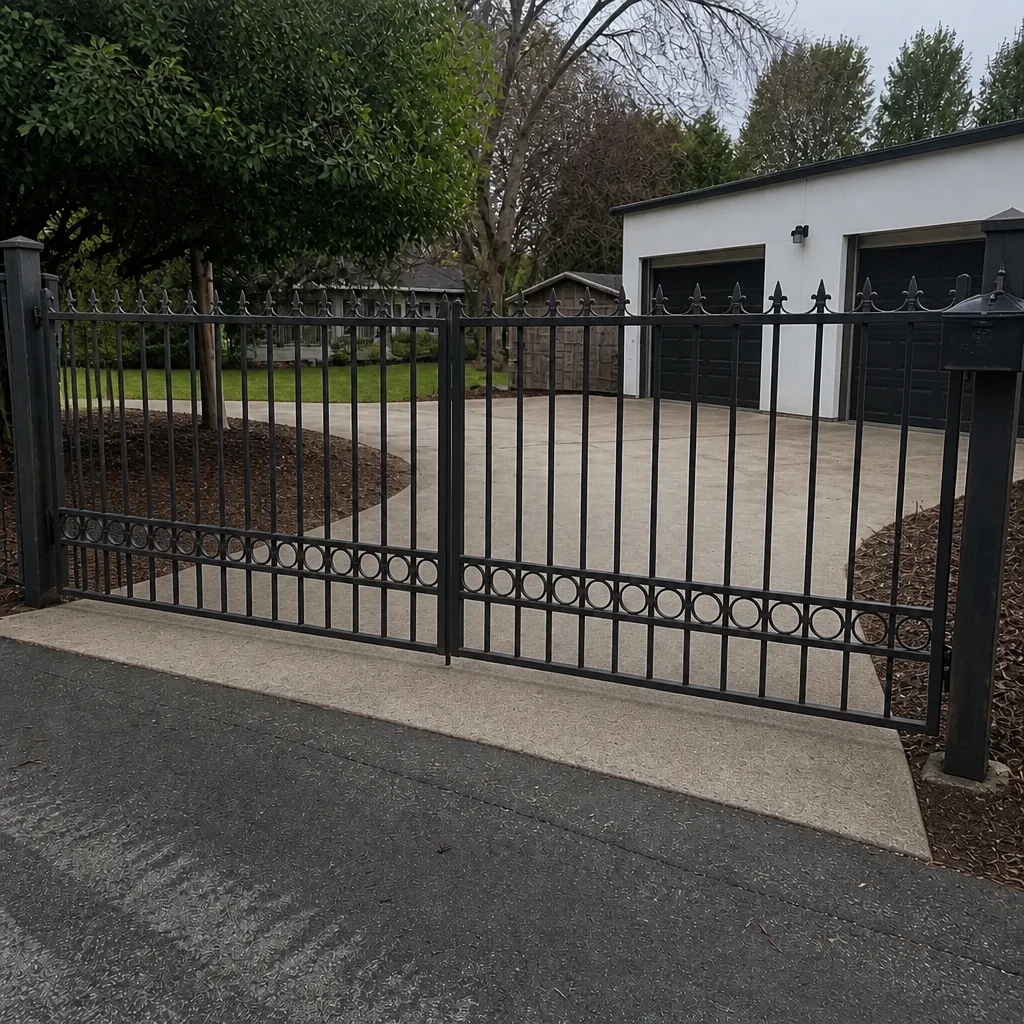 After
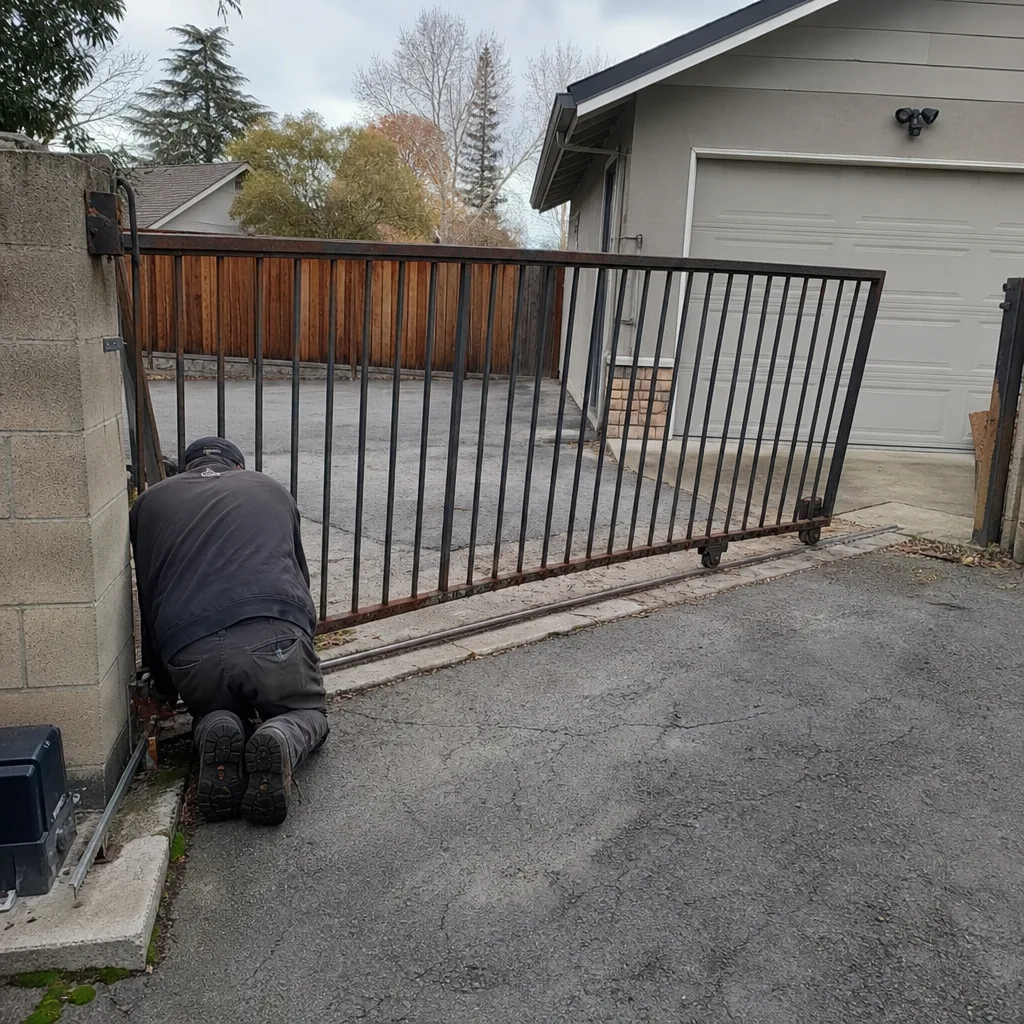 Before
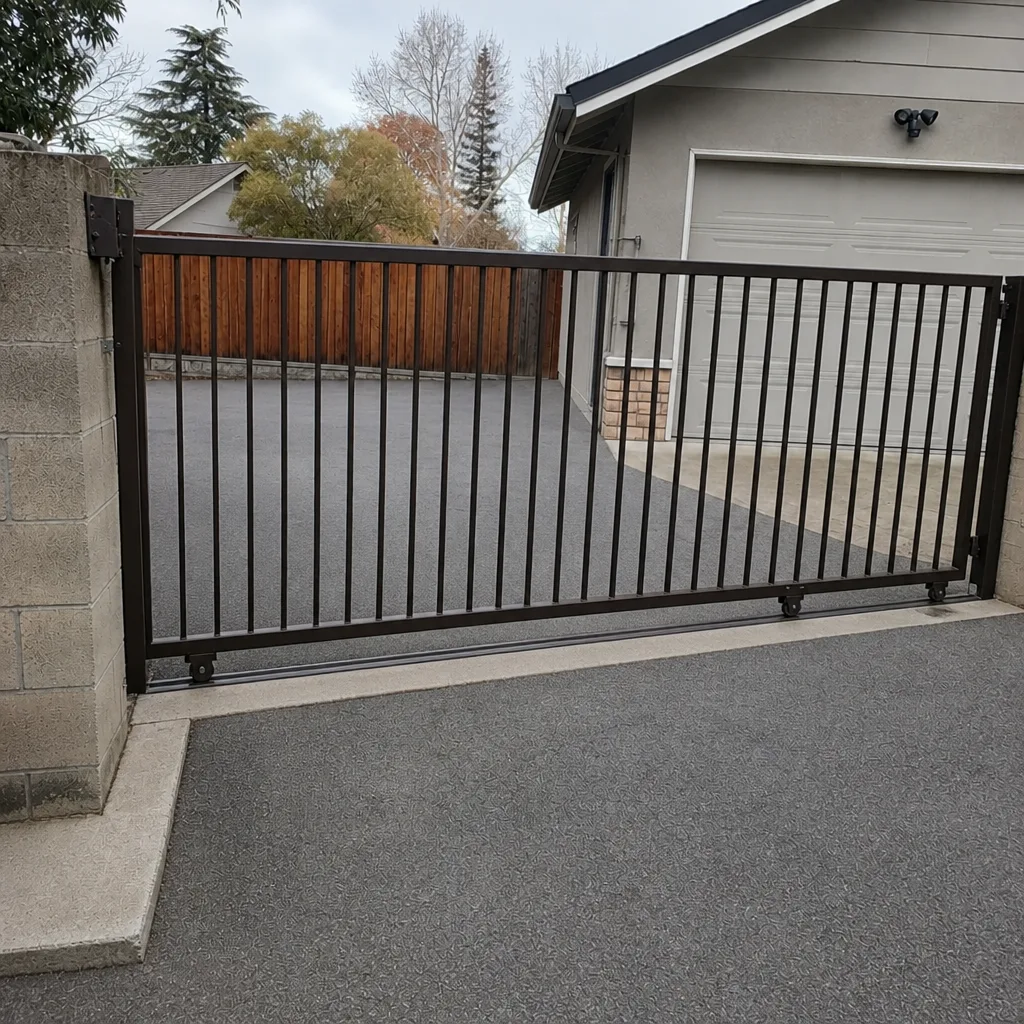 After
When to Call a Professional
If the gate is off its track, the operator hums without moving, the reversing system won’t test correctly, or you see burned or damaged wiring, stop the checklist and call for professional electric gate repair. These are failures that require diagnostic equipment, replacement parts, or structural adjustment. Continuing to run a gate in these conditions can turn a repairs job into a full gate repair and operator replacement. Gate Repair Carmichael offers free estimates in Carmichael. Call (877) 752-3866, and we’ll give you a written price before any work is done. We answer 24/7. Fast dispatch from 7am to 7pm, Sunday through Friday.
Frequently Asked Questions
Lubricate every three months for most Carmichael gates, and only after cleaning the surfaces first. Swing gate hinges need light machine oil or white lithium spray; slide gate chains and racks do better with a dry lubricant that won’t hold Carmichael dust.
The most common failure we see in Carmichael is a post base that has settled after wet winters followed by dry summers, which causes the gate leaf to sag out of alignment. This condition strains hinges and operators and should be checked monthly during wet season. If the reveal gap is uneven, call (877) 752-3866 for a free estimate before the problem compounds.
Yes, by tripping the circuit breaker that feeds the operator and running one open and one close on battery, but only if the circuit is clearly labeled and you’re comfortable with electrical panels. If the battery fails the test or you’d rather not handle it, a maintenance visit resolves it safely.
Dirty or misaligned photo eyes are the usual cause, followed by a wiring issue at a hinge flex point or a failing obstruction sensor. Wipe both lenses and check alignment first; if the problem persists, it’s time for a diagnostic visit. Call (877) 752-3866 to book one, estimates are free.
No. A squeak that persists after proper cleaning and lubrication usually indicates a hinge pin or bearing that has worn, and a metallic grinding sound from a slide gate means a wheel or roller has failed. These are mechanical wear issues that lubrication won’t fix and often need part replacement.
Check the operator housing for dust buildup, verify the photo eyes are clean, and test the battery backup. Heat waves strain capacitors and control boards, and a battery that’s already weak will fail when temperatures spike. A pre-summer check catches these issues while the fix is still inexpensive.
The Bottom Line
A gate maintenance checklist for Carmichael works when it follows the gate’s own failure order: structure, mechanical, electrical, operator. Monthly attention to photo eyes and track cleanliness prevents most nuisance faults. Quarterly checks on hardware and operator force settings catch wear before it becomes breakage. An annual structural review with a professional catches the post settlement and wire fatigue that Carmichael’s seasonal soil moisture and summer heat produce. And lubrication, the thing most checklists lead with, belongs at the end, after the cleaning. Work the sequence, note the red flags, and when something is beyond routine attention, call (877) 752-3866. We answer 24/7. Fast dispatch from 7am to 7pm, Sunday through Friday.
Written by the team at Gate Repair Carmichael, serving Carmichael since 2014.